Foraged Greens Pesto
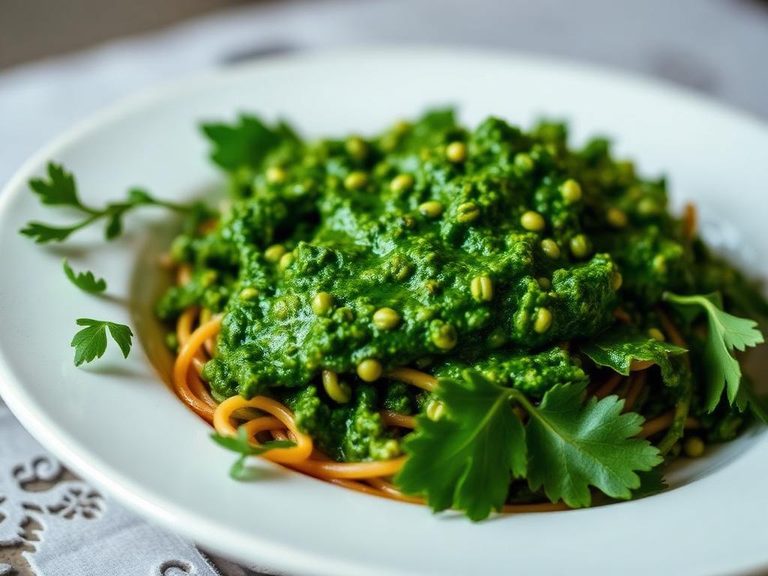
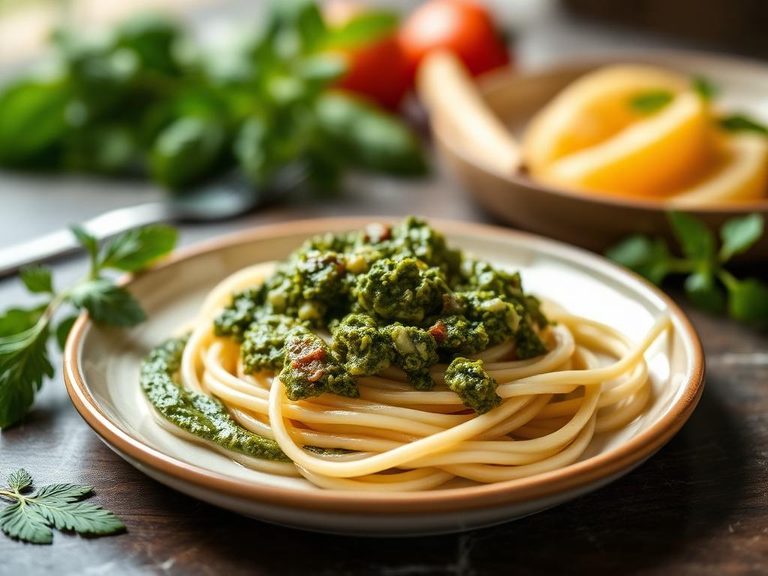
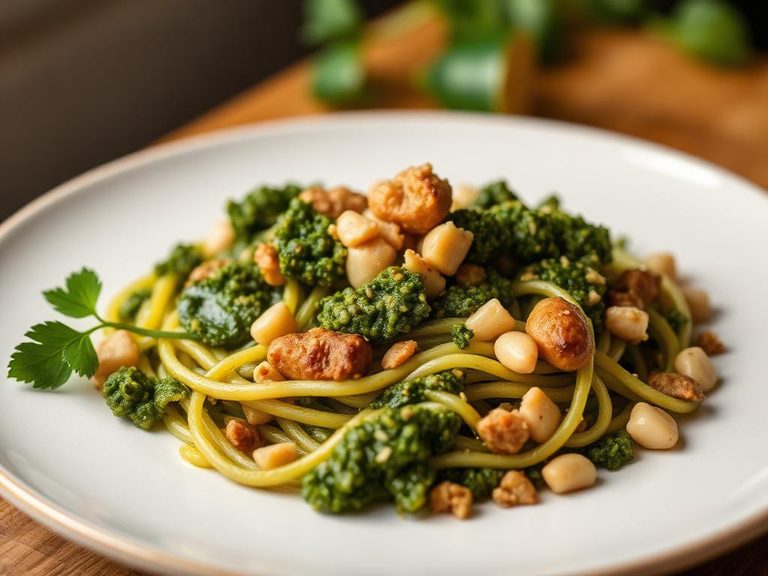
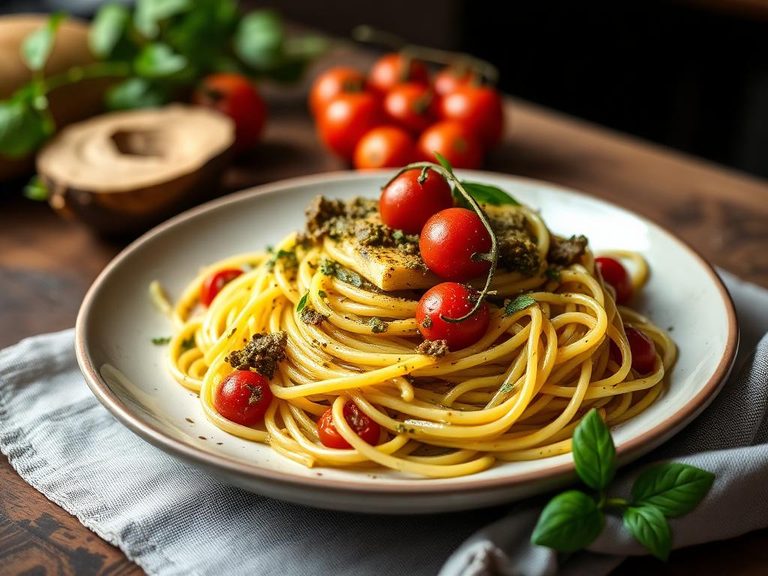
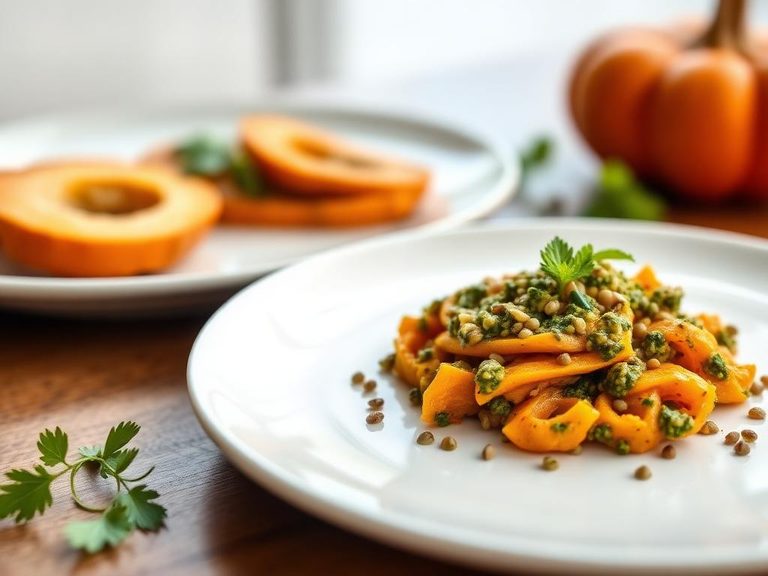
Foraged Greens Pesto is a vibrant, herbaceous sauce made by blending wild-harvested greens like dandelion, nettle, or chickweed with nuts, garlic, oil, and cheese. This rustic variation on classic Genovese pesto is rooted in foraging traditions, particularly in European and North American culinary cultures, where seasonal wild greens were used to create flavorful, nutrient-dense condiments.
🍽️ Nutrition at a glance
This dish is primarily a source of healthy fats from olive oil and nuts, with moderate protein from cheese and nuts, and is low in carbohydrates. It is exceptionally rich in vitamins A, C, and K, as well as minerals like iron and calcium from the wild greens.
Nutrition breakdown
| Calories | 180 kcal |
| Protein | 4 g |
| Carbs | 3 g |
| Fat | 17 g |
| Fiber | 1 g |
| Sugar | 0 g |
| Sodium | 210 mg |
| Vitamin K | 120 mcg |
| Vitamin A | 2500 IU |
| Vitamin C | 15 mg |
| Iron | 1.5 mg |
| Calcium | 80 mg |
| Magnesium | 25 mg |
| Potassium | 120 mg |
| Folate | 30 mcg |
Per 1/4 cup (60 g) · estimated, varies by recipe
💡 What's interesting
Culturally, foraged greens pesto represents a sustainable, hyper-local approach to cooking, connecting modern kitchens to ancient practices of gathering wild foods. Nutritionally, wild greens often contain higher concentrations of antioxidants and phytonutrients compared to their cultivated counterparts.