

Fish and chips with tartar sauce

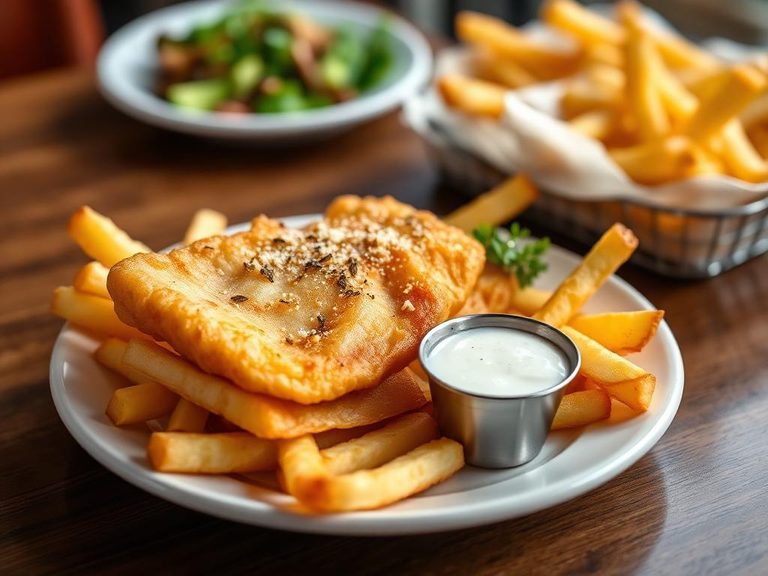
Fish and chips with tartar sauce is a classic British dish featuring battered and deep-fried white fish (typically cod or haddock) served alongside thick-cut fried potatoes, often accompanied by a creamy, tangy tartar sauce made from mayonnaise, pickles, and herbs. It originated as a staple working-class meal in 19th-century England, combining the affordability of fried fish with the heartiness of chips. The dish remains a beloved comfort food worldwide, particularly in the UK, Australia, and coastal regions.
🍽️ Nutrition at a glance
This dish is high in fat and protein, with a moderate amount of carbohydrates from the batter and chips. It provides significant amounts of omega-3 fatty acids from the fish, along with vitamins like B12 and minerals such as selenium, but is also calorie-dense, typically ranging from 800 to 1200 calories per serving depending on portion size and preparation.
Nutrition breakdown
| Calories | 950 kcal |
| Protein | 45 g |
| Carbs | 70 g |
| Fat | 55 g |
| Fiber | 5 g |
| Sugar | 4 g |
| Sodium | 850 mg |
| Vitamin B12 | 3.5 mcg |
| Selenium | 40 mcg |
| Phosphorus | 350 mg |
| Vitamin D | 2.0 mcg |
| Potassium | 600 mg |
| Vitamin C | 15 mg |
| Iron | 2.5 mg |
| Zinc | 3.0 mg |
Per 1 typical serving (about 300g fish, 200g chips, 30g tartar sauce) · estimated, varies by recipe
💡 What's interesting
Culturally, fish and chips became a symbol of British resilience during World War II, as it was one of the few foods not rationed. Nutritionally, the tartar sauce adds a probiotic element from fermented pickles, which can aid digestion, though the overall dish is often considered an indulgent treat rather than a health food.
🍽️ Related dishes




AI estimate may be inaccurate · Terms