Dried meat strips
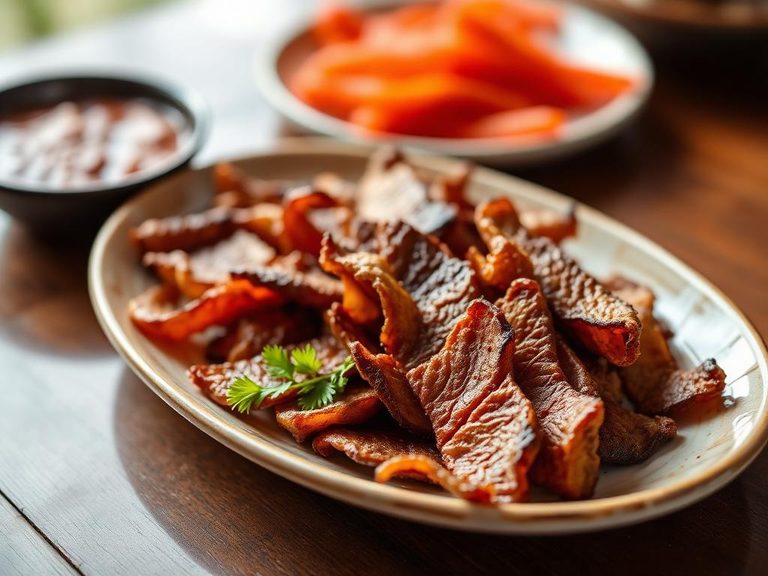
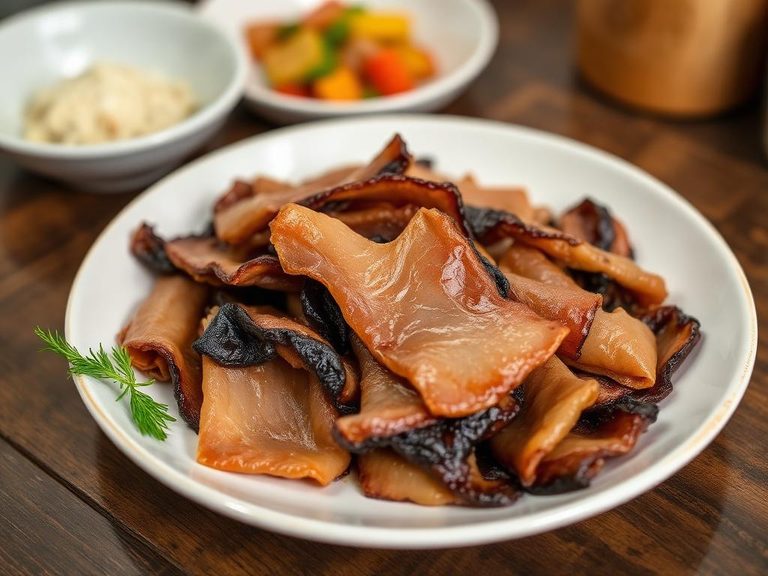
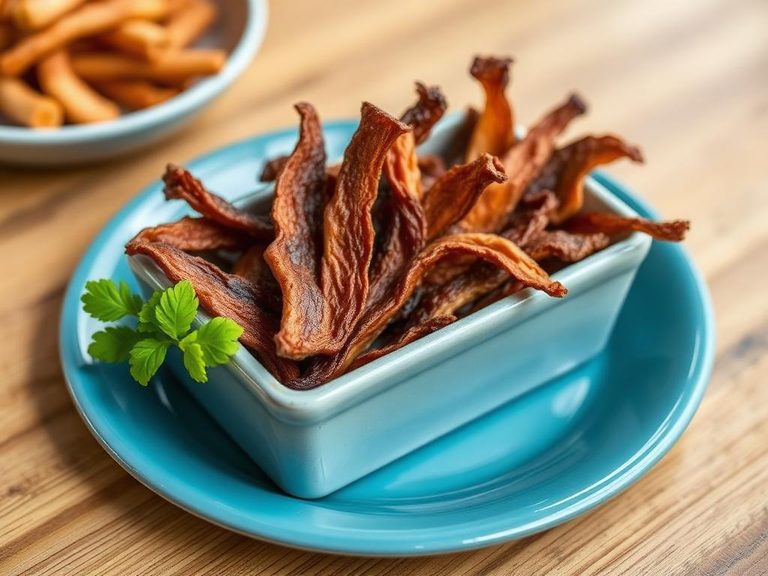
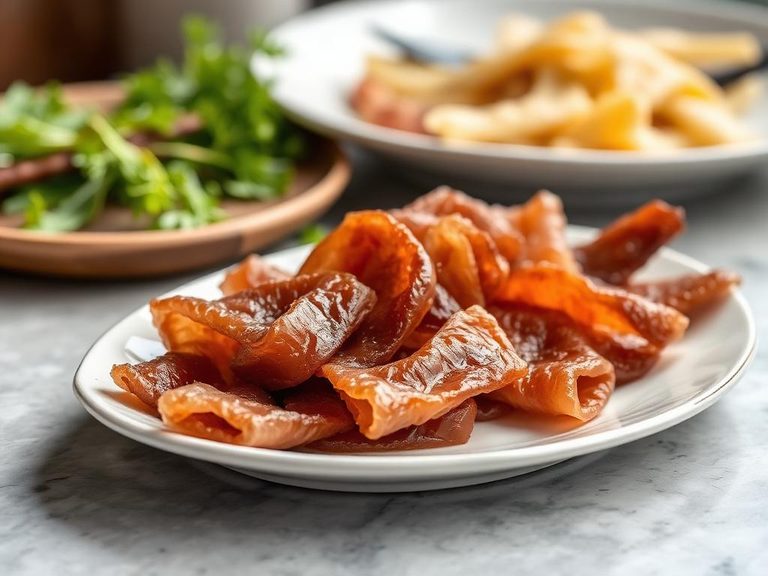
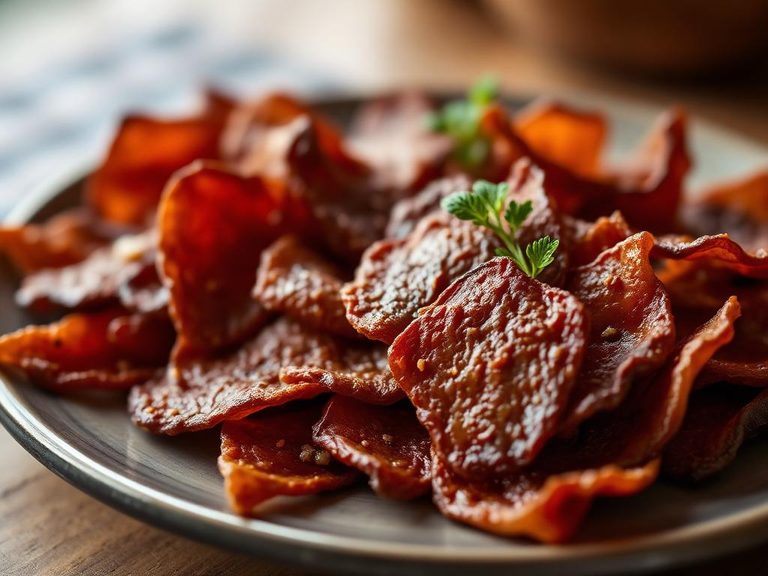
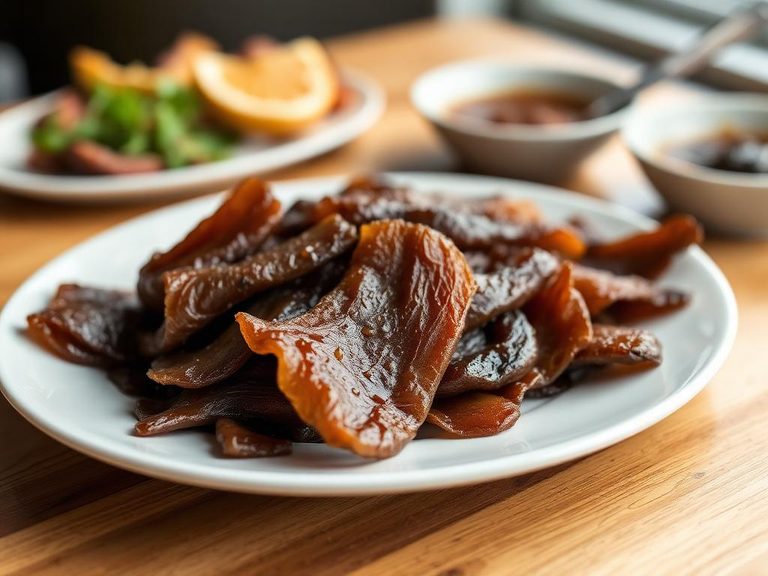
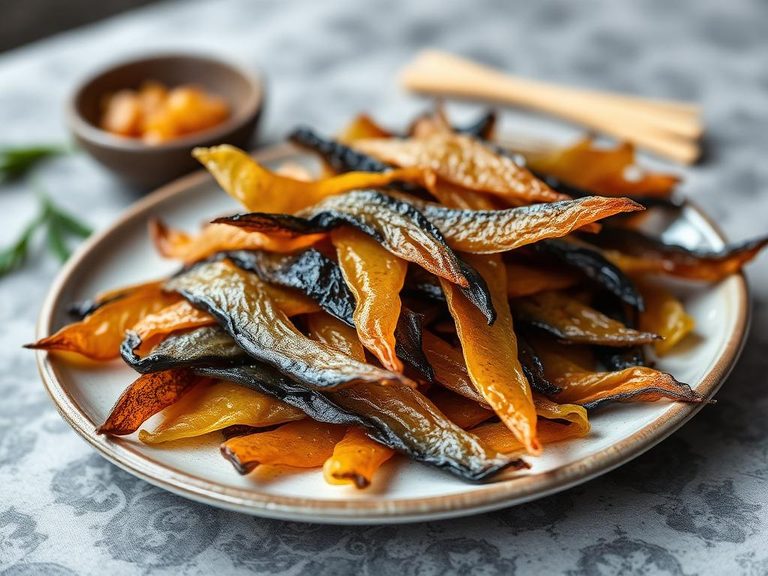
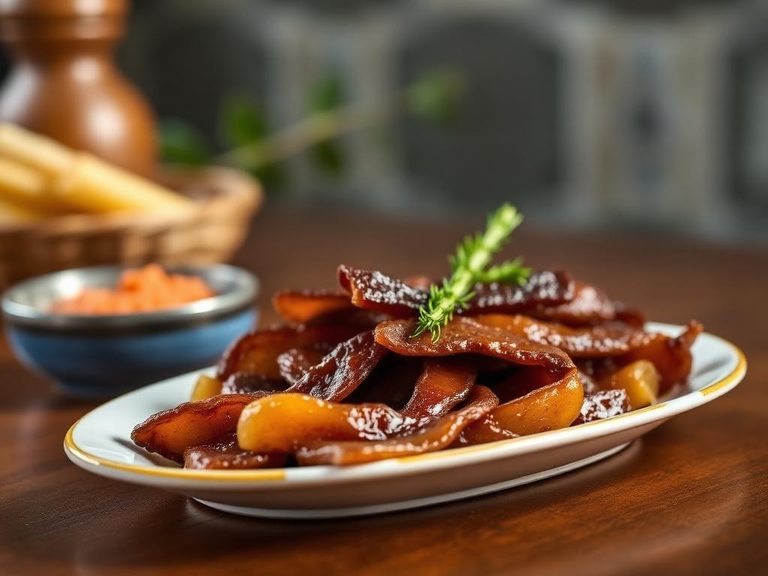
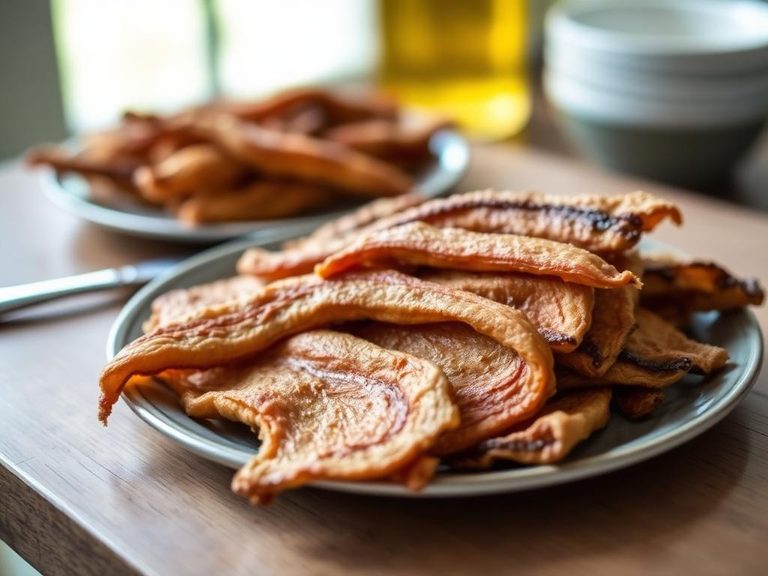
Dried meat strips, often referred to as jerky, are a popular snack made by marinating lean cuts of meat (such as beef, pork, or game) in a mixture of salt, spices, and sometimes soy sauce or sugar, then drying them to preserve the meat. This method of preservation has been used for centuries across various cultures, from the Native American pemmican to the Central Asian kazy and the Chinese la rou.
🍽️ Nutrition at a glance
Dried meat strips are a high-protein, low-carbohydrate snack, making them a popular choice for athletes and those on low-carb diets. A typical serving provides a significant amount of protein, iron, and B vitamins, with a calorie range of approximately 100-150 kcal per 28-gram serving, depending on the specific recipe and fat content.
Nutrition breakdown
| Calories | 116 kcal |
| Protein | 9.4 g |
| Carbs | 3.1 g |
| Fat | 7.2 g |
| Fiber | 0.4 g |
| Sugar | 2.1 g |
| Sodium | 480 mg |
| Iron | 1.5 mg |
| Zinc | 2.3 mg |
| Niacin (B3) | 3.2 mg |
| Vitamin B12 | 0.6 mcg |
| Phosphorus | 105 mg |
| Selenium | 10.2 mcg |
| Potassium | 180 mg |
| Magnesium | 12 mg |
Per 1 serving (28 g) · estimated, varies by recipe
💡 What's interesting
The process of drying meat concentrates its flavors and nutrients, creating a lightweight, non-perishable food that has been essential for travelers, soldiers, and nomadic peoples throughout history. Nutritionally, it's a dense source of complete protein and minerals like zinc and selenium, which support immune function and muscle repair.