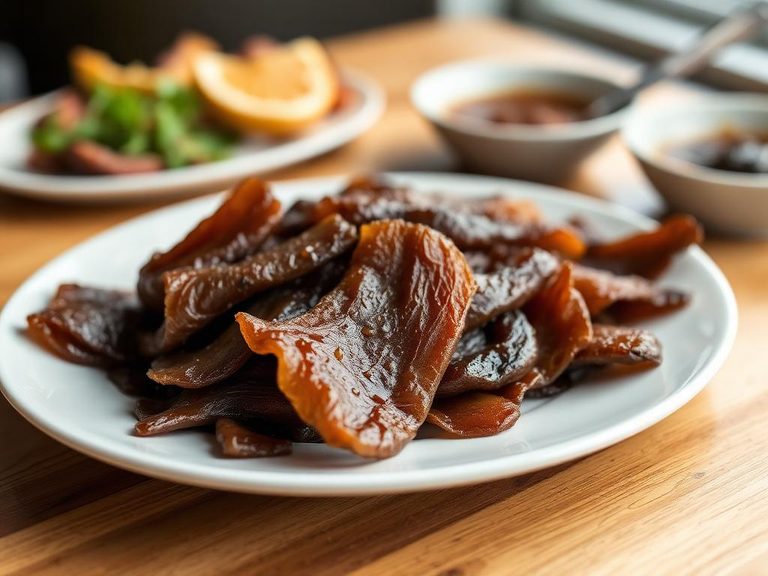
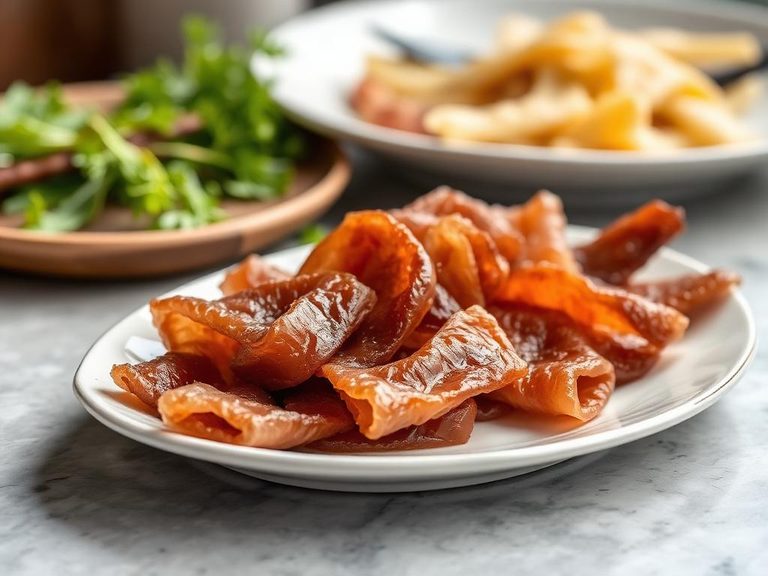
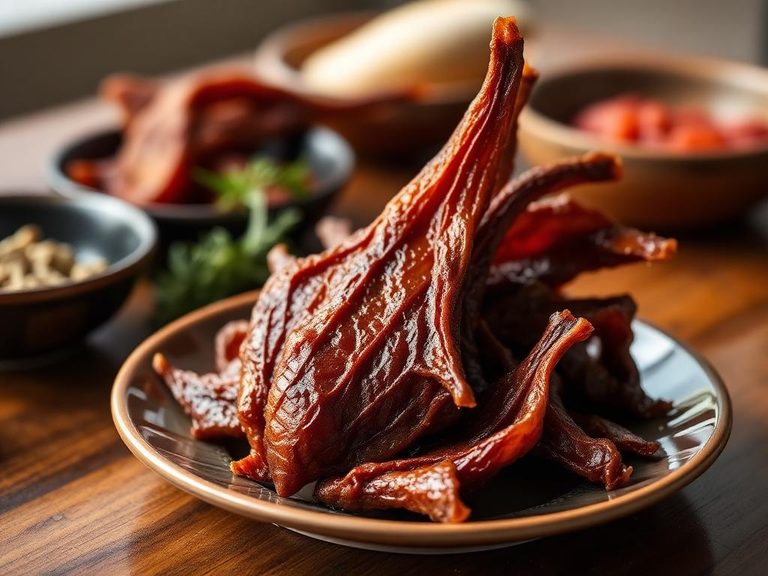
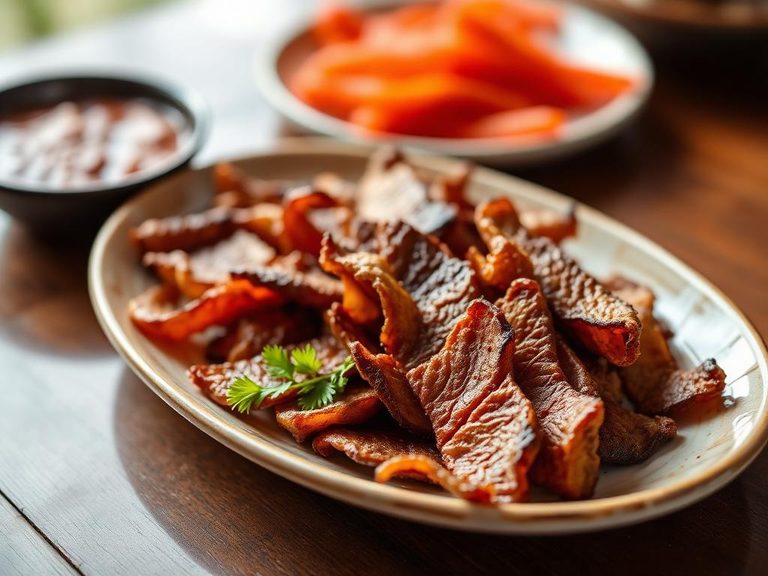
Dried sea lion meat strips
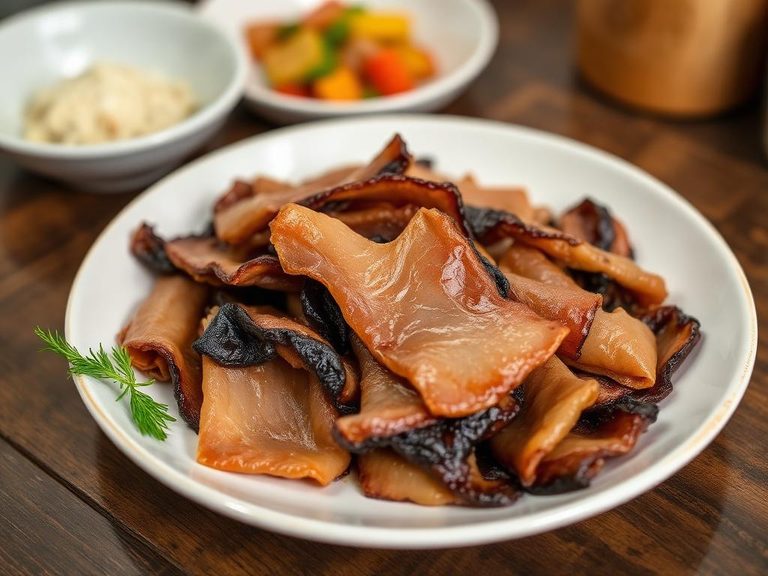
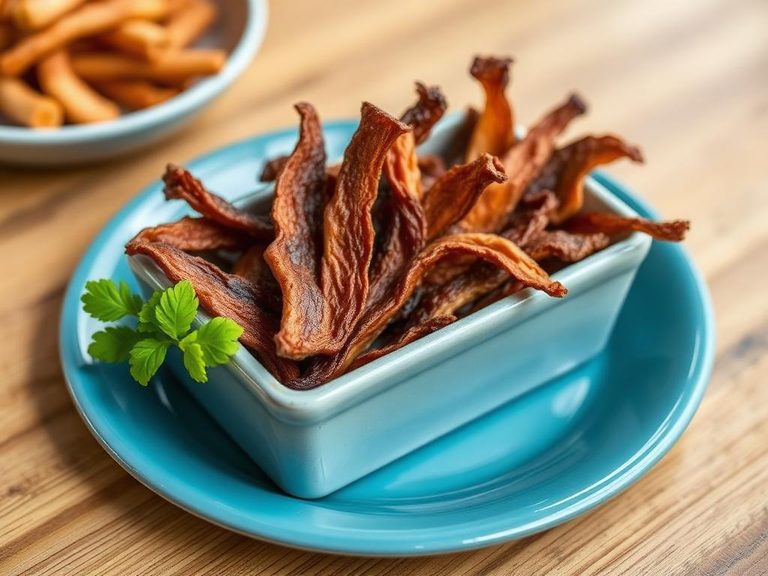
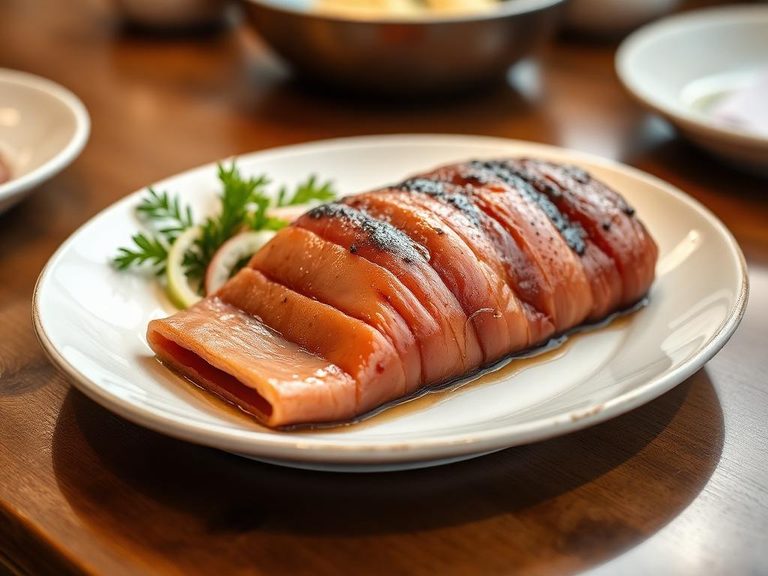
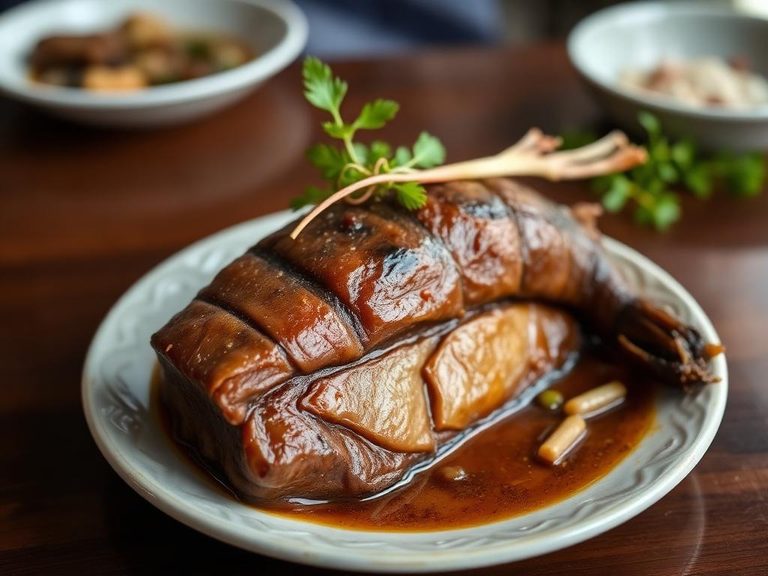
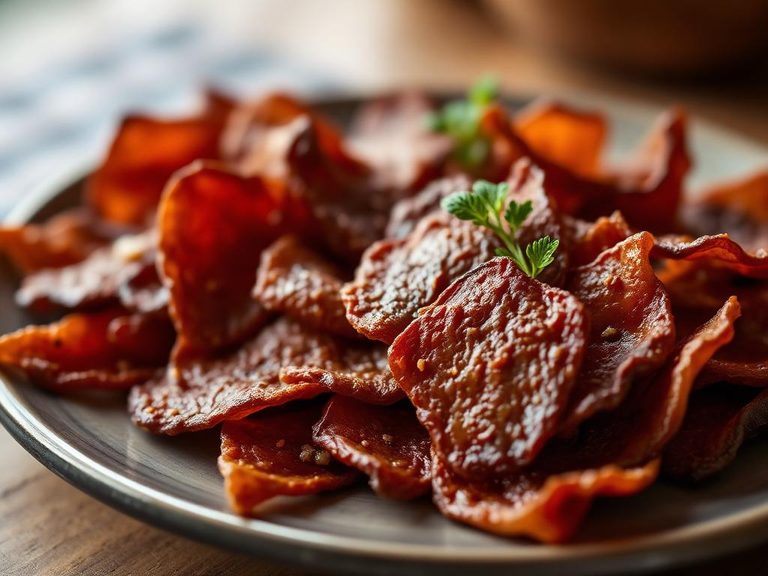
Dried sea lion meat strips are a traditional, high-protein preserved food made by salting and air-drying sea lion muscle meat. This dish originates from Arctic and sub-Arctic coastal communities, particularly among Inuit and other Indigenous peoples of the North Atlantic and Pacific coasts, where it served as a vital source of nutrition during long winters.
🍽️ Nutrition at a glance
This dish is extremely high in protein and fat, with virtually no carbohydrates, providing essential calories and nutrients in harsh environments. A typical serving offers a significant amount of iron, zinc, and B vitamins, particularly B12.
Nutrition breakdown
| Calories | 180 kcal |
| Protein | 22 g |
| Carbs | 0 g |
| Fat | 10 g |
| Fiber | 0 g |
| Sugar | 0 g |
| Sodium | 450 mg |
| Vitamin B12 | 8.0 mcg |
| Iron | 3.5 mg |
| Zinc | 4.0 mg |
| Niacin (B3) | 5.0 mg |
| Phosphorus | 200 mg |
| Selenium | 35 mcg |
| Potassium | 250 mg |
| Vitamin D | 2.0 mcg |
Per 1 piece (approximately 50 g) · estimated, varies by recipe
💡 What's interesting
Culturally, this food represents a deep connection to marine hunting traditions and the practice of preserving food for survival. Nutritionally, its very high fat content, including omega-3 fatty acids from the sea lion's marine diet, made it an exceptionally energy-dense food for cold climates.