Dried and smoked strips
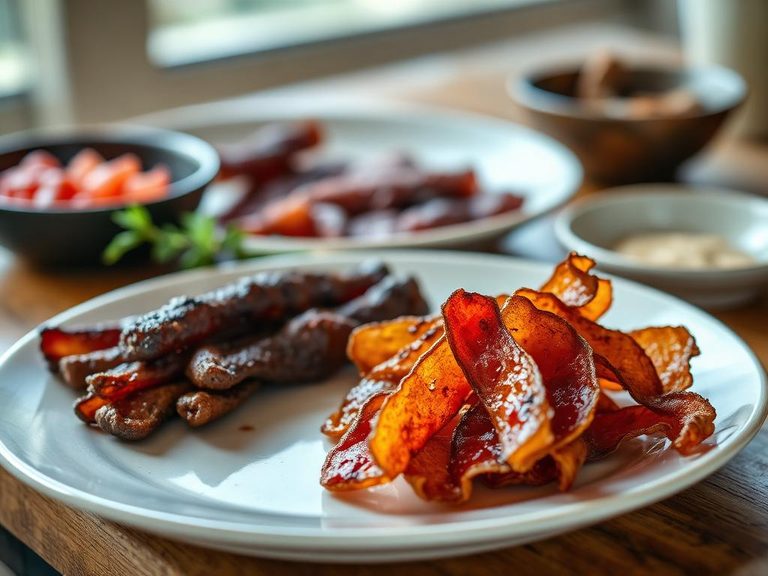
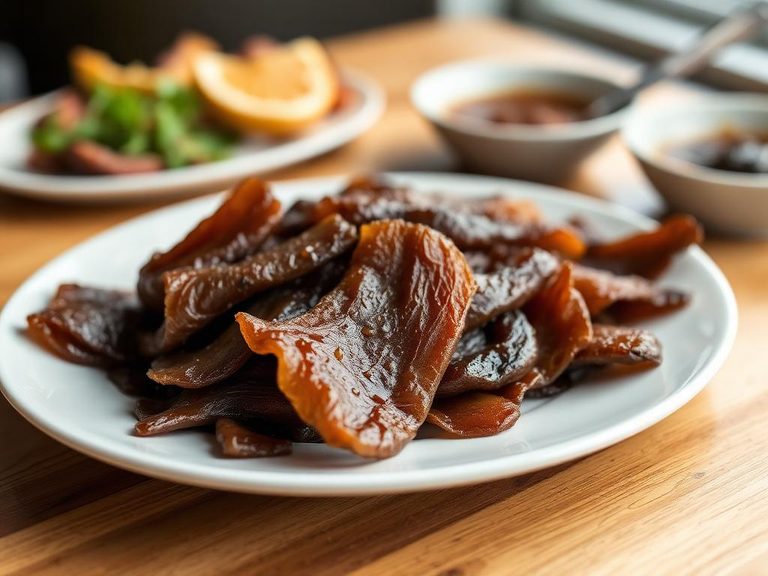
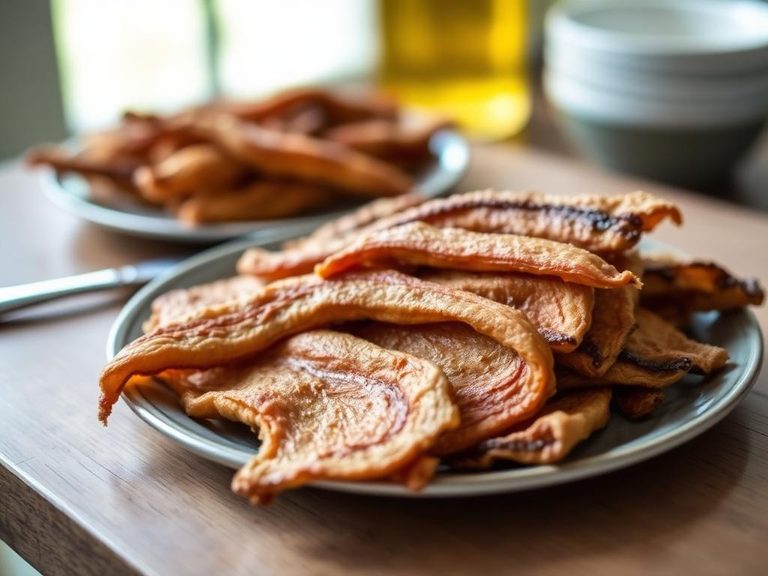
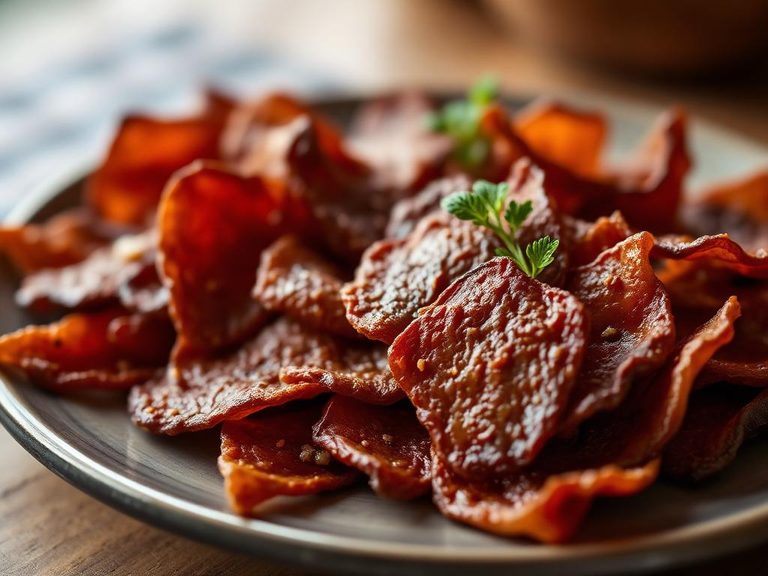
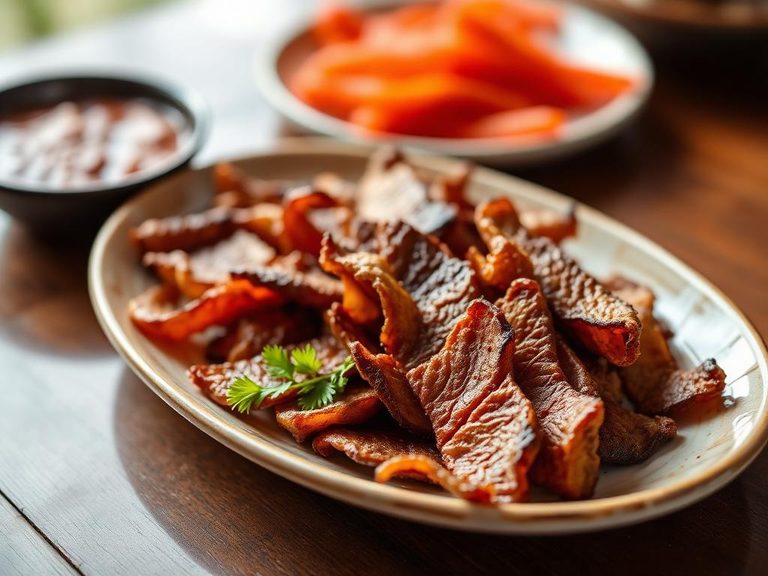
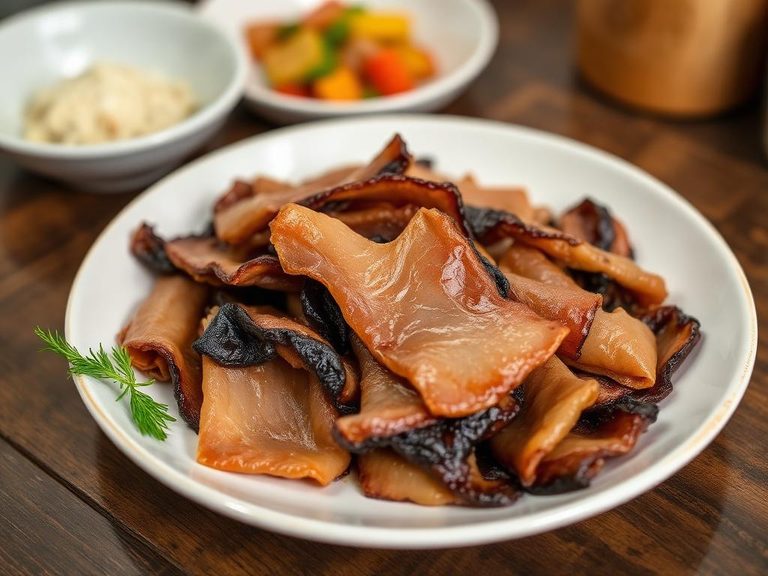
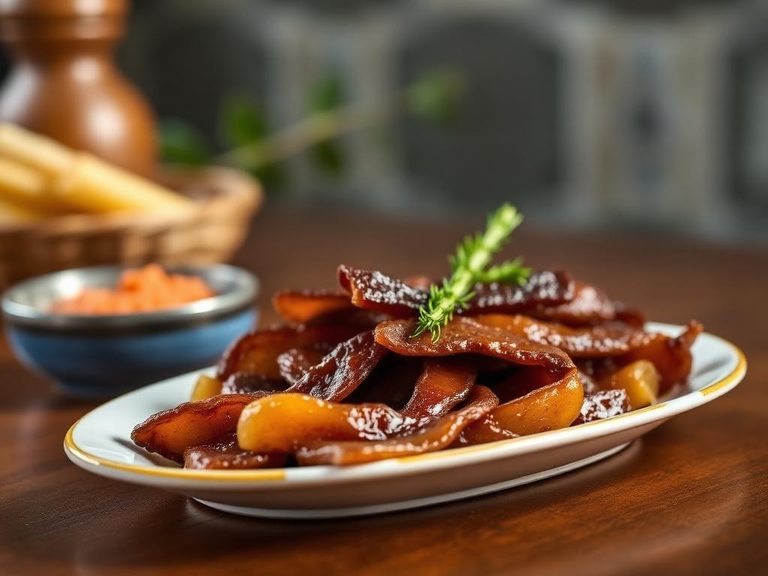
Dried and smoked strips, often referred to as jerky, are lean cuts of meat (commonly beef, pork, or game) that have been cured with salt and spices, then slowly dehydrated and smoked. This ancient preservation method originated in various cultures worldwide, from the Americas to Central Asia, to create a lightweight, shelf-stable, and protein-rich food for travel and storage.
🍽️ Nutrition at a glance
This dish is extremely high in protein and low in carbohydrates, making it a nutrient-dense snack. A typical serving provides a substantial amount of iron, zinc, and B vitamins, with a calorie count that varies widely based on the meat used and added sugars or fats.
Nutrition breakdown
| Calories | 116 kcal |
| Protein | 9.4 g |
| Carbs | 3.1 g |
| Fat | 7.3 g |
| Fiber | 0.5 g |
| Sugar | 2.5 g |
| Sodium | 485 mg |
| Iron | 1.4 mg |
| Zinc | 2.3 mg |
| Niacin (B3) | 4.2 mg |
| Vitamin B6 | 0.2 mg |
| Vitamin B12 | 0.8 mcg |
| Phosphorus | 120 mg |
| Selenium | 10.5 mcg |
| Potassium | 180 mg |
Per 1 ounce (28 g) · estimated, varies by recipe
💡 What's interesting
Nutritionally, the smoking process not only adds flavor but also contains compounds that have antimicrobial properties, historically aiding in preservation. Culturally, it's a foundational food for many nomadic and frontier societies, representing a practical solution to the need for portable, non-perishable sustenance.