

Cultured Buttermilk Soup
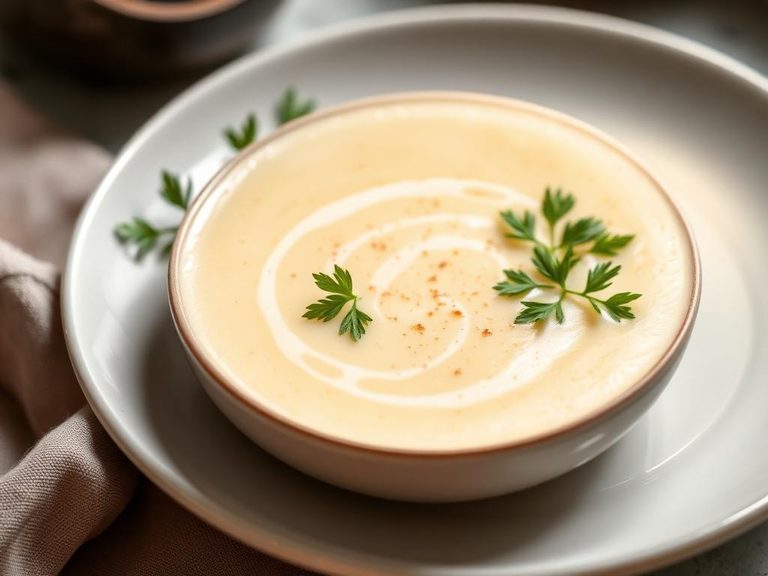
Cultured Buttermilk Soup is a traditional, refreshing chilled soup, most popular in Eastern Europe and Russia, known as 'Okroshka' or 'Botvinya'. It is typically made with a base of tangy cultured buttermilk or kefir, mixed with finely chopped fresh vegetables like cucumbers, radishes, and spring onions, and often includes boiled potatoes, eggs, and cooked meat. It's a staple summer dish, valued for its cooling properties and savory, slightly sour flavor profile.
🍽️ Nutrition at a glance
This soup is generally moderate in protein and fat, with a lower carbohydrate content, especially if made without potatoes. It provides a good source of calcium, probiotics, and vitamins like Vitamin K and C, with a typical serving containing around 150-250 calories.
Nutrition breakdown
| Calories | 180 kcal |
| Protein | 8 g |
| Carbs | 15 g |
| Fat | 9 g |
| Fiber | 2 g |
| Sugar | 5 g |
| Sodium | 450 mg |
| Calcium | 200 mg |
| Potassium | 350 mg |
| Vitamin B12 | 0.5 mcg |
| Vitamin C | 15 mg |
| Vitamin K | 25 mcg |
| Phosphorus | 150 mg |
| Riboflavin (B2) | 0.2 mg |
| Selenium | 10 mcg |
Per 1 cup (240 g) · estimated, varies by recipe
💡 What's interesting
Culturally, it's a quintessential summer dish in Slavic cuisines, often served at room temperature or chilled to combat heat. Nutritionally, the live cultures in buttermilk or kefir offer probiotic benefits for gut health, while the mix of fresh vegetables provides a good array of vitamins and minerals.
🍽️ Related dishes







AI estimate may be inaccurate · Terms