

Cocktail Garnish
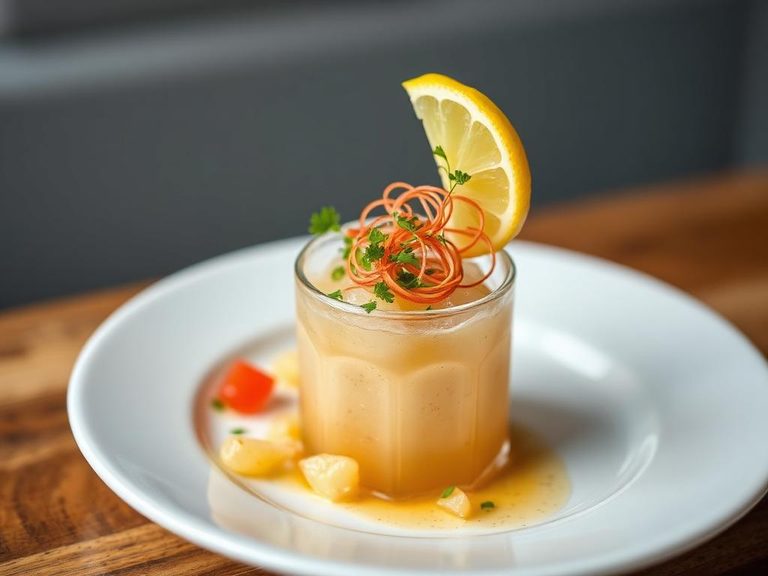
Cocktail garnish refers to decorative and flavorful additions like olives, cherries, citrus twists, or pickles that enhance a drink's presentation and taste. These small, often edible items are integral to classic cocktails like the Martini or Manhattan. They originated in the 19th-century bar culture of Europe and the United States.
🍽️ Nutrition at a glance
Cocktail garnishes are typically low in calories, fat, and protein, providing minimal nutritional value. They can offer small amounts of vitamins (like vitamin C from citrus) or minerals (like sodium from olives), but are primarily used for flavor and aesthetics rather than nutrition.
Nutrition breakdown
| Calories | 10 kcal |
| Protein | 0.1 g |
| Carbs | 2 g |
| Fat | 0 g |
| Fiber | 0.2 g |
| Sugar | 1.5 g |
| Sodium | 150 mg |
| Sodium | 150 mg |
| Vitamin C | 1 mg |
| Potassium | 10 mg |
| Iron | 0.1 mg |
| Calcium | 5 mg |
Per 1 typical garnish (e.g., 1 olive, 1 cherry, or 1 twist, approximately 5-10 g) · estimated, varies by recipe
💡 What's interesting
Culturally, garnishes are a form of edible art that can signal a cocktail's style or era, such as the olive for a savory Martini or the cherry for a sweet Old Fashioned. Nutritionally, they often add sodium or sugar without significant health benefits, making them a fun but non-essential component.
🍽️ Related dishes
AI estimate may be inaccurate · Terms