

Chicken Tenders / Fingers

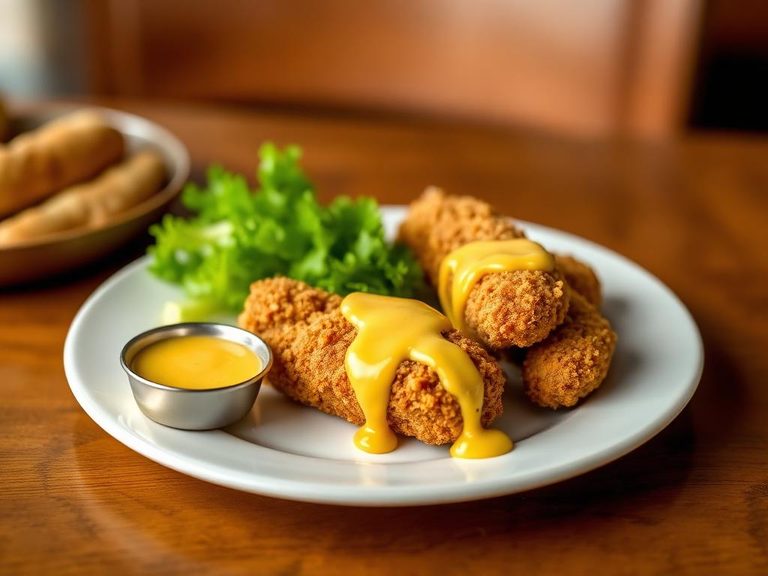
Chicken tenders, also known as chicken fingers, are strips of chicken breast meat that are breaded and deep-fried or baked until golden and crispy. They are a staple of American comfort food, often served with dipping sauces like honey mustard, barbecue, or ranch. The dish is believed to have originated in the United States, with popular claims tracing it to New England in the 1970s.
🍳 View the full Chicken Tenders / Fingers recipe →
🍽️ Nutrition at a glance
Chicken tenders are a high-protein food, with a typical serving providing around 25-30 grams of protein, but they are also high in fat and calories due to the breading and frying process, generally ranging from 300-500 calories per serving. They offer key nutrients like B vitamins and minerals such as selenium, but the nutritional profile can vary widely based on preparation method.
Nutrition breakdown
| Calories | 360 kcal |
| Protein | 22 g |
| Carbs | 24 g |
| Fat | 18 g |
| Fiber | 1 g |
| Sugar | 2 g |
| Sodium | 680 mg |
| Iron | 1.2 mg |
| Calcium | 40 mg |
| Potassium | 280 mg |
| Phosphorus | 180 mg |
| Vitamin B6 | 0.3 mg |
| Niacin (B3) | 5 mg |
| Selenium | 18 mcg |
| Zinc | 1.5 mg |
Per 4 pieces (150 g) · estimated, varies by recipe
💡 What's interesting
Culturally, chicken tenders have become a ubiquitous menu item in American schools, restaurants, and homes, symbolizing accessible, kid-friendly comfort food. Nutritionally, their appeal lies in their versatility, as they can be adapted to healthier cooking methods like air-frying or baking, and served with nutrient-rich sides to balance the meal.
🍽️ Related dishes







AI estimate may be inaccurate · Terms