

Bolo de Rolo
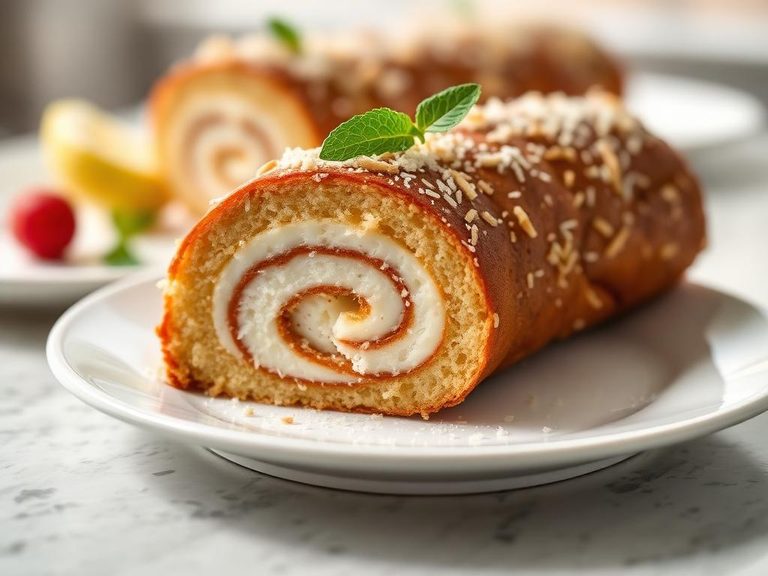
Bolo de Rolo is a traditional Brazilian dessert from the state of Pernambuco, consisting of thin, delicate layers of sponge cake rolled with a sweet guava paste filling (goiabada). It is often compared to a Swiss roll but is distinguished by its many paper-thin layers and the vibrant, fruity center. The cake is a beloved sweet treat, especially during festive occasions and afternoon coffee breaks.
🍽️ Nutrition at a glance
This dessert is primarily a source of carbohydrates from the cake and sugar, with a moderate amount of fat from eggs and butter. It provides a quick energy boost and contains some iron and calcium, but is generally considered an indulgent treat with a calorie count around 250-300 kcal per slice.
Nutrition breakdown
| Calories | 280 kcal |
| Protein | 3.5 g |
| Carbs | 38 g |
| Fat | 13 g |
| Fiber | 1.5 g |
| Sugar | 22 g |
| Sodium | 95 mg |
| Potassium | 120 mg |
| Calcium | 30 mg |
| Iron | 1.2 mg |
| Vitamin A | 80 µg |
| Vitamin C | 1 mg |
| Magnesium | 15 mg |
| Phosphorus | 50 mg |
| Zinc | 0.4 mg |
Per 1 slice (approx. 80 g) · estimated, varies by recipe
💡 What's interesting
Culturally, Bolo de Rolo is a symbol of Pernambuco's culinary heritage, with its origins tracing back to Portuguese convent sweets adapted with local ingredients like guava. Its unique preparation involves baking extremely thin cake layers individually and then stacking and rolling them with the filling, creating a beautiful spiral pattern when sliced.
🍽️ Related dishes


AI estimate may be inaccurate · Terms