

Blini

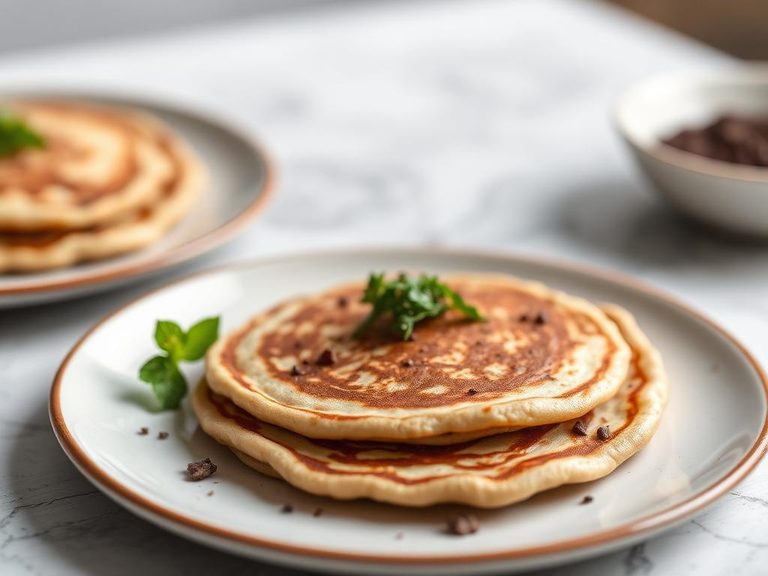
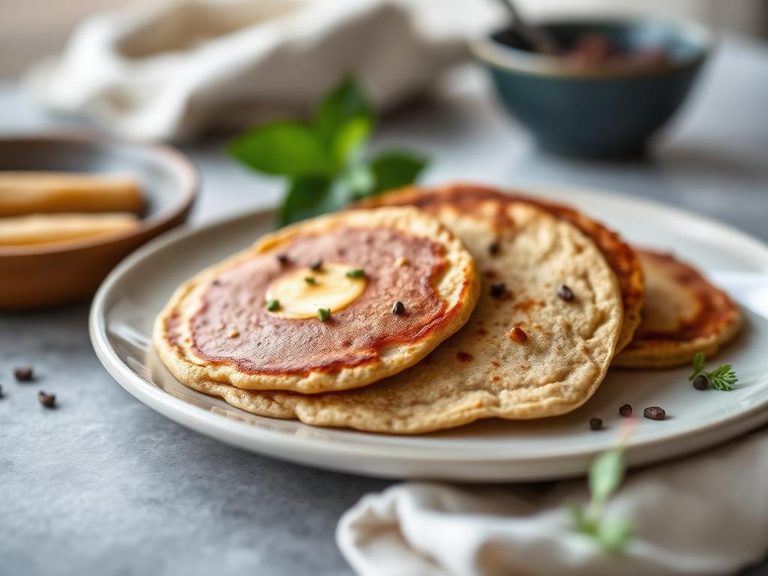
Blini are traditional Eastern European thin pancakes, typically made from a batter of buckwheat or wheat flour, eggs, and milk or kefir, resulting in a soft, spongy texture. They are often served with savory toppings like smoked salmon, sour cream, and caviar, or sweet options like honey and fresh berries. Originating from Russia and Ukraine, they hold deep cultural significance and are a staple in many Slavic cuisines.
🍳 View the full Blini recipe →
🍽️ Nutrition at a glance
Blini are primarily a source of carbohydrates from the flour, with moderate protein from eggs and dairy, and fat depending on the cooking method and toppings. A typical serving of two medium blini provides roughly 200-300 calories, along with nutrients like calcium, iron, and B vitamins.
Nutrition breakdown
| Calories | 100 kcal |
| Protein | 3.5 g |
| Carbs | 14 g |
| Fat | 3.5 g |
| Fiber | 0.5 g |
| Sugar | 1.5 g |
| Sodium | 180 mg |
| Calcium | 45 mg |
| Iron | 0.8 mg |
| Potassium | 65 mg |
| Phosphorus | 60 mg |
| Vitamin B1 (Thiamin) | 0.08 mg |
| Vitamin B2 (Riboflavin) | 0.06 mg |
| Vitamin B12 | 0.2 mcg |
| Folate | 15 mcg |
Per 1 medium blini (about 50 g) · estimated, varies by recipe
💡 What's interesting
Culturally, blini are central to Maslenitsa, a Slavic festival celebrating the end of winter, where they symbolize the sun. Nutritionally, using buckwheat flour adds a boost of fiber and minerals, making them a more nutrient-dense option compared to standard pancakes.
🍽️ Related dishes




AI estimate may be inaccurate · Terms