

Agua de coco
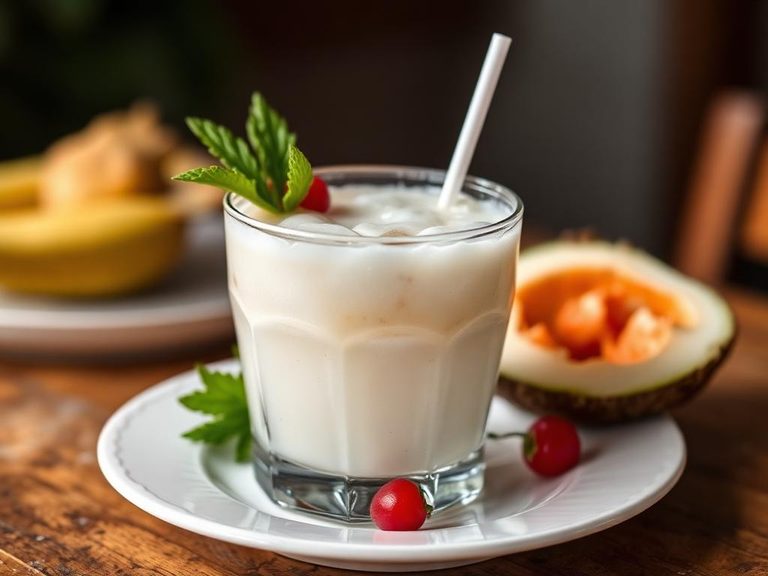
Agua de coco is a refreshing Brazilian street drink made from the natural water of young green coconuts, often served directly in the shell with a straw. It's a simple, hydrating beverage with no added ingredients, and is a ubiquitous sight on beaches and from street vendors throughout Brazil.
🍽️ Nutrition at a glance
It is naturally low in fat and protein, but contains carbohydrates primarily from natural sugars like glucose and fructose. A typical serving provides essential electrolytes like potassium and magnesium, with a calorie count ranging from 40 to 70 calories.
Nutrition breakdown
| Calories | 46 kcal |
| Protein | 0.5 g |
| Carbs | 8.9 g |
| Fat | 0.5 g |
| Fiber | 1.1 g |
| Sugar | 6.3 g |
| Sodium | 105 mg |
| Potassium | 600 mg |
| Sodium | 105 mg |
| Magnesium | 60 mg |
| Calcium | 58 mg |
| Phosphorus | 48 mg |
| Manganese | 0.65 mg |
| Vitamin C | 2.4 mg |
| Folate | 20 µg |
Per 1 cup (240 g) · estimated, varies by recipe
💡 What's interesting
Culturally, it's an iconic symbol of Brazilian beach life and a go-to natural rehydrator. Nutritionally, its electrolyte profile makes it a popular natural alternative to commercial sports drinks for hydration.
🍽️ Related dishes







AI estimate may be inaccurate · Terms