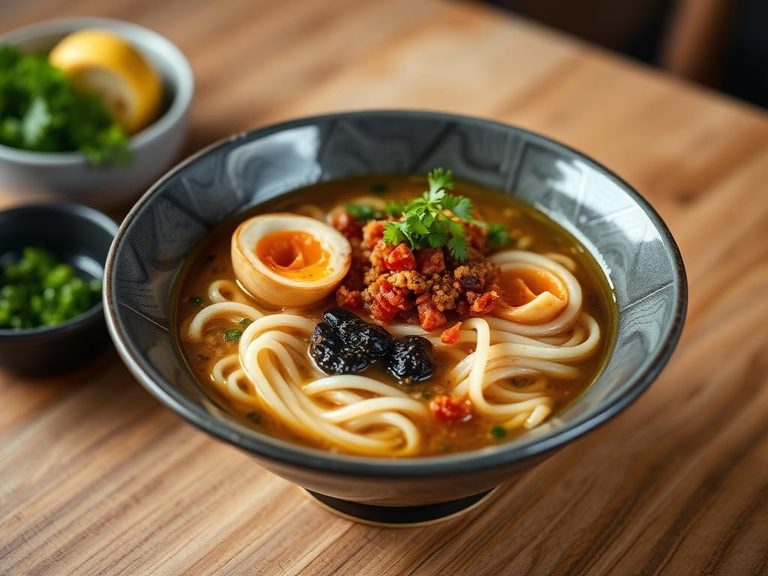
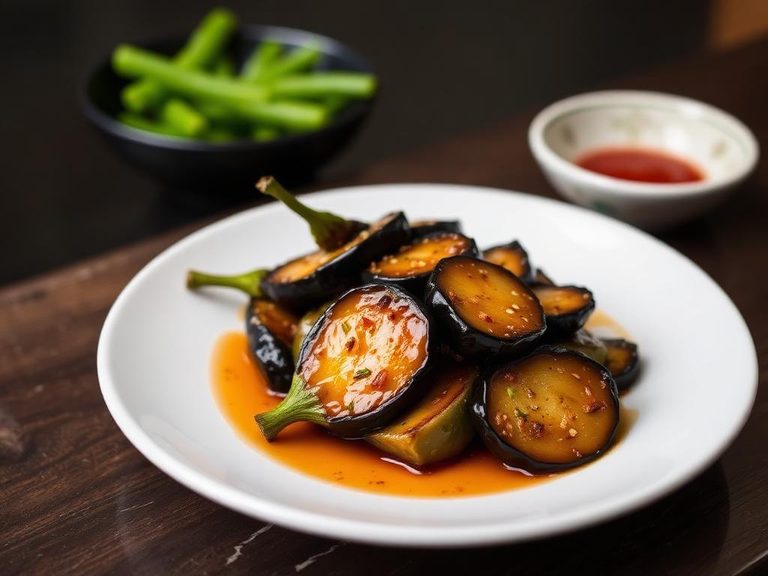
Added to miso soup
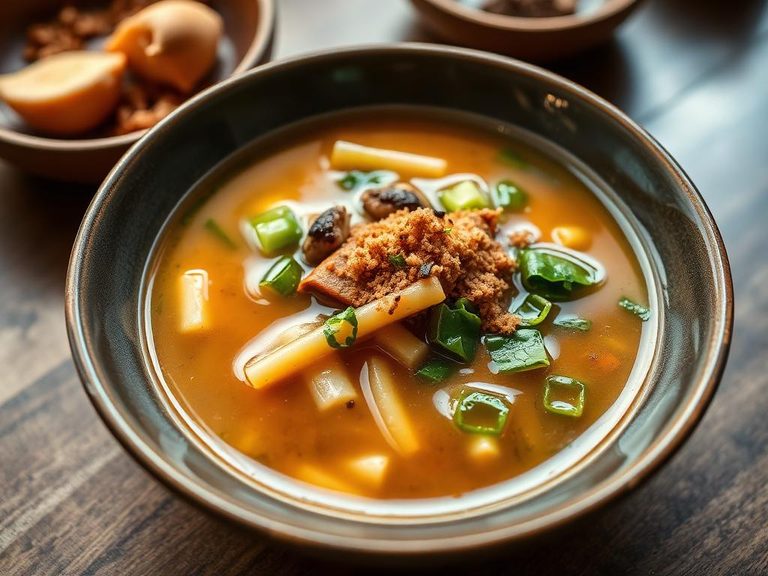
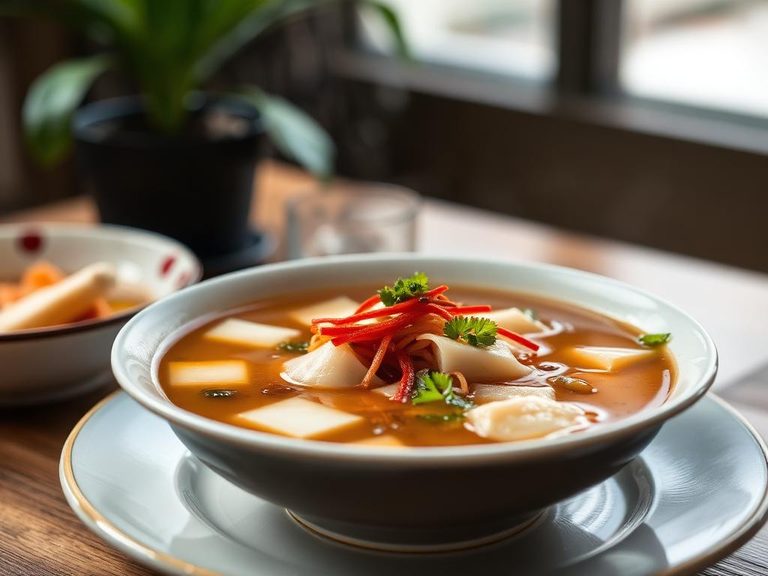
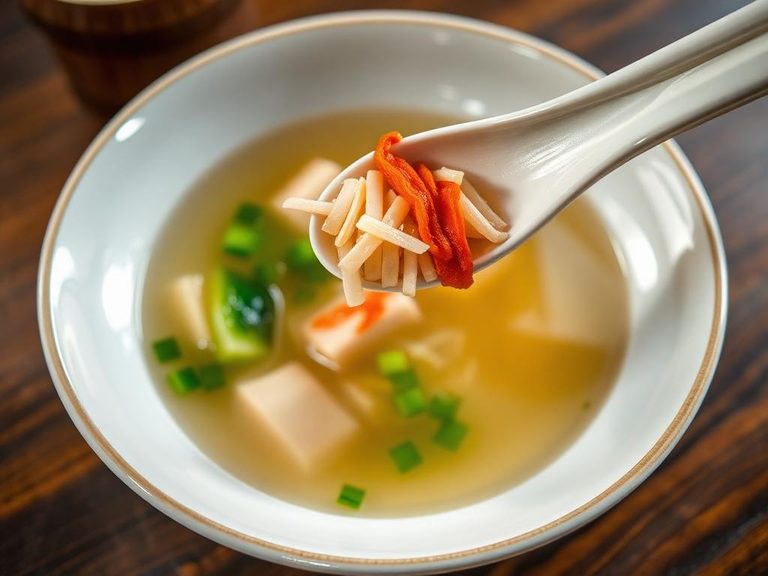
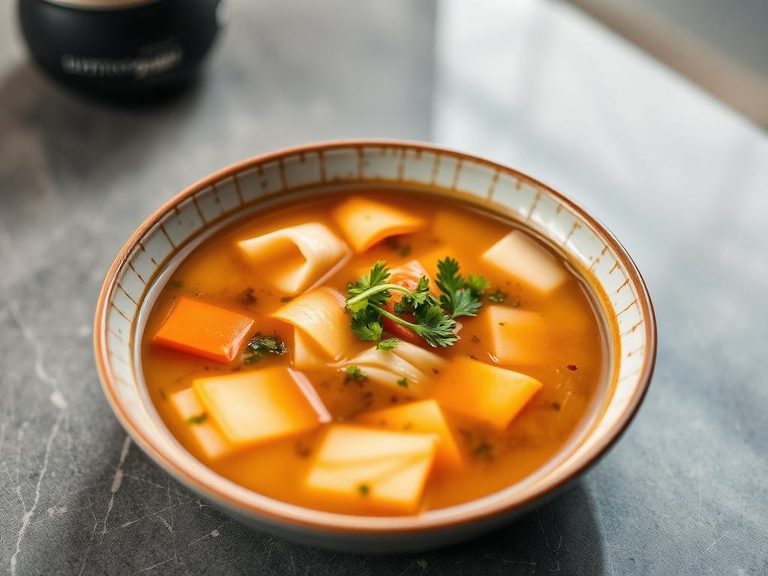
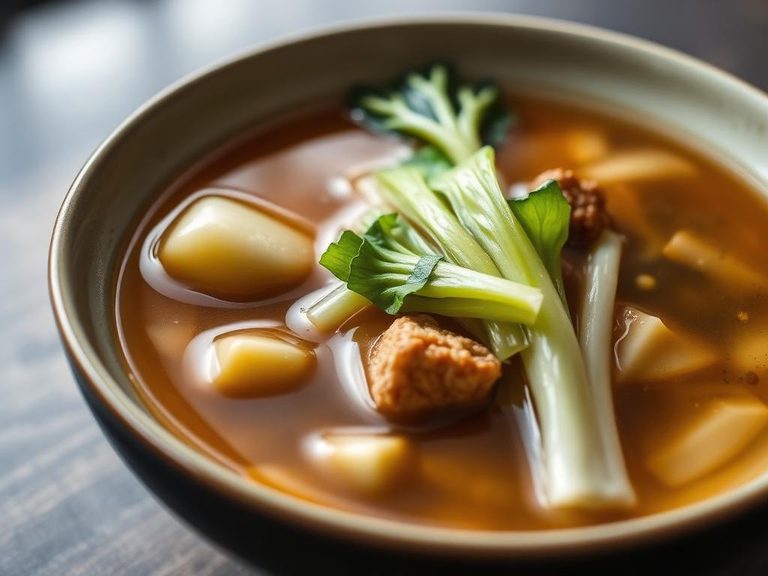
Miso soup is a traditional Japanese soup made from a base of dashi (stock) and miso paste, often containing ingredients like tofu, wakame seaweed, and green onions. It is a staple of Japanese cuisine, typically served as a side dish with meals. The dish is known for its savory, umami flavor and can be customized with various ingredients like vegetables, mushrooms, or seafood.
🍽️ Nutrition at a glance
Miso soup is generally low in calories, with a typical serving containing around 30-50 calories. It provides protein from tofu and miso, along with essential minerals like potassium and magnesium from seaweed and vegetables, while being low in fat and carbohydrates.
Nutrition breakdown
| Calories | 45 kcal |
| Protein | 3 g |
| Carbs | 6 g |
| Fat | 1 g |
| Fiber | 1.5 g |
| Sugar | 1 g |
| Sodium | 800 mg |
| Sodium | 800 mg |
| Potassium | 250 mg |
| Manganese | 0.4 mg |
| Copper | 0.1 mg |
| Zinc | 0.5 mg |
| Phosphorus | 40 mg |
| Vitamin B12 | 0.2 mcg |
| Vitamin K | 5 mcg |
Per 1 cup (240 g) · estimated, varies by recipe
💡 What's interesting
Miso soup is culturally significant in Japan, often served as part of a traditional breakfast or as a comforting meal. Nutritionally, it is unique for its probiotic benefits from fermented miso paste, which supports gut health, and its high umami content that enhances flavor without added salt.