Added to miso soup or other broths
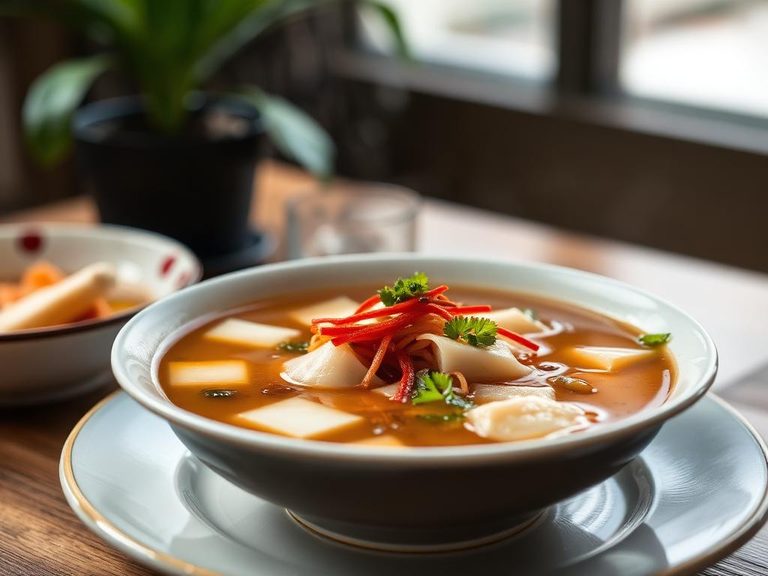
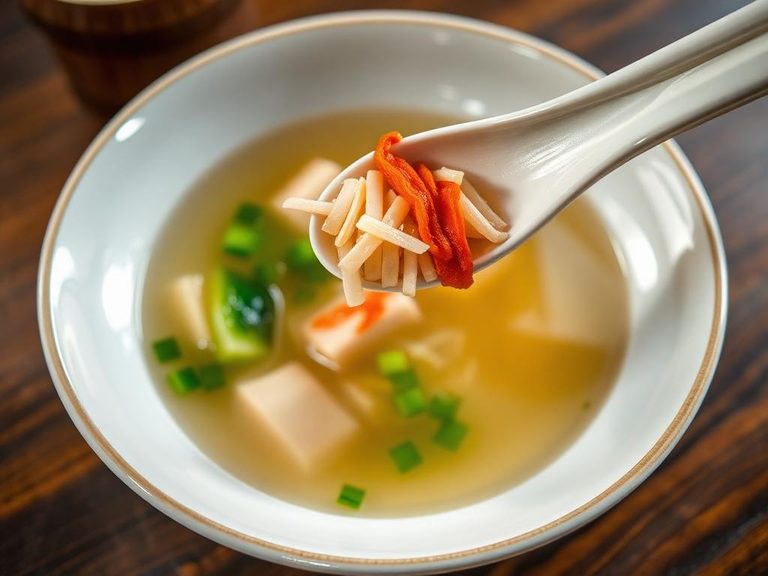
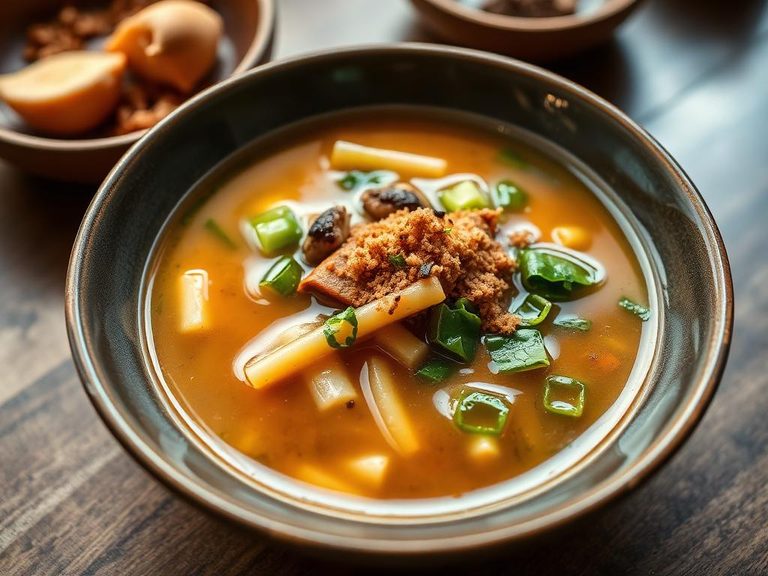
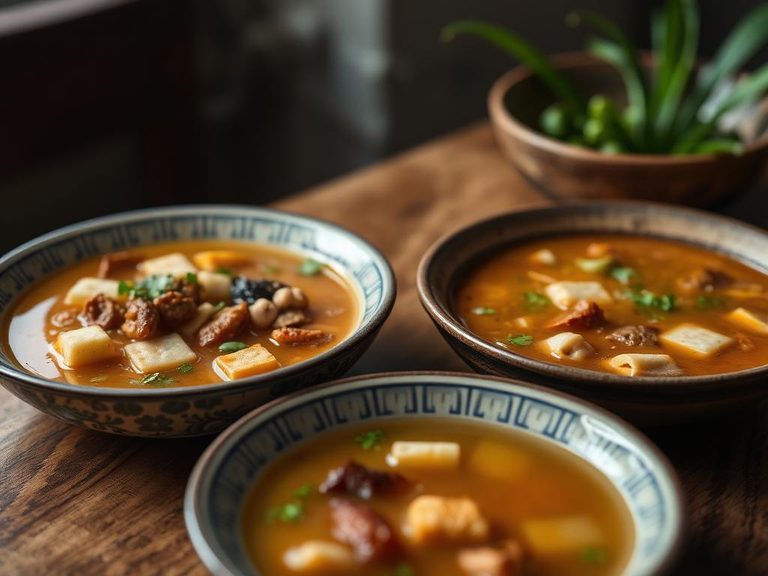
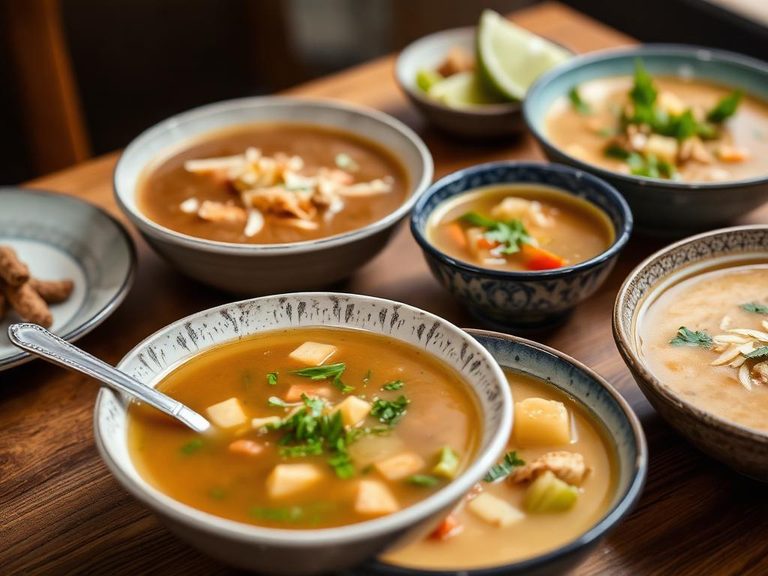
This refers to a category of ingredients commonly added to miso soup or other broths, such as tofu, wakame seaweed, scallions, or clams. These additions transform a simple broth into a more substantial and flavorful dish. The practice is fundamental in Japanese cuisine, where miso soup is a staple served daily.
🍽️ Nutrition at a glance
These additions are generally low in calories and fat, with some providing plant-based protein (like tofu) or being a source of fiber and minerals (like seaweed). A typical bowl of miso soup with common additions is a light, nutrient-dense dish, often ranging from 50-100 calories per cup.
Nutrition breakdown
| Calories | 72 kcal |
| Protein | 5.8 g |
| Carbs | 6.2 g |
| Fat | 2.3 g |
| Fiber | 1.4 g |
| Sugar | 1.8 g |
| Sodium | 645 mg |
| Manganese | 0.5 mg |
| Copper | 0.2 mg |
| Zinc | 0.8 mg |
| Selenium | 7.2 mcg |
| Phosphorus | 98 mg |
| Potassium | 210 mg |
| Folate | 18 mcg |
| Vitamin K | 5.3 mcg |
Per 1 cup (240 g) of miso soup with tofu and wakame · estimated, varies by recipe
💡 What's interesting
Culturally, these ingredients are chosen for their 'umami' synergy with the fermented miso paste, creating a deeply savory flavor profile. Nutritionally, the combination provides a balanced mix of protein, minerals, and probiotics from the miso, making it a cornerstone of the healthy Japanese diet.