Miso-Glazed Eggplant
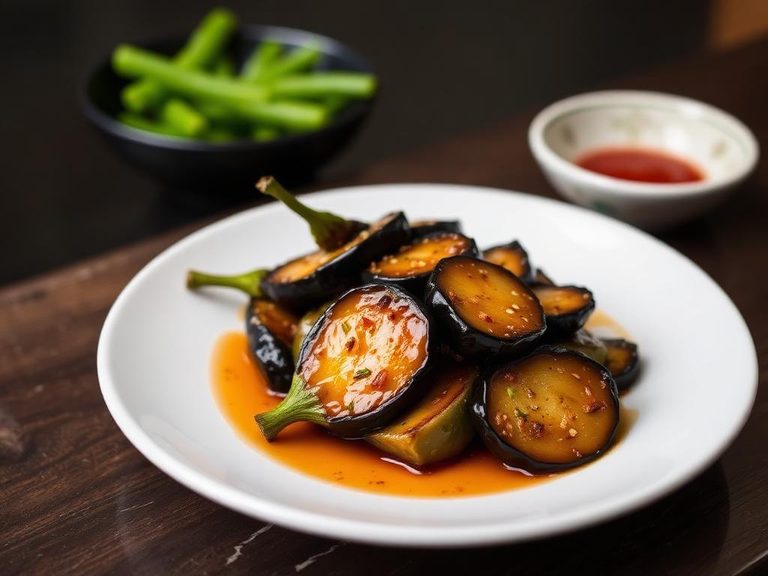
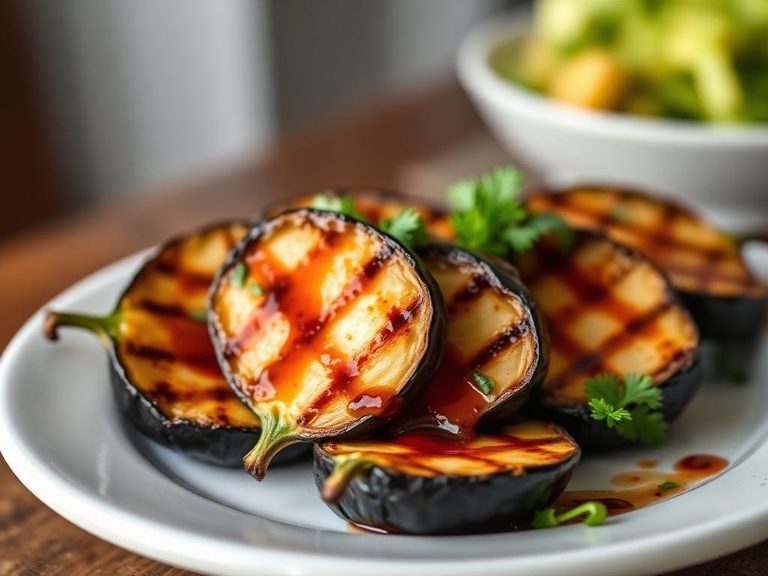
Miso-Glazed Eggplant, or Nasu Dengaku, is a classic Japanese dish featuring eggplant halves that are grilled or broiled until tender, then coated with a sweet and savory glaze made from miso paste, mirin, and sugar. The dish originates from Japan, where it's a popular side dish or appetizer, often enjoyed during summer when eggplants are at their peak.
🍽️ Nutrition at a glance
This dish is primarily a source of carbohydrates from the miso glaze and eggplant, with a moderate amount of fat from the cooking oil and miso. It provides key nutrients like fiber, vitamins B6 and C from the eggplant, and probiotics from the fermented miso, with a typical serving containing around 150-200 calories.
Nutrition breakdown
| Calories | 180 kcal |
| Protein | 4 g |
| Carbs | 22 g |
| Fat | 9 g |
| Fiber | 6 g |
| Sugar | 12 g |
| Sodium | 650 mg |
| Potassium | 450 mg |
| Vitamin C | 10 mg |
| Vitamin B6 | 0.2 mg |
| Manganese | 0.4 mg |
| Folate | 35 mcg |
| Magnesium | 30 mg |
| Copper | 0.2 mg |
| Iron | 1.5 mg |
Per 1 cup (240 g) · estimated, varies by recipe
💡 What's interesting
Culturally, Nasu Dengaku is a staple in Japanese home cooking and bento boxes, showcasing the art of balancing flavors like umami, sweet, and salty. Nutritionally, the fermentation process of miso adds beneficial probiotics, while eggplant's anthocyanins offer antioxidant benefits, making it a flavorful yet health-conscious choice.