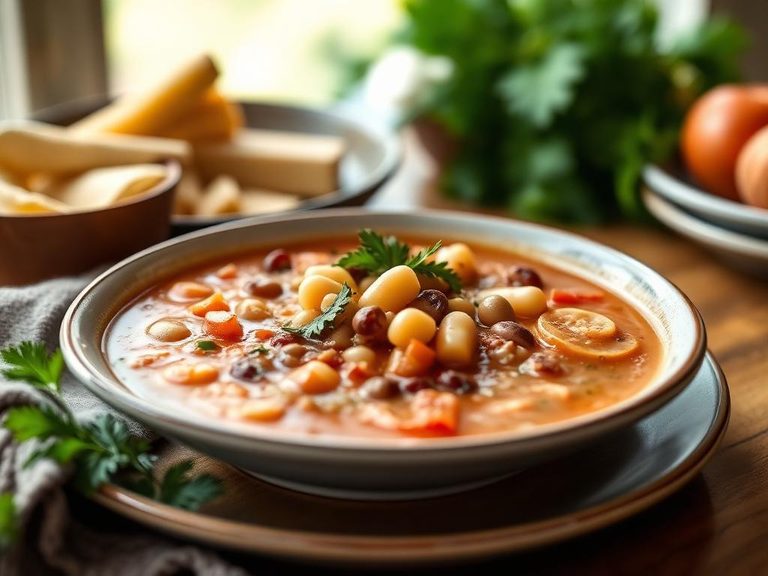
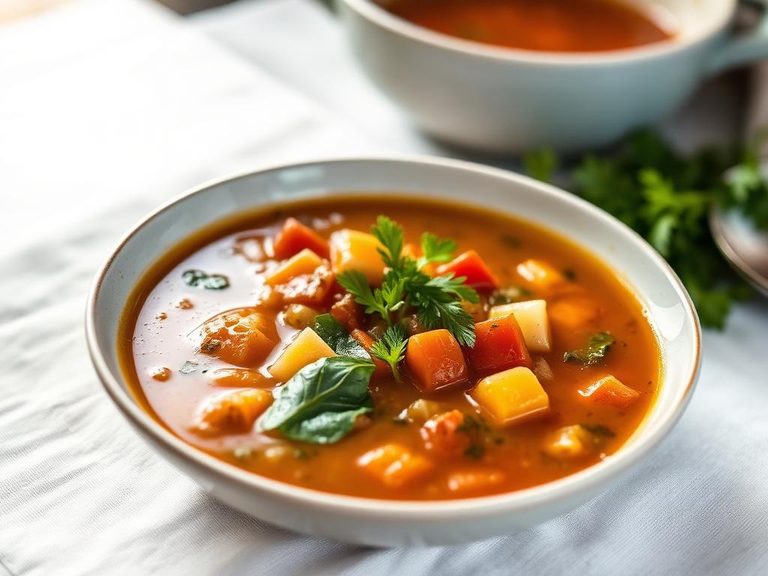
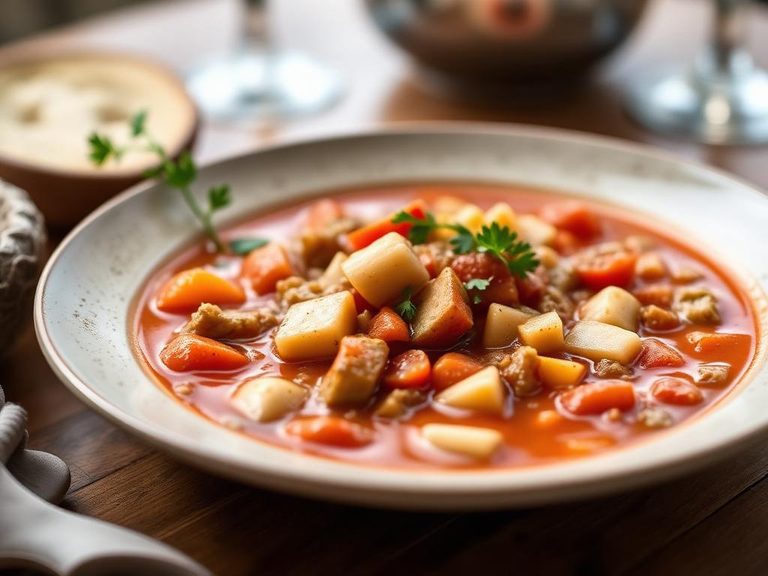
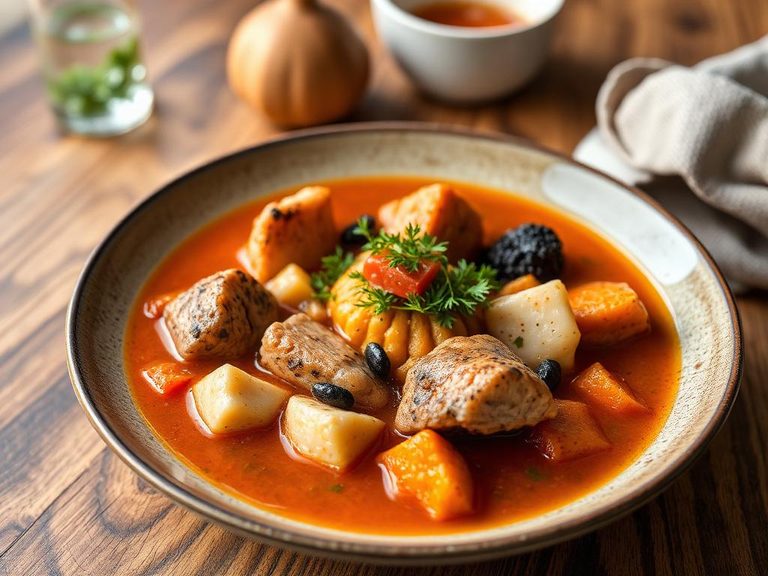
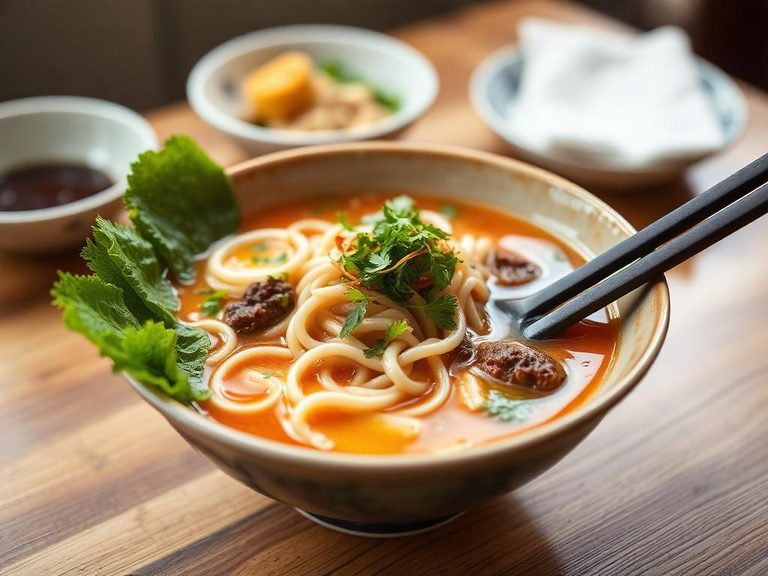
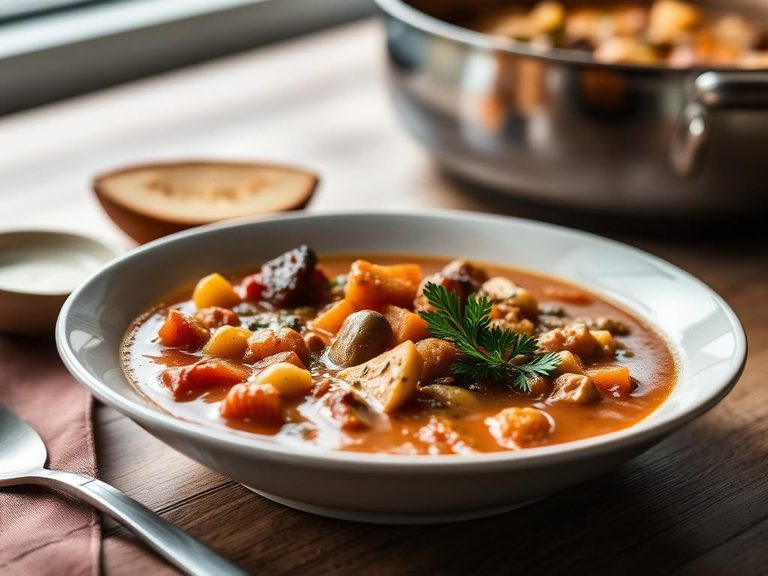
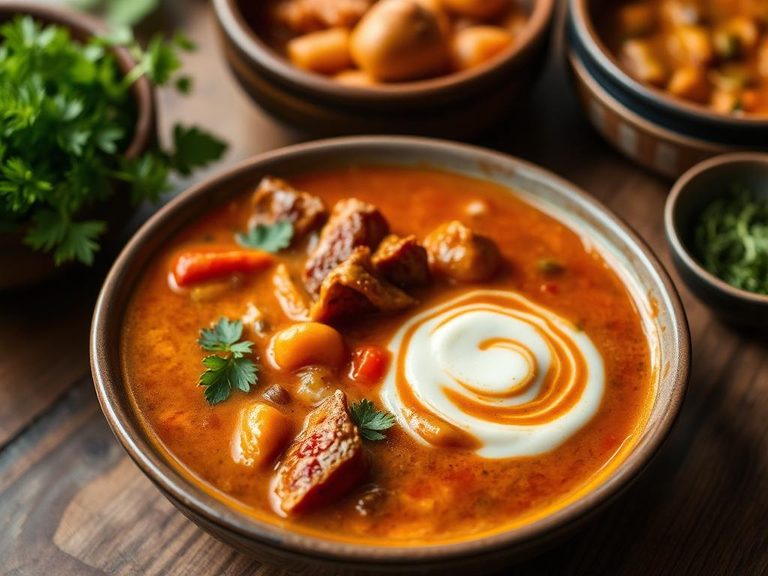
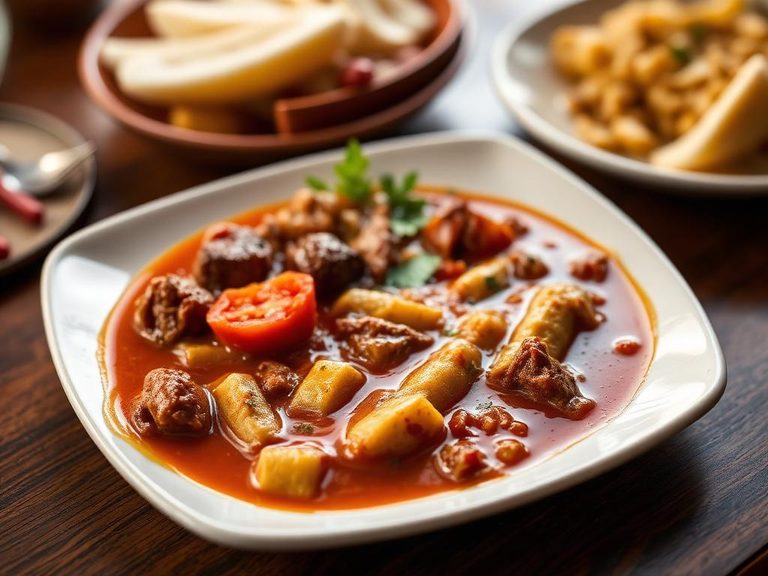
Added to minestrone or vegetable soups
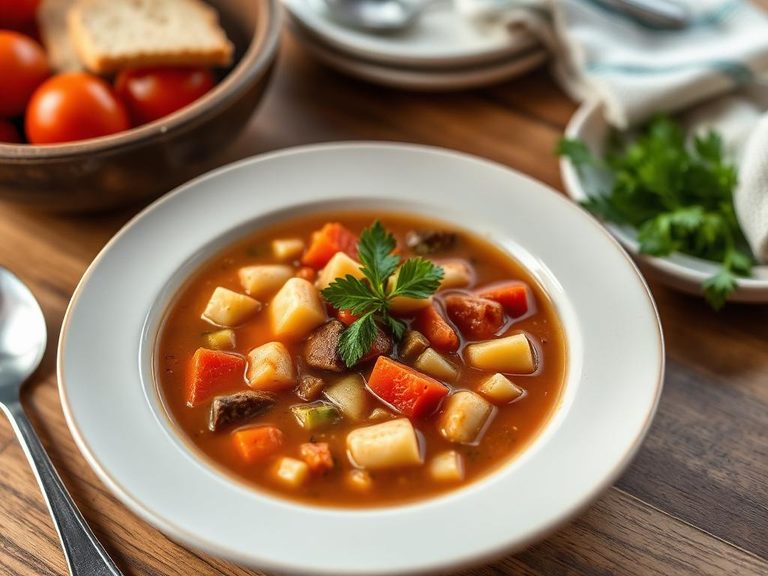
This refers to the practice of adding a variety of vegetables, legumes, and sometimes pasta or grains to a minestrone or vegetable soup base. Typical ingredients include tomatoes, onions, carrots, celery, beans (like cannellini or kidney), and leafy greens like kale or spinach. It is a staple of Italian home cooking, representing a hearty, rustic, and resourceful approach to creating a nourishing meal.
🍽️ Nutrition at a glance
Minestrone is a high-fiber, nutrient-dense soup that is generally moderate in carbohydrates from beans and vegetables, low in fat, and provides a good amount of plant-based protein. A typical serving offers a broad spectrum of vitamins (like A, C, K) and minerals (like potassium and iron), with a calorie ballpark of 150-250 kcal per serving.
Nutrition breakdown
| Calories | 180 kcal |
| Protein | 9 g |
| Carbs | 32 g |
| Fat | 2 g |
| Fiber | 8 g |
| Sugar | 6 g |
| Sodium | 480 mg |
| Vitamin A | 85 mcg RAE |
| Vitamin C | 25 mg |
| Vitamin K | 45 mcg |
| Potassium | 620 mg |
| Iron | 2.5 mg |
| Calcium | 80 mg |
| Folate | 110 mcg DFE |
| Manganese | 0.8 mg |
Per 1.5 cups (360 g) · estimated, varies by recipe
💡 What's interesting
Culturally, minestrone is the ultimate 'clean out the pantry' soup, with no fixed recipe, making it a symbol of Italian cucina povera (peasant cooking) and seasonal adaptability. Nutritionally, the combination of legumes and vegetables creates a complete protein profile and a low-glycemic meal that supports sustained energy.