Yokan with chestnuts
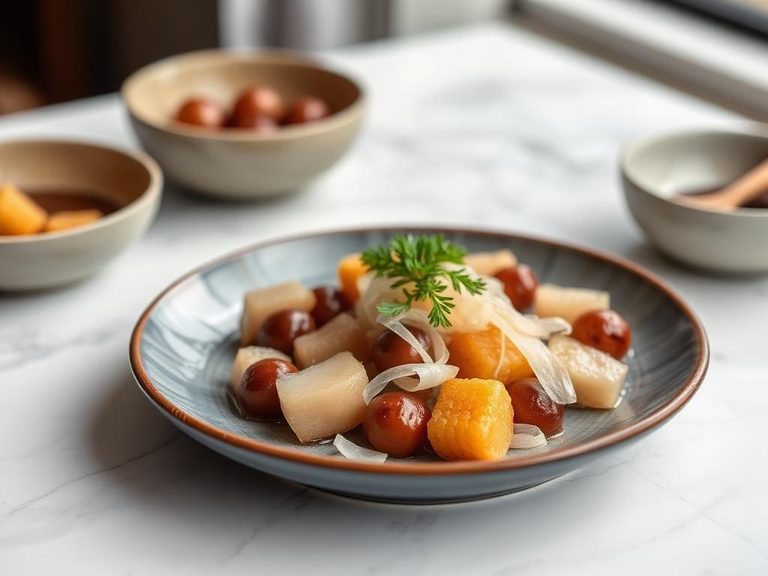
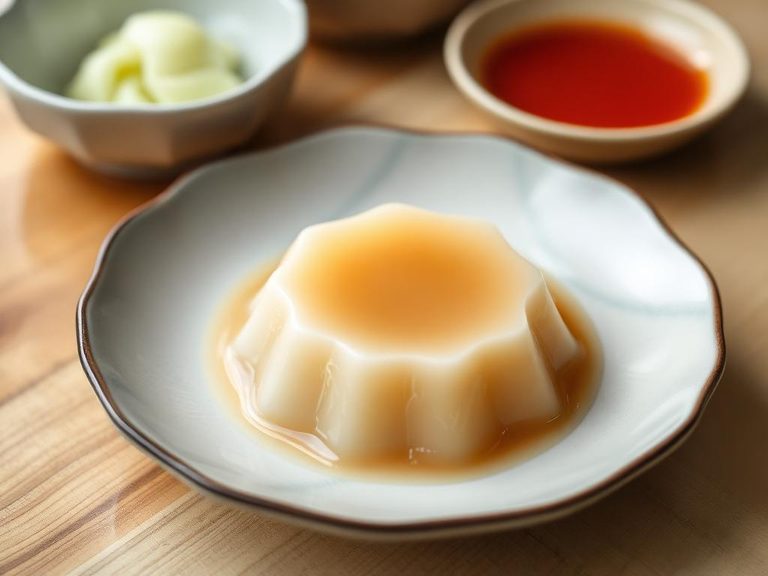
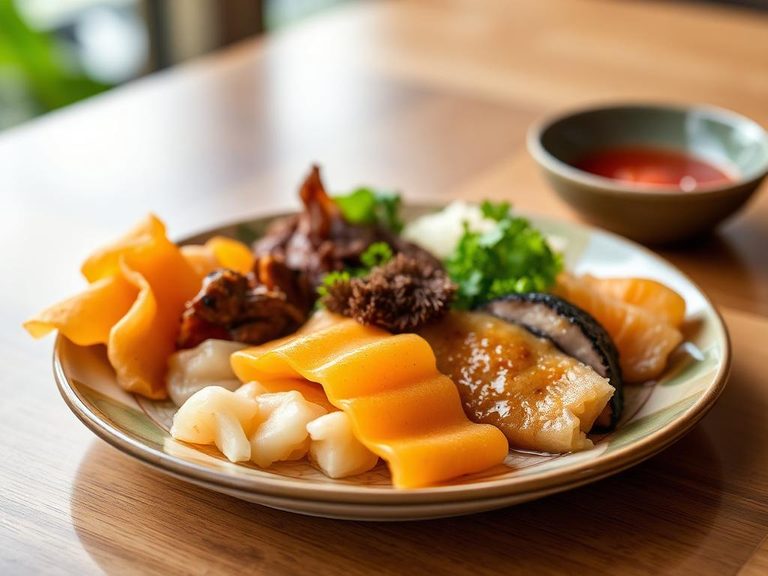
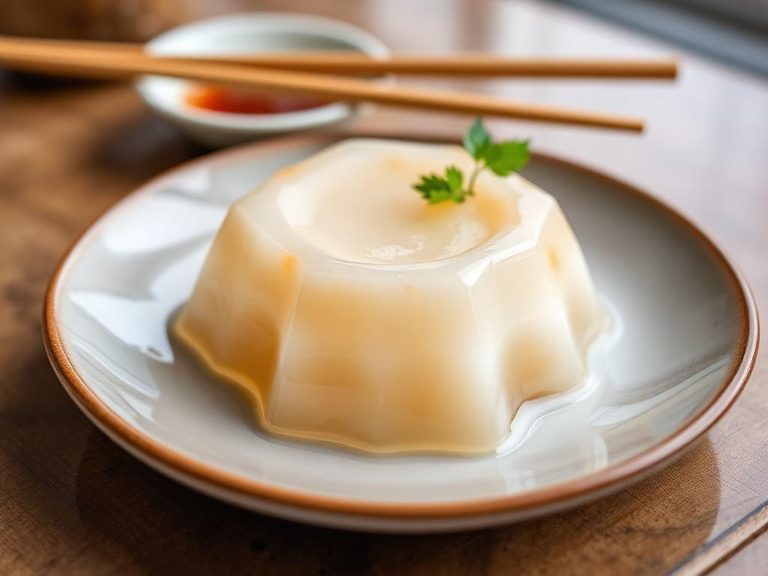
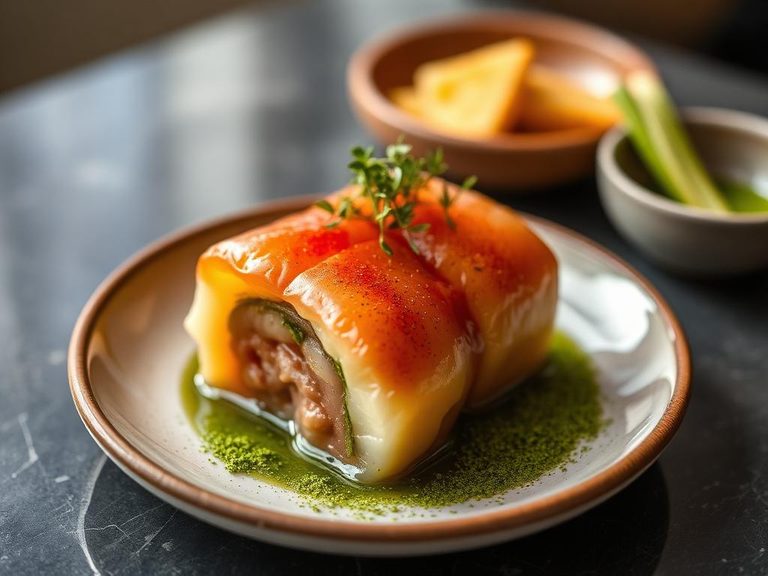
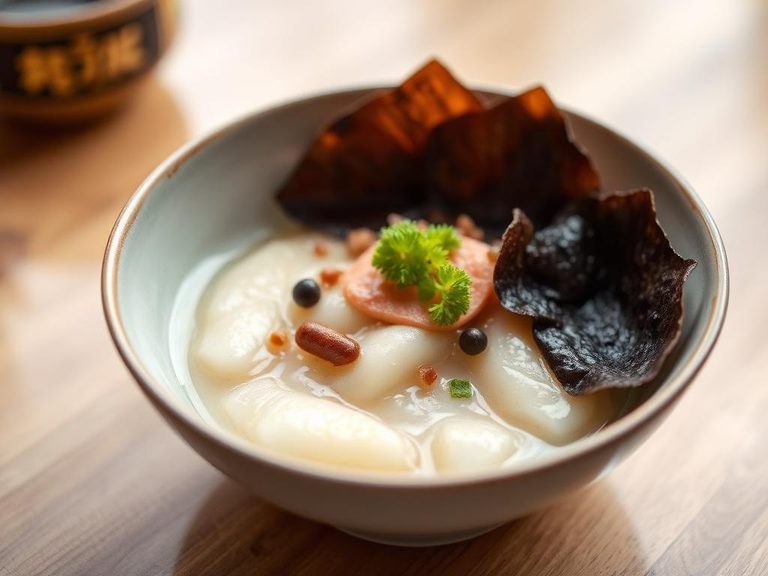
Yokan with chestnuts is a traditional Japanese wagashi (sweet confection), typically enjoyed during autumn and winter. It is a firm, jelly-like dessert made from red bean paste (anko), agar-agar, sugar, and studded with sweetened chestnuts (kuri). This variation is a seasonal and elegant twist on classic yokan, often served with green tea.
🍽️ Nutrition at a glance
Yokan is primarily a high-carbohydrate food, with most of its calories coming from sugars and starches. It provides minimal protein and fat, but offers small amounts of minerals like potassium and manganese from the beans and chestnuts.
Nutrition breakdown
| Calories | 240 kcal |
| Protein | 3.5 g |
| Carbs | 52 g |
| Fat | 0.5 g |
| Fiber | 2 g |
| Sugar | 38 g |
| Sodium | 15 mg |
| Manganese | 0.5 mg |
| Potassium | 180 mg |
| Iron | 0.8 mg |
| Magnesium | 25 mg |
| Phosphorus | 50 mg |
| Vitamin C | 3 mg |
| Thiamin (B1) | 0.05 mg |
| Folate | 15 µg |
Per 1 piece (100 g) · estimated, varies by recipe
💡 What's interesting
Culturally, yokan is a staple of Japanese tea ceremonies and seasonal gift-giving, with chestnut yokan specifically symbolizing the harvest of autumn. Nutritionally, the red beans provide a modest source of plant-based protein and fiber, while the chestnuts add a unique texture and a touch of vitamin C.