

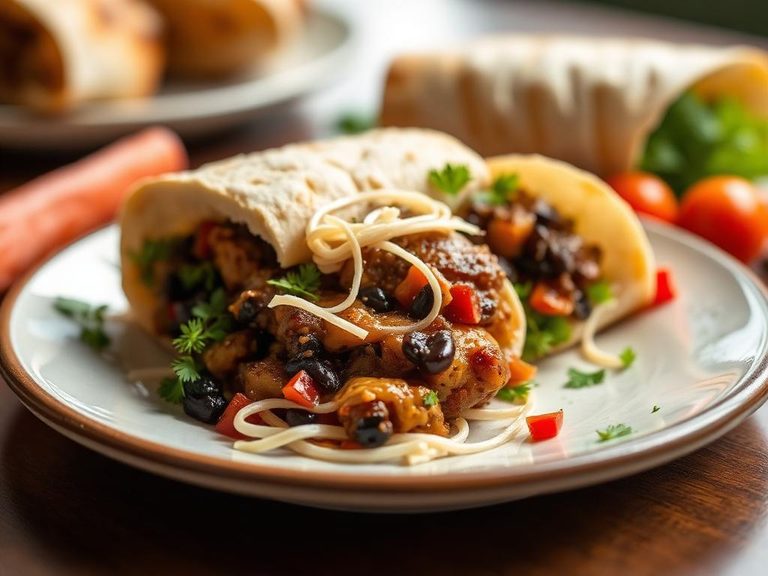
Wrap sandwich
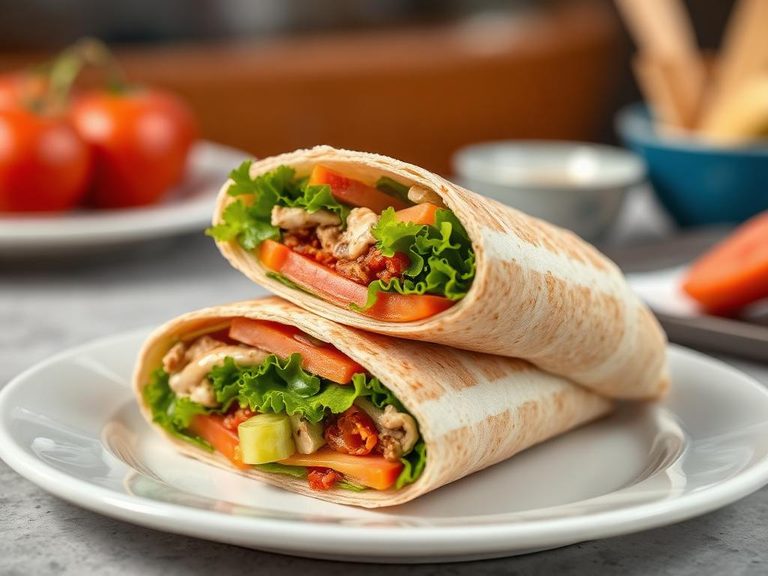
A wrap sandwich is a versatile dish where various fillings are rolled inside a soft, thin flatbread, such as a tortilla, lavash, or roti. Common ingredients include grilled meats, fresh vegetables, cheeses, and sauces, making it a popular choice for a quick and customizable meal. While its roots can be traced to various flatbread-based cuisines worldwide, the modern wrap as a portable lunch item is widely associated with American and Tex-Mex culinary trends.
🍳 View the full Wrap sandwich recipe →
🍽️ Nutrition at a glance
The nutritional profile varies greatly based on fillings, but a typical wrap can be a balanced source of carbohydrates from the bread, protein from meats or beans, and fats from dressings or cheese. A standard serving generally ranges from 300 to 600 calories, offering key nutrients like fiber, vitamins from vegetables, and iron or B vitamins from the protein component.
Nutrition breakdown
| Calories | 450 kcal |
| Protein | 22 g |
| Carbs | 42 g |
| Fat | 20 g |
| Fiber | 4 g |
| Sugar | 5 g |
| Sodium | 900 mg |
| Iron | 4 mg |
| Calcium | 150 mg |
| Potassium | 400 mg |
| Vitamin C | 10 mg |
| Vitamin A | 80 mcg |
| Vitamin B12 | 1.2 mcg |
| Folate | 60 mcg |
| Magnesium | 40 mg |
Per 1 wrap sandwich (approx. 250 g) · estimated, varies by recipe
💡 What's interesting
Culturally, the wrap is a fascinating example of culinary adaptation, taking the ancient concept of using flatbread as an edible vessel and packaging it for modern convenience. Nutritionally, it can be a uniquely efficient vehicle for increasing vegetable intake, as the wrap format allows for a high density of diverse produce in a single, handheld serving.
🍽️ Related dishes




AI estimate may be inaccurate · Terms