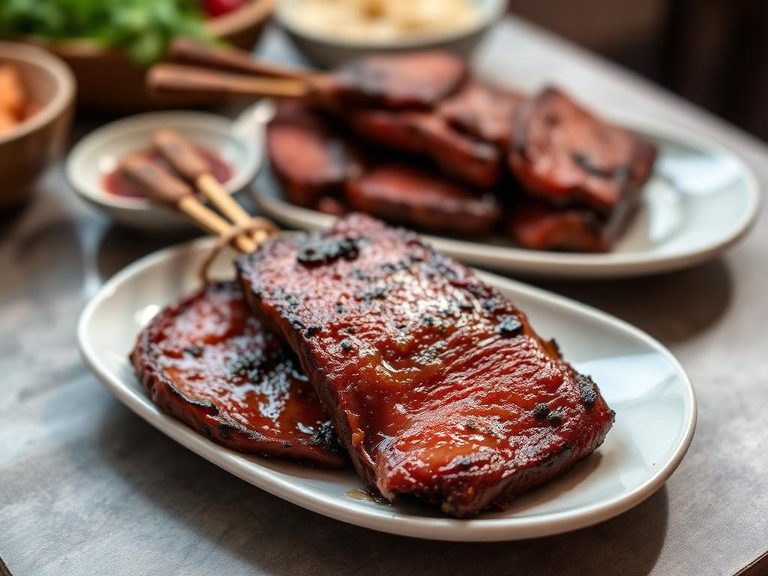
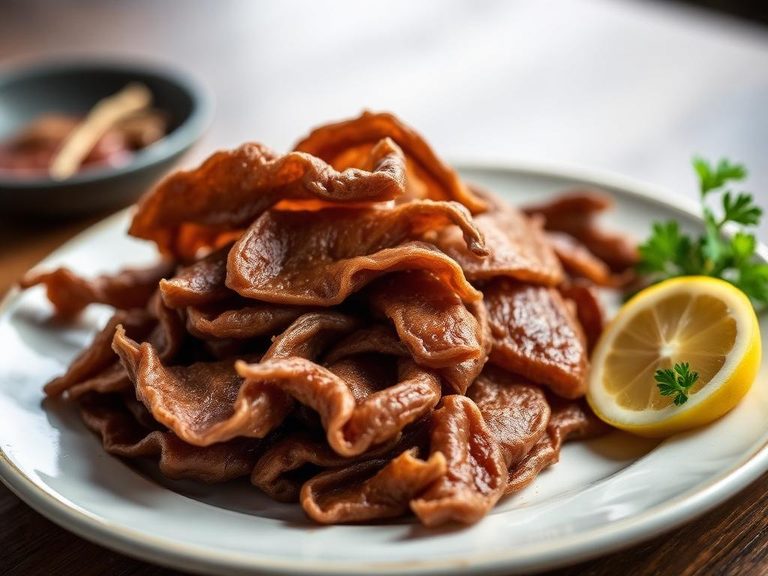
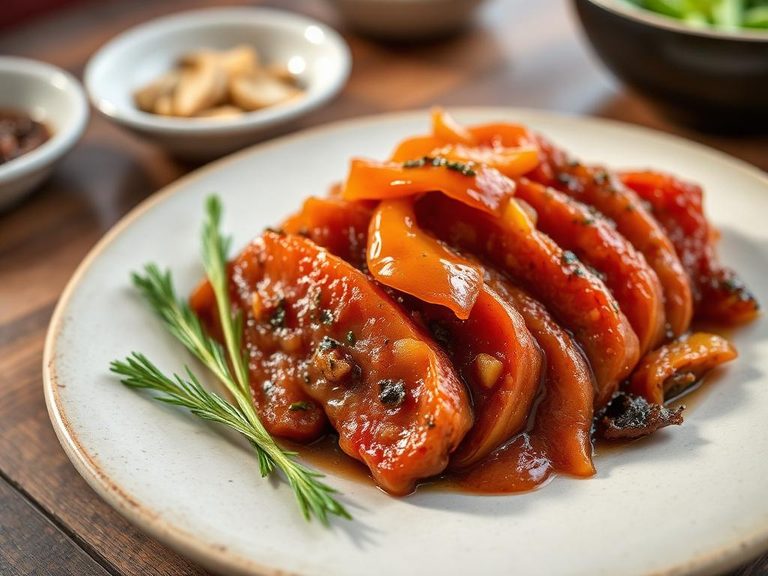
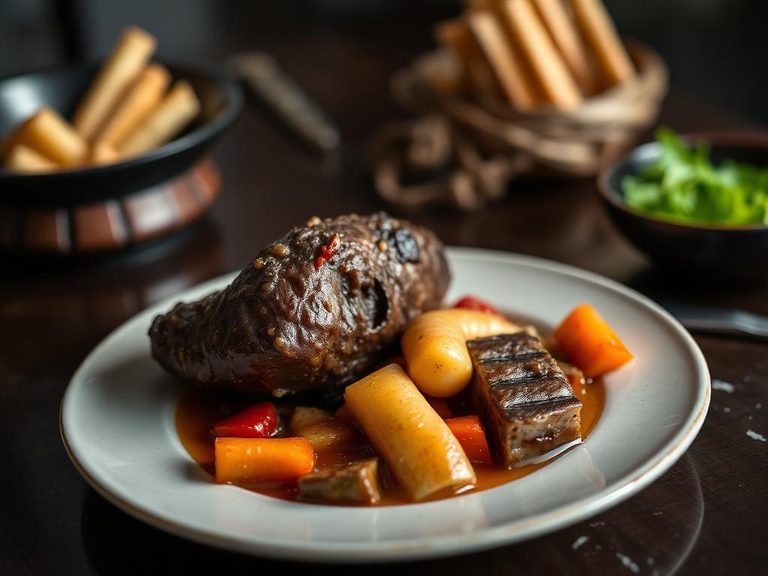
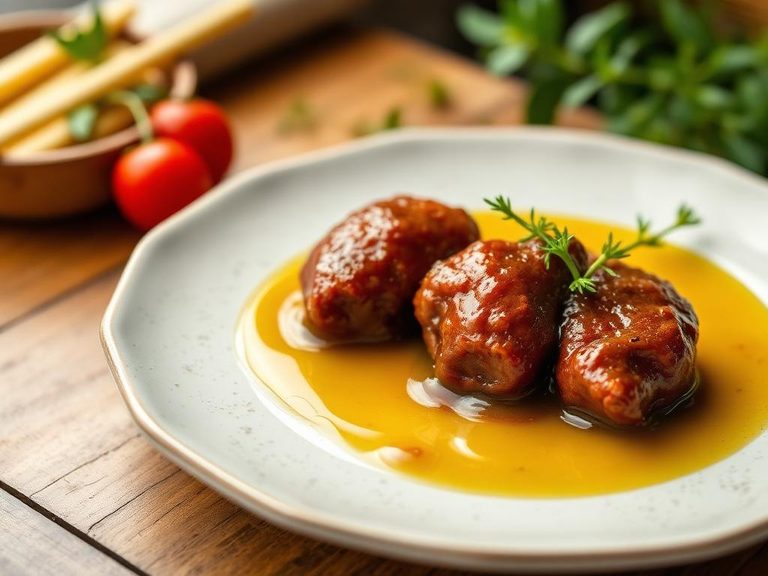
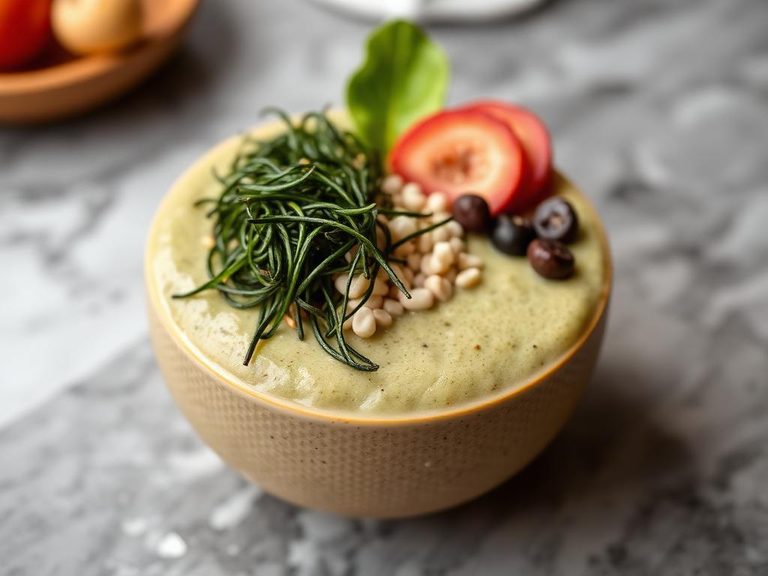
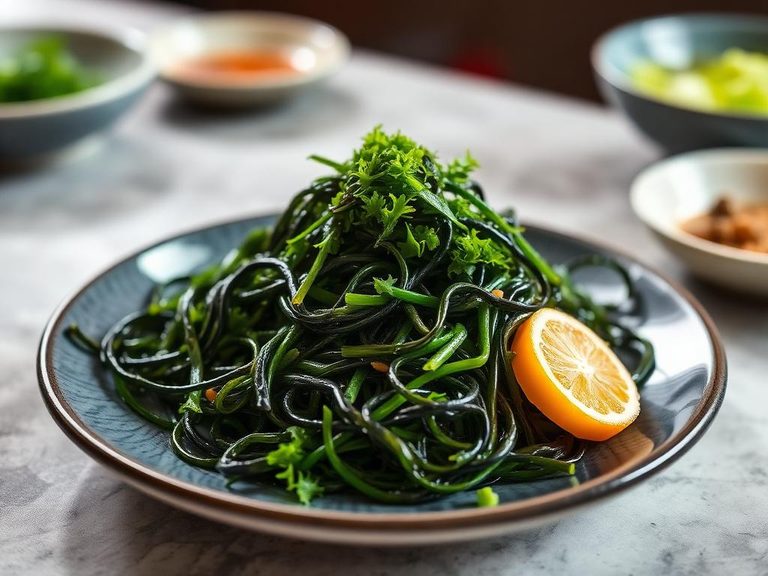
Walrus meat soup with seaweed
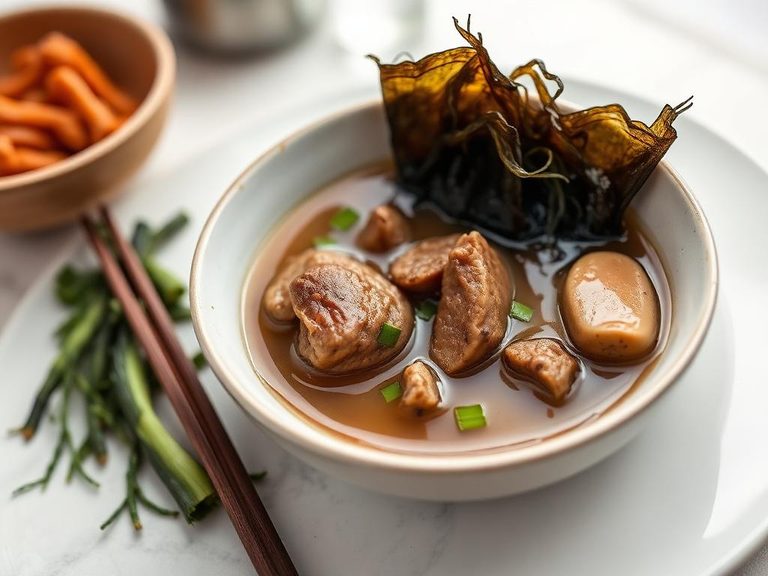
Walrus meat soup with seaweed is a hearty, traditional dish from Arctic and subarctic coastal communities, particularly among Inuit and other Indigenous peoples. It typically features chunks of walrus meat simmered with various types of seaweed, such as kelp, and often includes other local ingredients like onions or wild herbs. The dish is deeply rooted in the subsistence hunting cultures of regions like Alaska, Northern Canada, and Greenland.
🍽️ Nutrition at a glance
This soup is very high in protein and fat, providing a dense source of energy essential for cold climates. It is a significant source of omega-3 fatty acids, iron, and minerals like iodine and selenium from the seaweed, with a calorie count that can easily exceed 400-500 kcal per serving due to the rich meat.
Nutrition breakdown
| Calories | 480 kcal |
| Protein | 38 g |
| Carbs | 8 g |
| Fat | 32 g |
| Fiber | 4 g |
| Sugar | 2 g |
| Sodium | 650 mg |
| Iron | 6 mg |
| Omega-3 (EPA+DHA) | 1.5 g |
| Iodine | 150 mcg |
| Selenium | 40 mcg |
| Vitamin B12 | 12 mcg |
| Zinc | 8 mg |
| Potassium | 550 mg |
| Phosphorus | 380 mg |
Per 1 bowl (350 g) · estimated, varies by recipe
💡 What's interesting
Culturally, this dish represents a profound connection to the sea and sustainable use of local resources, where every part of a harvested animal is utilized. Nutritionally, the combination of marine mammal meat and seaweed creates a unique profile exceptionally rich in long-chain omega-3s (EPA and DHA), which are crucial for brain and heart health.