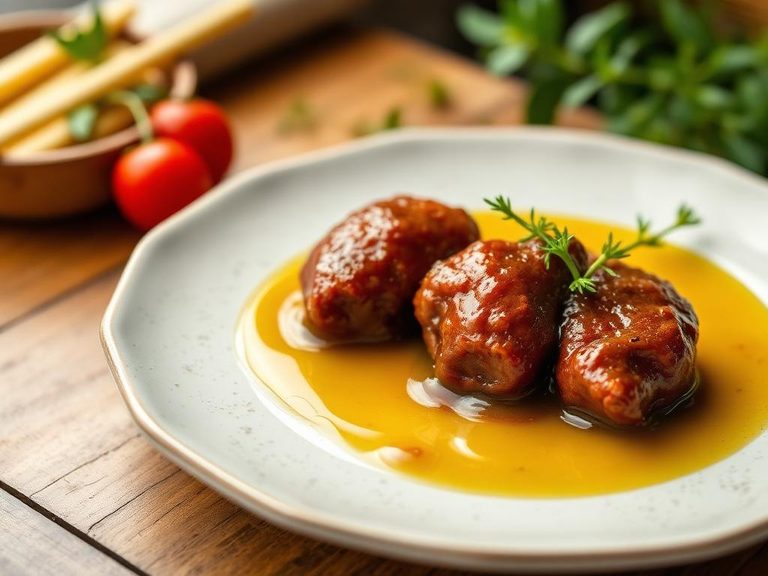
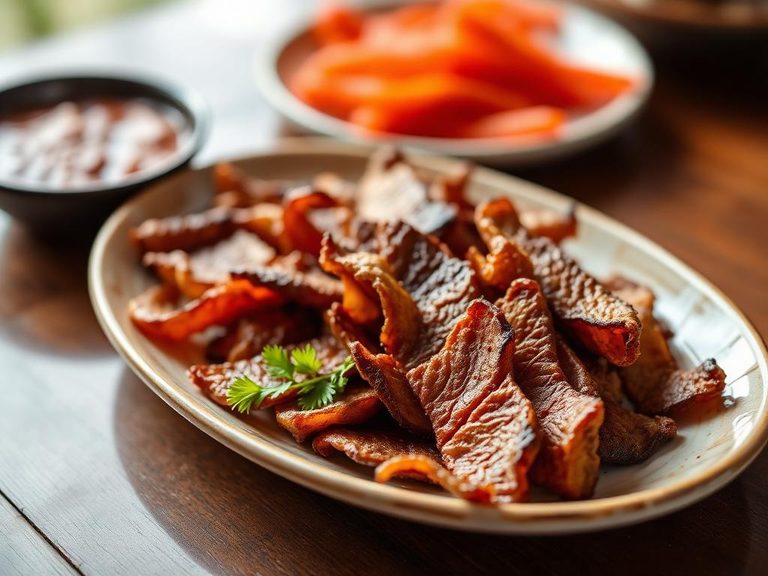
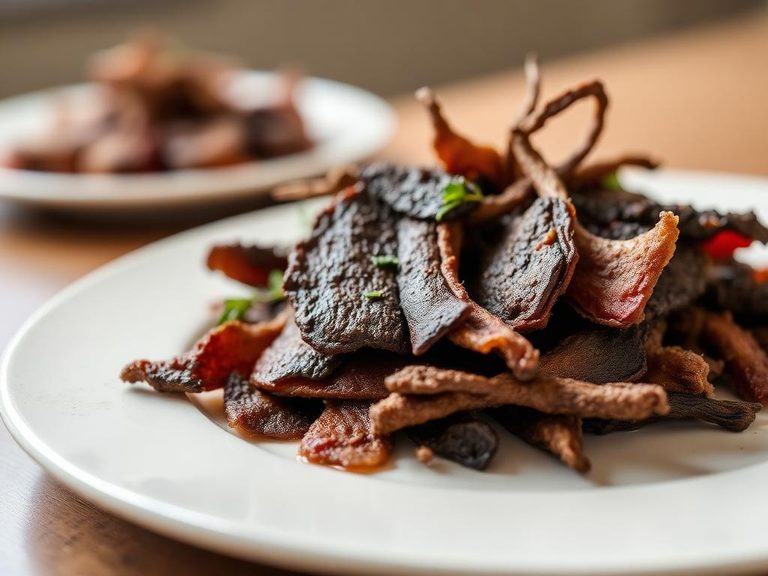
Dried walrus meat
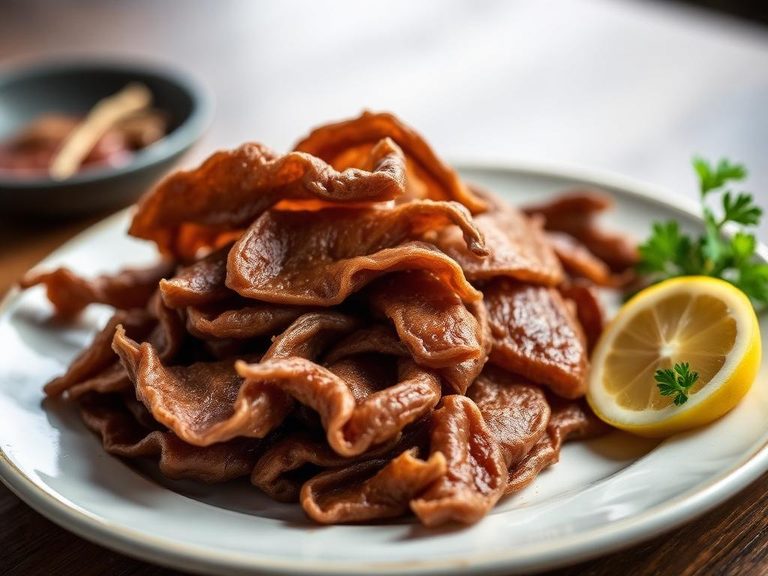
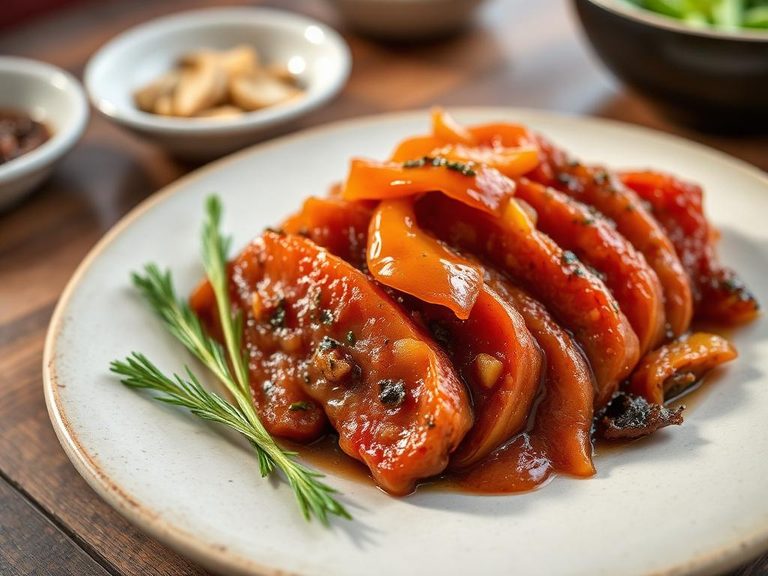
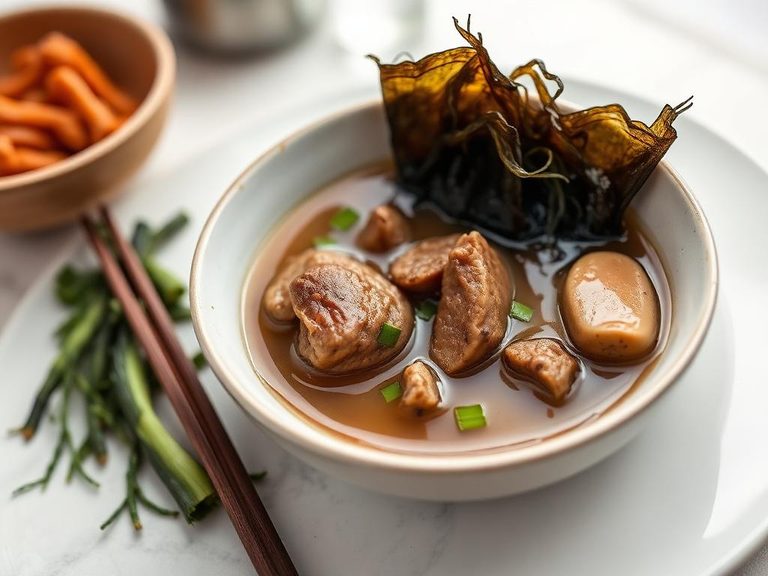
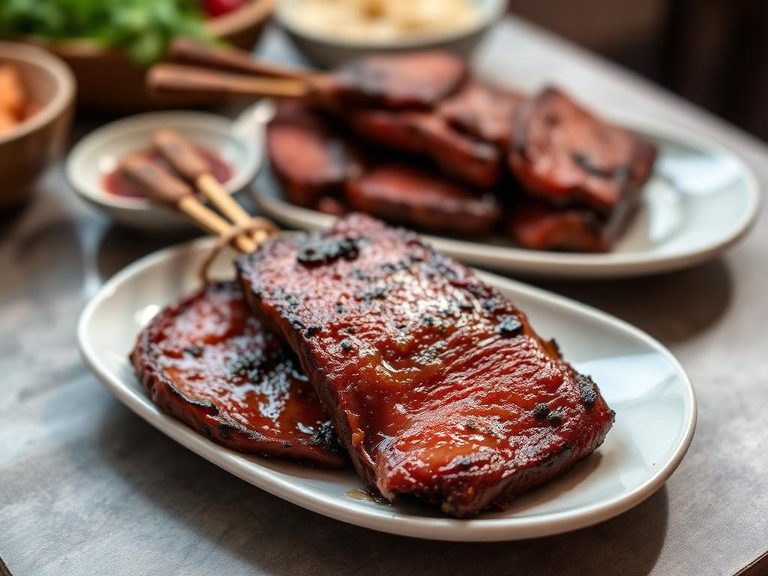
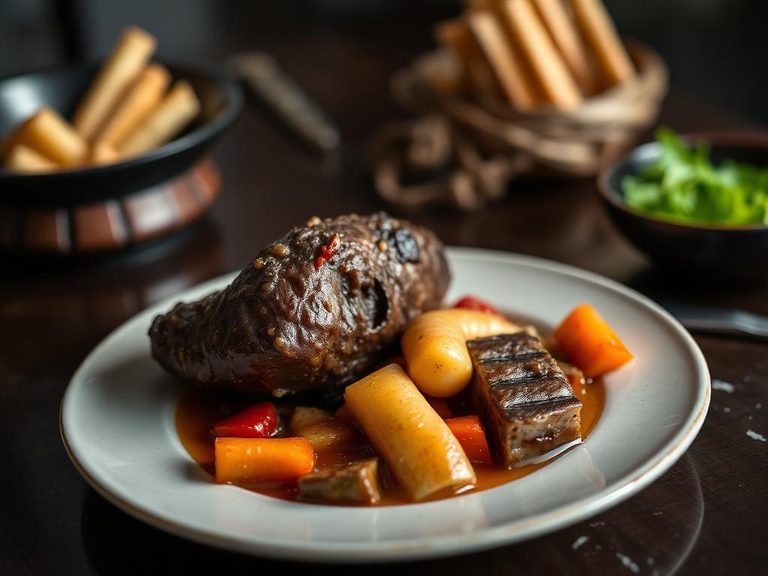
Dried walrus meat is a traditional preserved food, typically prepared by air-drying or smoking strips of walrus flesh. It is a staple in some Arctic indigenous cuisines, particularly among Inuit and Yupik communities, where it serves as a vital source of sustenance during long winters.
🍽️ Nutrition at a glance
This dish is extremely high in protein and fat, with virtually no carbohydrates, making it a dense energy source. It is rich in omega-3 fatty acids, iron, and B vitamins, providing a rough calorie estimate of 350-450 kcal per 100g serving.
Nutrition breakdown
| Calories | 400 kcal |
| Protein | 30 g |
| Carbs | 0 g |
| Fat | 30 g |
| Fiber | 0 g |
| Sugar | 0 g |
| Sodium | 800 mg |
| Iron | 5 mg |
| Zinc | 4 mg |
| Potassium | 450 mg |
| Vitamin B12 | 12 µg |
| Niacin (B3) | 8 mg |
| Phosphorus | 350 mg |
| Selenium | 25 µg |
| Omega-3 Fatty Acids | 2 g |
Per 100 g (about 3.5 oz) · estimated, varies by recipe
💡 What's interesting
Culturally, dried walrus meat is part of a subsistence diet that connects communities to their environment and traditions. Nutritionally, its high fat content, especially omega-3s, is unusual for a dried meat and helps provide essential calories in cold climates.