

Veggie Wrap
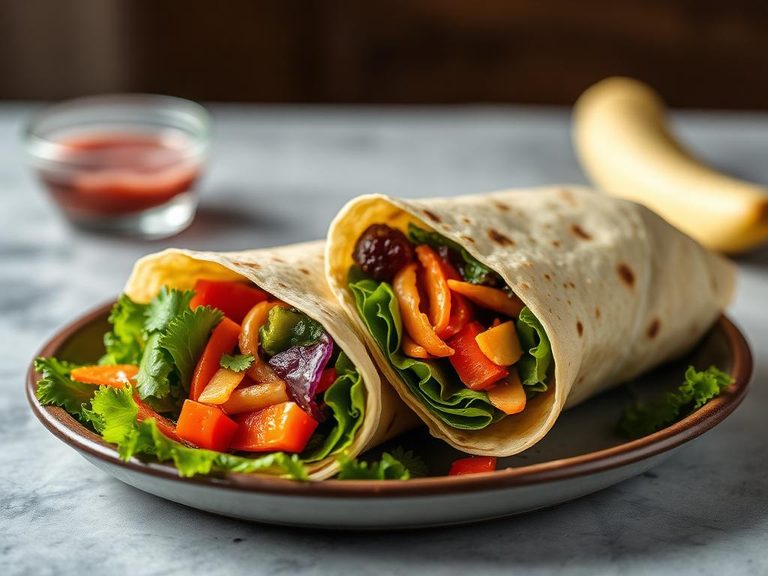
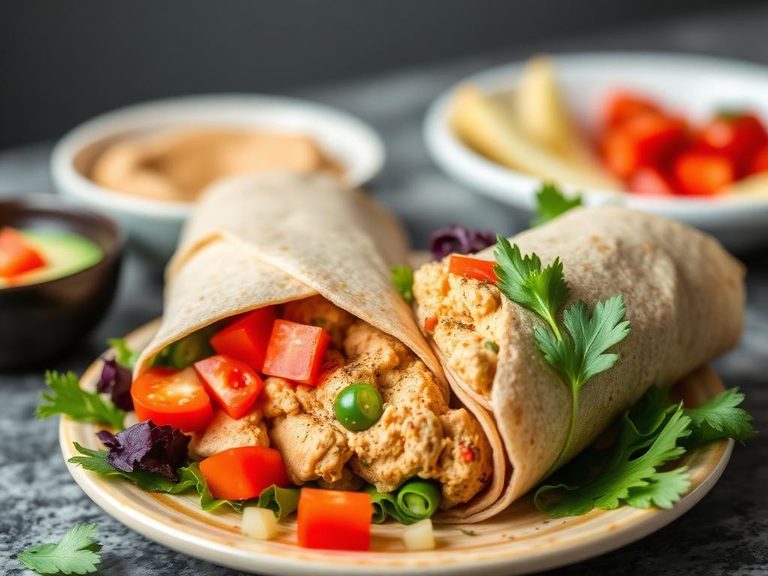
A Veggie Wrap is a versatile and popular dish consisting of a soft flatbread, such as a tortilla or roti, rolled around a filling of fresh and cooked vegetables, often with a flavorful sauce or spread. It typically includes ingredients like lettuce, tomatoes, cucumbers, bell peppers, onions, and sometimes protein-rich additions like beans, lentils, or tofu. While its exact origins are hard to pin down, the format is a global adaptation of traditional wraps found in many cuisines, from Mexican burritos to Middle Eastern shawarma.
🍳 View the full Veggie Wrap recipe →
🍽️ Nutrition at a glance
A standard veggie wrap is generally a balanced meal, offering a good source of complex carbohydrates from the wrap and fiber from the vegetables, with moderate protein if legumes or tofu are included. It typically provides key nutrients like vitamins A and C, potassium, and dietary fiber, with a calorie count ranging from 300 to 500 per serving depending on the fillings and sauces used.
Nutrition breakdown
| Calories | 350 kcal |
| Protein | 12 g |
| Carbs | 45 g |
| Fat | 14 g |
| Fiber | 8 g |
| Sugar | 6 g |
| Sodium | 650 mg |
| Potassium | 400 mg |
| Vitamin A | 80 mcg RAE |
| Vitamin C | 25 mg |
| Vitamin K | 40 mcg |
| Folate | 120 mcg DFE |
| Iron | 3 mg |
| Calcium | 150 mg |
| Magnesium | 60 mg |
Per 1 wrap (approx. 200 g) · estimated, varies by recipe
💡 What's interesting
The veggie wrap is a modern culinary icon of convenience and customization, reflecting a global shift towards portable, plant-forward eating. Nutritionally, it's a blank canvas that can be easily tailored to meet various dietary needs, from high-protein to low-carb, making it a staple in health-conscious and fast-casual food scenes worldwide.
🍽️ Related dishes

AI estimate may be inaccurate · Terms