

Vegetable fried rice (no oil)
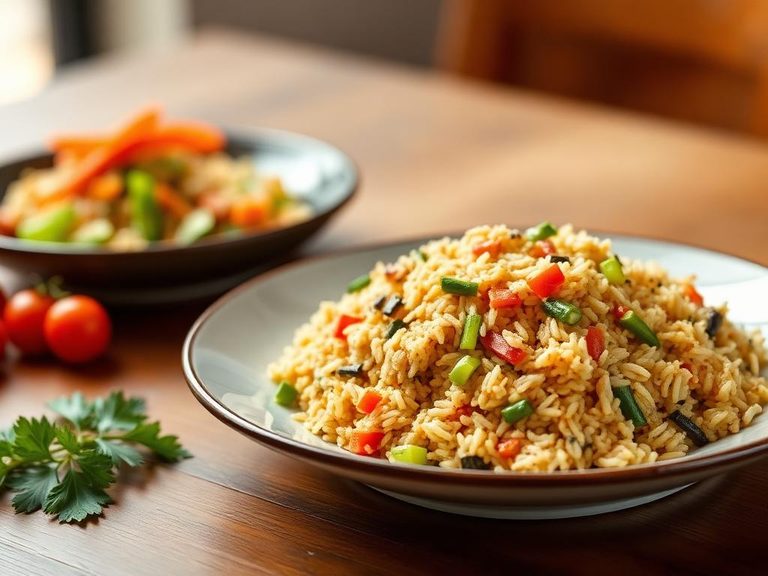
Vegetable fried rice (no oil) is a healthy, plant-based variation of the classic Chinese stir-fry dish, typically made by cooking pre-cooked rice with a colorful mix of vegetables like carrots, peas, corn, and bell peppers. It originates from Chinese cuisine, where fried rice is a staple home-cooked and street food dish, often adapted to use available ingredients.
🍽️ Nutrition at a glance
This dish is primarily high in carbohydrates from the rice, with a moderate amount of fiber and vitamins from the vegetables, and very low fat since no oil is used. A typical serving (about 1.5 cups) provides roughly 250-350 calories, along with key nutrients like vitamin A, vitamin C, and potassium.
Nutrition breakdown
| Calories | 180 kcal |
| Protein | 5 g |
| Carbs | 38 g |
| Fat | 1.5 g |
| Fiber | 3.5 g |
| Sugar | 4 g |
| Sodium | 480 mg |
| Potassium | 320 mg |
| Iron | 2.5 mg |
| Magnesium | 45 mg |
| Phosphorus | 110 mg |
| Vitamin C | 15 mg |
| Vitamin A | 90 µg RAE |
| Folate | 60 µg |
| Manganese | 1.8 mg |
Per 1 cup (190 g) · estimated, varies by recipe
💡 What's interesting
Culturally, fried rice is a symbol of resourcefulness in Chinese cooking, traditionally made to repurpose leftover rice and reduce food waste. Nutritionally, the no-oil version is unique as it relies on techniques like using vegetable broth or non-stick pans to achieve a similar texture, making it a lighter option without sacrificing flavor.
🍽️ Related dishes
AI estimate may be inaccurate · Terms