

Tempura Onion
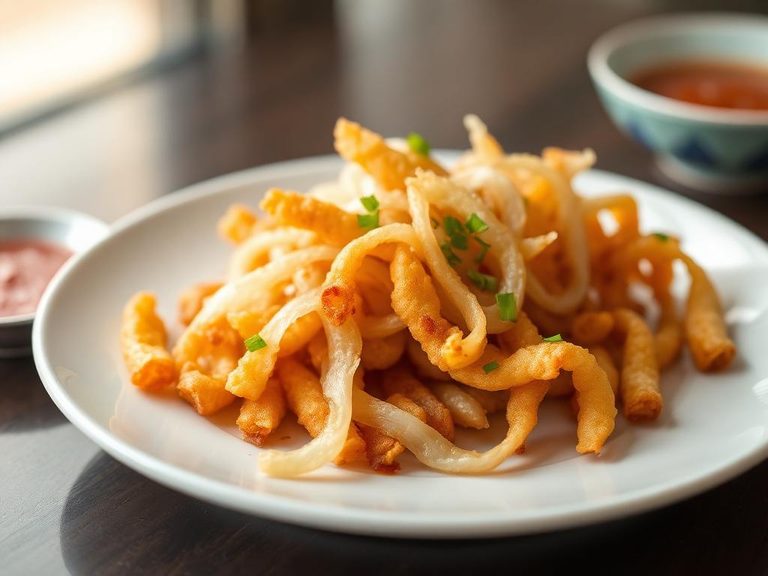
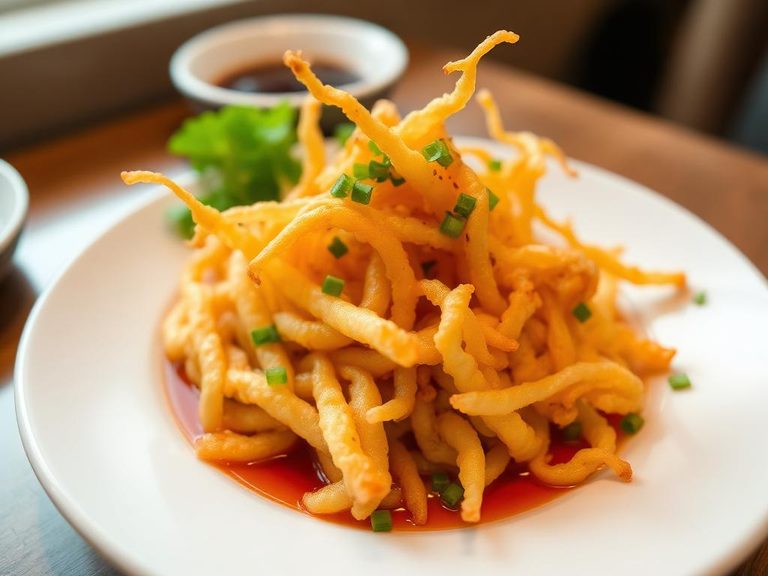
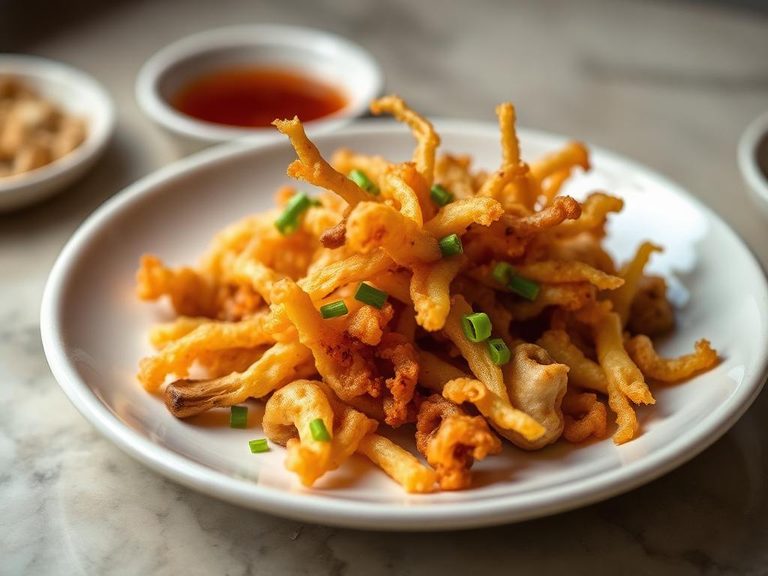
Tempura Onion is a classic Japanese dish featuring onion slices or rings coated in a light, crispy batter and deep-fried to a golden perfection. The batter typically includes flour, egg, and ice-cold water, creating an airy texture that contrasts with the sweet, tender onion inside. It is a popular item in Japanese cuisine, often served as an appetizer, side dish, or part of a larger meal like tendon (tempura rice bowl).
🍳 View the full Tempura Onion recipe →
🍽️ Nutrition at a glance
Tempura Onion is high in fat and carbohydrates due to the deep-frying process and batter coating, with a moderate amount of protein from the egg in the batter. A typical serving (about 100g) provides roughly 250-300 calories, along with small amounts of vitamins like vitamin C and B vitamins from the onion, though the frying method reduces some nutritional value.
Nutrition breakdown
| Calories | 280 kcal |
| Protein | 4 g |
| Carbs | 25 g |
| Fat | 18 g |
| Fiber | 2 g |
| Sugar | 4 g |
| Sodium | 450 mg |
| Potassium | 220 mg |
| Vitamin C | 8 mg |
| Iron | 1.2 mg |
| Calcium | 35 mg |
| Vitamin B6 | 0.1 mg |
| Magnesium | 15 mg |
| Phosphorus | 50 mg |
| Folate | 20 µg |
Per 1 cup (150 g) · estimated, varies by recipe
💡 What's interesting
Culturally, tempura was introduced to Japan by Portuguese missionaries in the 16th century and has since evolved into a refined culinary art, with chefs emphasizing precise batter consistency and frying techniques. Nutritionally, while the dish is indulgent, the use of onions adds a natural sweetness and fiber, making it a flavorful way to enjoy vegetables in a crispy, satisfying form.
🍽️ Related dishes

AI estimate may be inaccurate · Terms