

Stir-fry seasoning
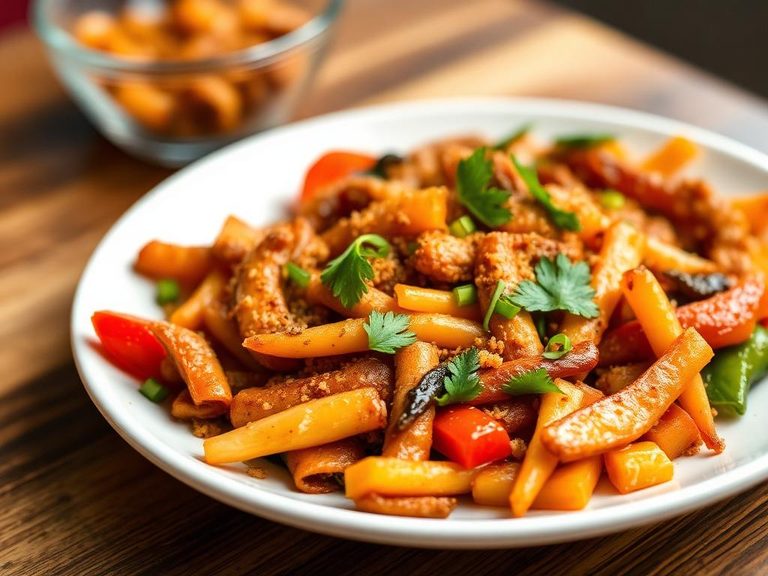
Stir-fry seasoning is a foundational flavor base used in Chinese cooking, typically made from a blend of aromatics like garlic, ginger, and scallions, combined with savory liquids such as soy sauce, rice wine, and sesame oil. It originates from China and is essential for creating the signature umami-rich, balanced flavors in countless stir-fried dishes across various regional cuisines.
🍳 View the full Stir-fry seasoning recipe →
🍽️ Nutrition at a glance
Stir-fry seasoning is generally low in carbohydrates and protein but can be high in sodium and fat, depending on the oil and sauce components used. It provides key nutrients like antioxidants from garlic and ginger, and a small amount of healthy fats from sesame oil, with a rough calorie range of 50-100 per tablespoon serving.
Nutrition breakdown
| Calories | 25 kcal |
| Protein | 0.5 g |
| Carbs | 4 g |
| Fat | 1 g |
| Fiber | 0.5 g |
| Sugar | 2 g |
| Sodium | 1200 mg |
| Sodium | 1200 mg |
| Potassium | 50 mg |
| Iron | 0.3 mg |
| Calcium | 10 mg |
| Vitamin B1 (Thiamine) | 0.02 mg |
| Vitamin B2 (Riboflavin) | 0.01 mg |
| Niacin | 0.1 mg |
| Vitamin B6 | 0.01 mg |
Per 2 tablespoons (30 g) · estimated, varies by recipe
💡 What's interesting
Culturally, stir-fry seasoning embodies the Chinese culinary philosophy of 'wok hei' or 'breath of the wok,' where high heat and quick cooking infuse dishes with a unique smoky aroma. Nutritionally, the combination of garlic and ginger offers anti-inflammatory benefits, making it a flavorful way to enhance both taste and health in everyday meals.
🍽️ Related dishes


AI estimate may be inaccurate · Terms