

Some salad dressings

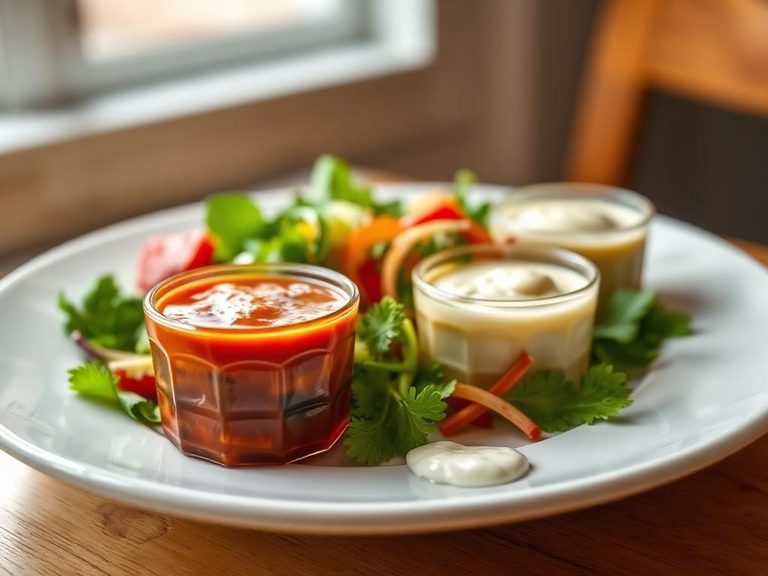
Salad dressings are liquid or creamy mixtures used to flavor and moisten salads and other dishes. They typically consist of a base of oil and an acid like vinegar or citrus juice, often emulsified with ingredients like mustard or egg yolk, and seasoned with herbs, spices, and salt. These versatile condiments originate from various culinary traditions worldwide, from classic French vinaigrettes to creamy American ranch.
🍽️ Nutrition at a glance
Salad dressings are generally high in fat, primarily from oils, and can be moderate in calories, with a typical serving ranging from 100 to 150 kcal. They provide key nutrients like Vitamin E and Vitamin K from the oil base, along with small amounts of minerals depending on the specific ingredients used.
Nutrition breakdown
| Calories | 120 kcal |
| Protein | 0 g |
| Carbs | 2 g |
| Fat | 13 g |
| Fiber | 0 g |
| Sugar | 1 g |
| Sodium | 200 mg |
| Vitamin E | 1.5 mg |
| Vitamin K | 8 mcg |
| Sodium | 200 mg |
| Potassium | 20 mg |
| Iron | 0.1 mg |
| Calcium | 5 mg |
| Magnesium | 2 mg |
| Phosphorus | 10 mg |
Per 1 tablespoon (15 g) · estimated, varies by recipe
💡 What's interesting
The cultural diversity of salad dressings is fascinating, with each region offering unique flavor profiles, such as the tangy tahini-based dressings of the Middle East or the sweet and savory Japanese sesame dressing. Nutritionally, the type of fat in the dressing (like olive oil) can significantly impact its health benefits, making it a key component in heart-healthy diets.
🍽️ Related dishes





AI estimate may be inaccurate · Terms