

Pierogi dough
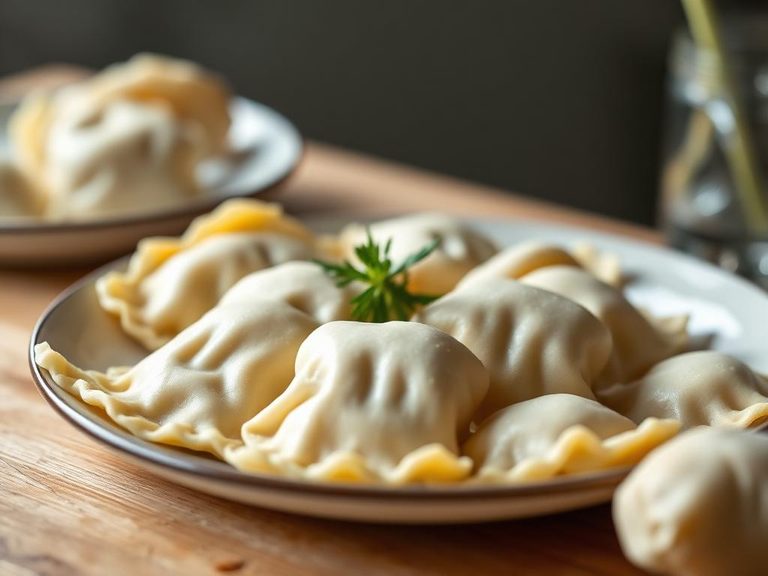
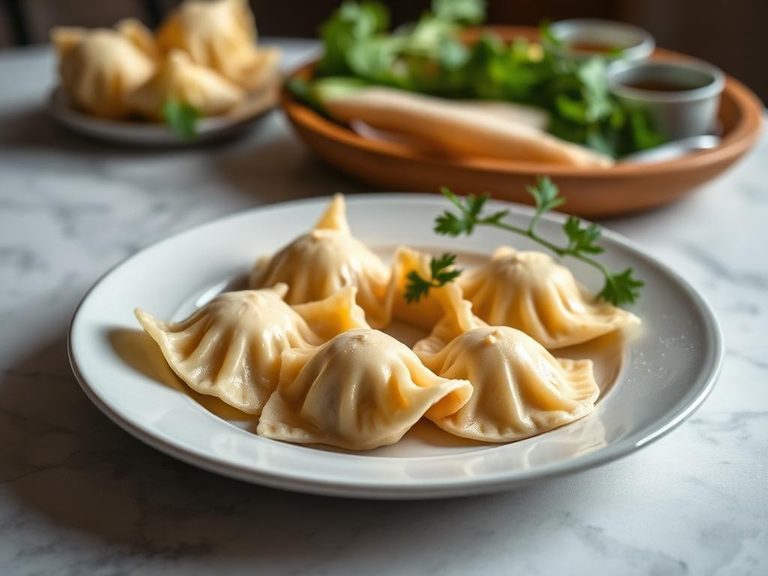
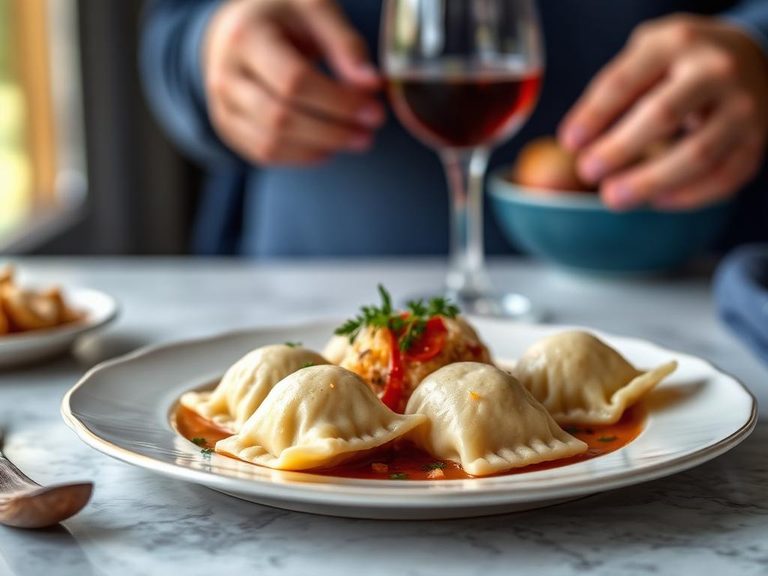
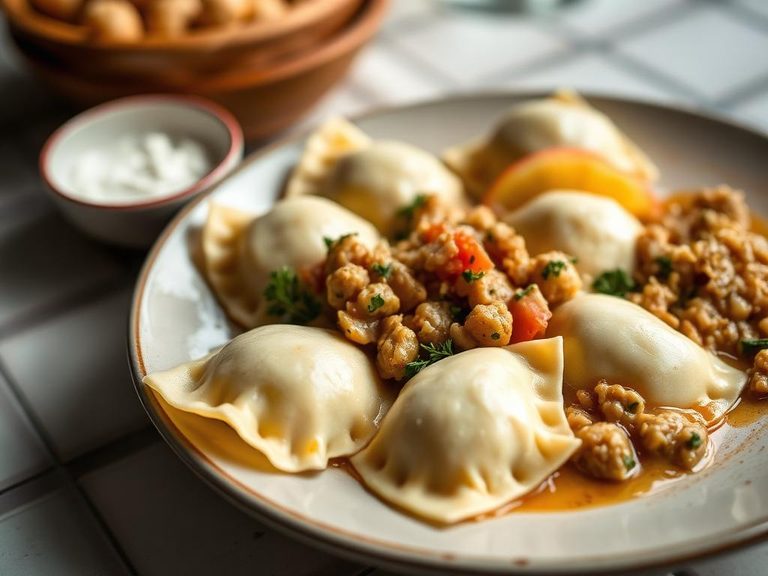
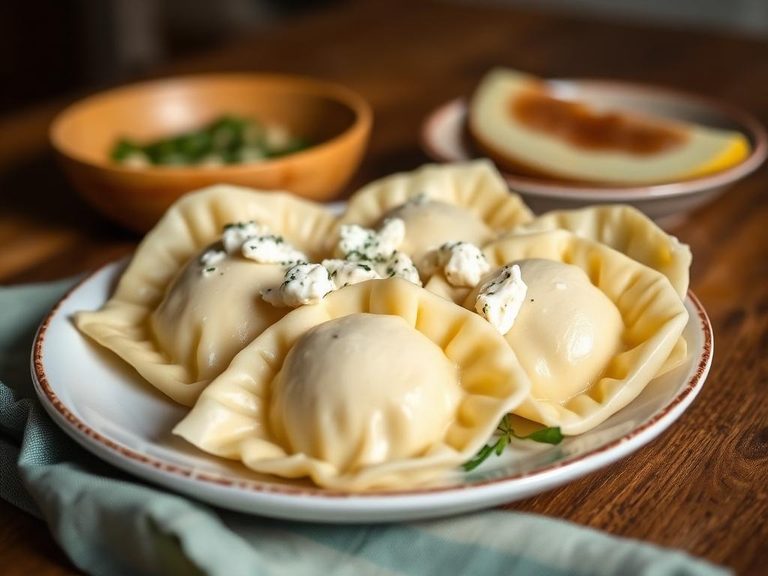
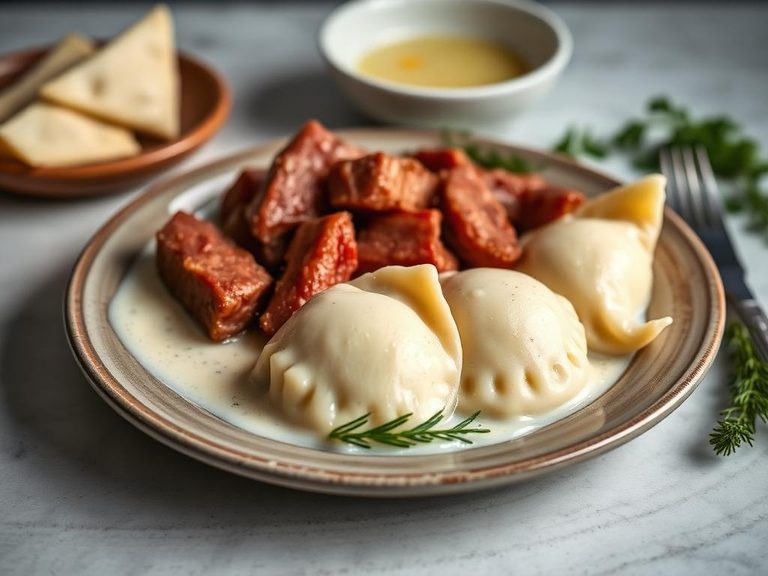
Pierogi dough is the traditional unleavened wrapper for Polish pierogi, made from simple ingredients like flour, water, eggs, and sometimes sour cream or butter. It is rolled thin and used to encase a variety of savory or sweet fillings, such as potato, cheese, sauerkraut, or fruit. This versatile dough is a cornerstone of Central and Eastern European cuisine, particularly in Poland.
🍽️ Nutrition at a glance
Pierogi dough is primarily a source of carbohydrates from the flour, with moderate protein from the eggs and flour. A typical serving provides a moderate calorie count, mainly from the starch, and offers small amounts of iron and B vitamins from the enriched flour.
Nutrition breakdown
| Calories | 80 kcal |
| Protein | 2.5 g |
| Carbs | 13 g |
| Fat | 1.5 g |
| Fiber | 0.5 g |
| Sugar | 0.5 g |
| Sodium | 100 mg |
| Iron | 1.2 mg |
| Thiamin (B1) | 0.15 mg |
| Folate | 30 mcg |
| Niacin (B3) | 1.8 mg |
| Selenium | 5 mcg |
| Manganese | 0.2 mg |
Per 1 pierogi dough circle (approx. 30 g) · estimated, varies by recipe
💡 What's interesting
The dough's simplicity and elasticity are key, allowing it to be rolled thin yet hold up to boiling and pan-frying. Nutritionally, it serves as a neutral, energy-dense vehicle for the more nutrient-rich fillings, making the final pierogi a balanced meal.
🍽️ Related dishes
AI estimate may be inaccurate · Terms