

Persian Rice (Tahdig)
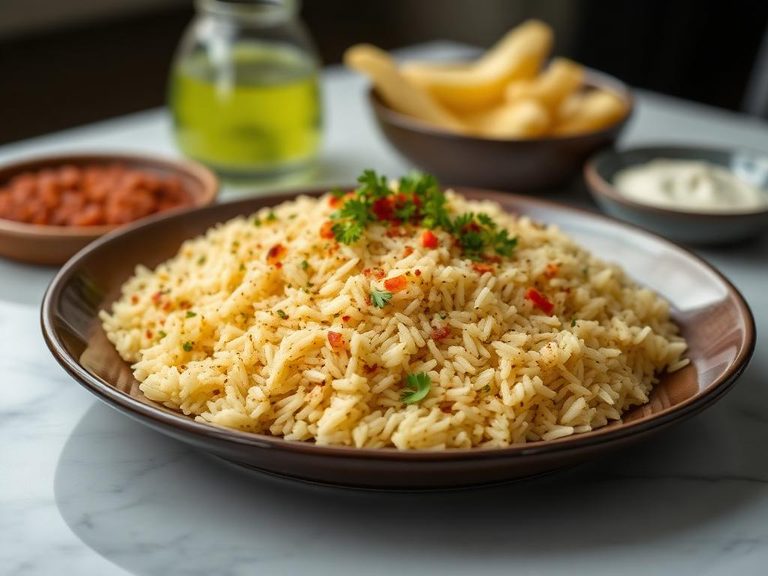
Tahdig is the prized crispy, golden crust of rice from the bottom of the pot, a signature element of Persian cuisine. It is typically made from long-grain basmati rice, water, oil or butter, and often a layer of potatoes, bread, or yogurt at the base to create its signature crunch. This dish is a beloved staple in Iran and among Persian communities worldwide, often served as a celebratory centerpiece.
🍳 View the full Persian Rice (Tahdig) recipe →
🍽️ Nutrition at a glance
Tahdig is primarily a high-carbohydrate dish, with a moderate amount of fat from the oil or butter used to create its crispy texture. It provides some B vitamins and minerals like iron from the rice, and a typical serving contains roughly 300-400 calories.
Nutrition breakdown
| Calories | 350 kcal |
| Protein | 6 g |
| Carbs | 55 g |
| Fat | 12 g |
| Fiber | 1 g |
| Sugar | 0 g |
| Sodium | 400 mg |
| Potassium | 120 mg |
| Iron | 2.5 mg |
| Thiamin (B1) | 0.3 mg |
| Niacin (B3) | 3.5 mg |
| Folate | 80 mcg |
| Magnesium | 25 mg |
| Phosphorus | 90 mg |
| Manganese | 0.8 mg |
Per 1 cup (240 g) · estimated, varies by recipe
💡 What's interesting
The name 'Tahdig' literally means 'bottom of the pot' in Persian, and its preparation is considered an art form, with families often competing for the most perfect, shatteringly crisp piece. Nutritionally, the crispy crust has a different texture and slightly higher fat content than the fluffy rice above, making it a uniquely satisfying contrast.
🍽️ Related dishes
AI estimate may be inaccurate · Terms