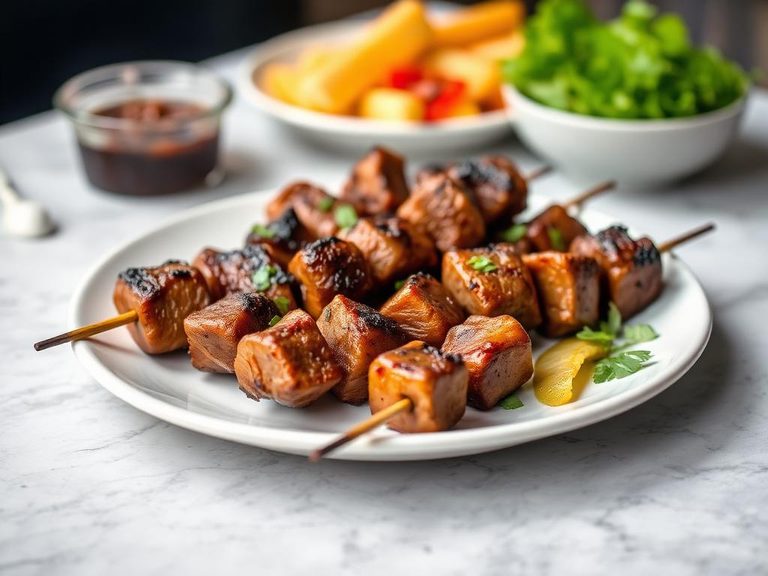
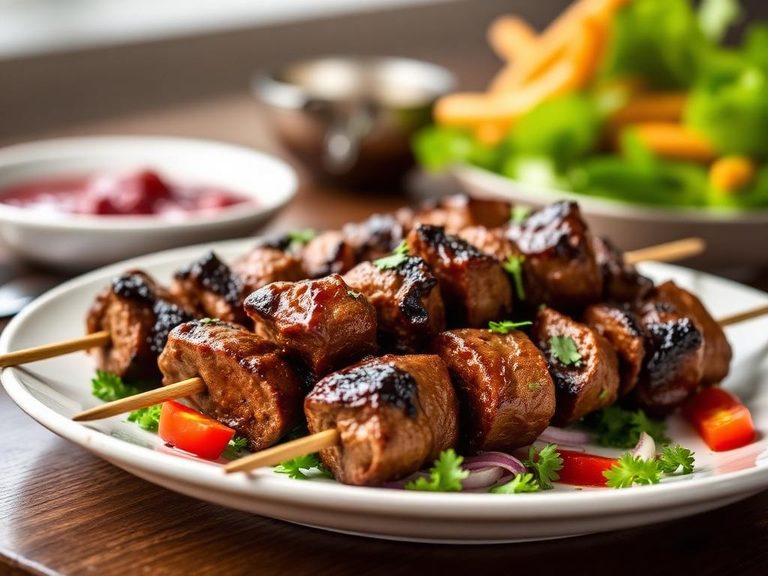
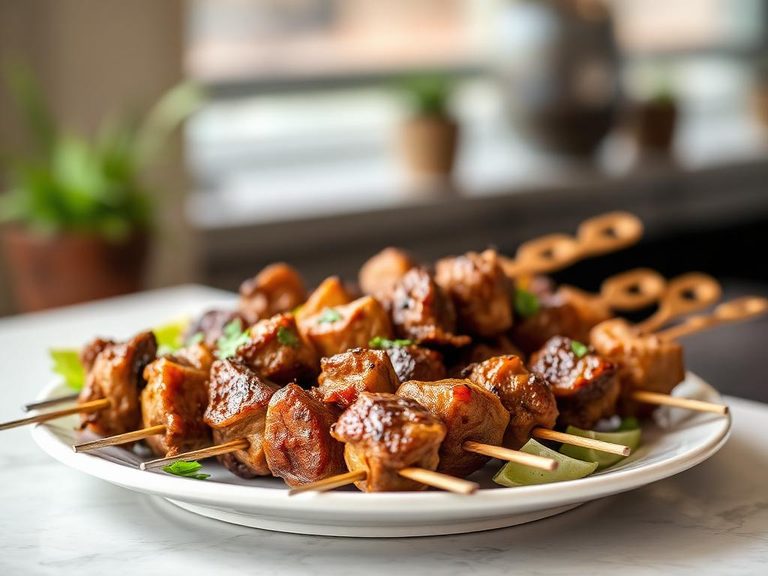
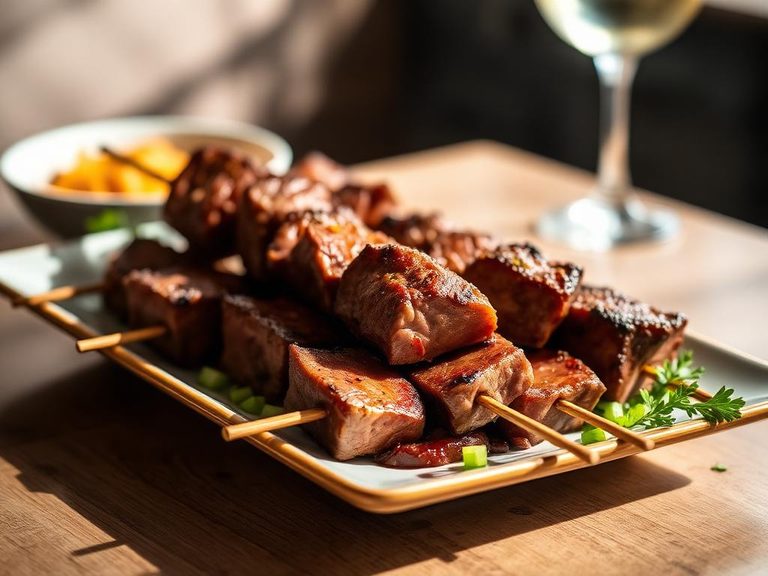
Ostrich Kabobs
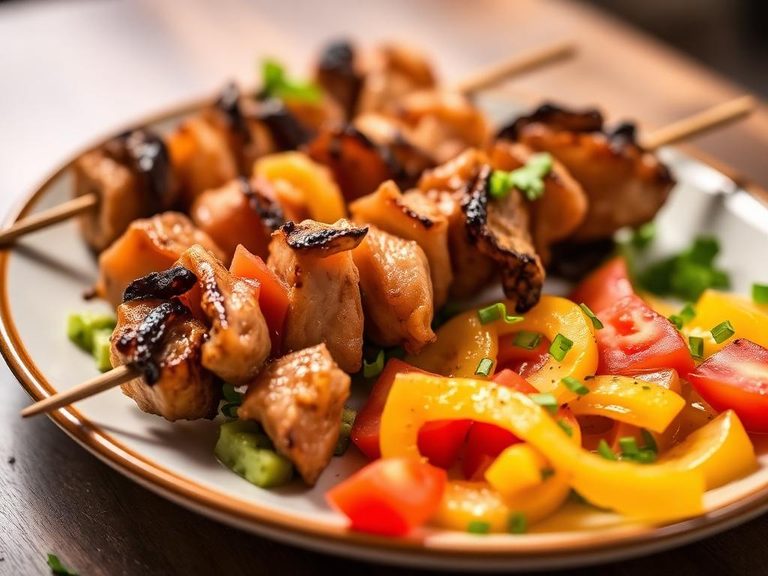
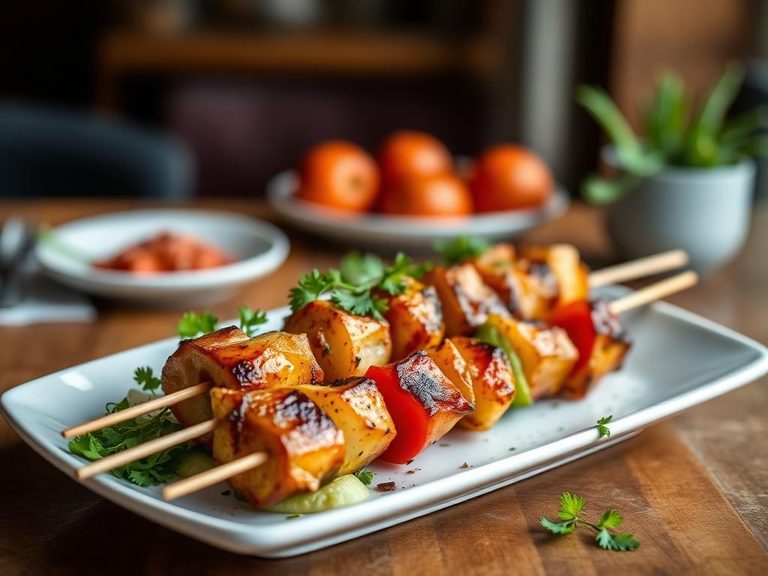
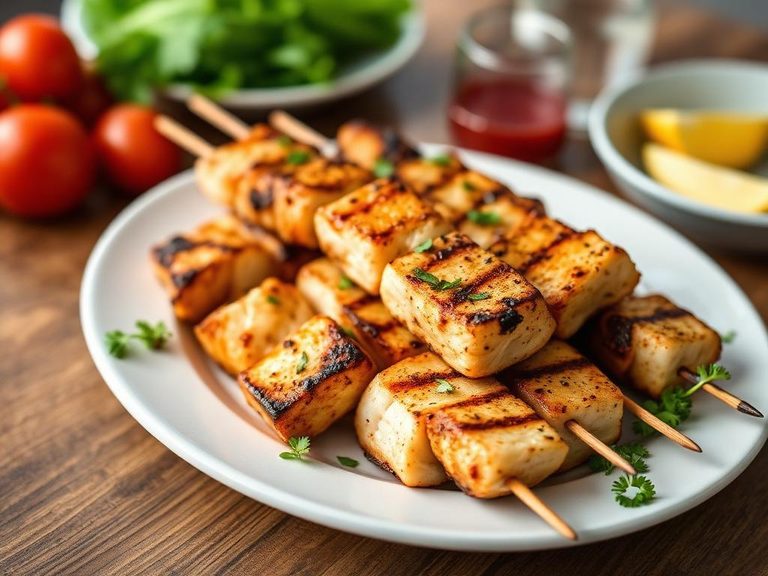
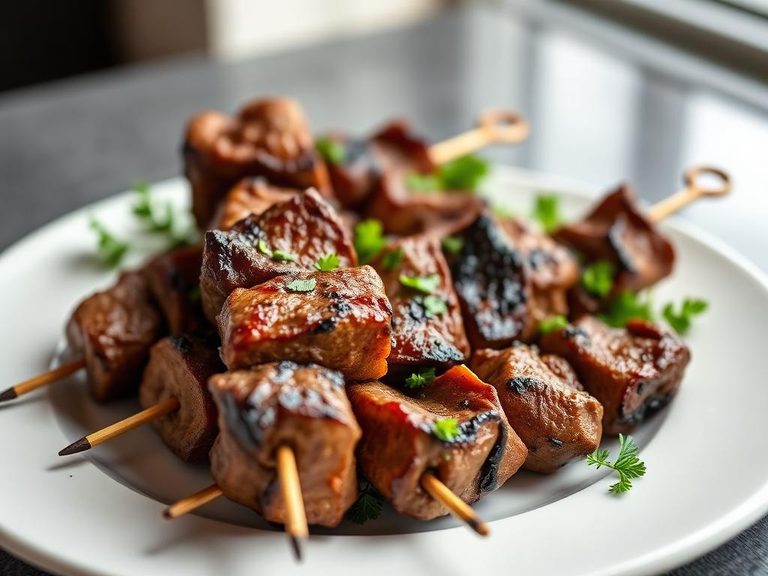
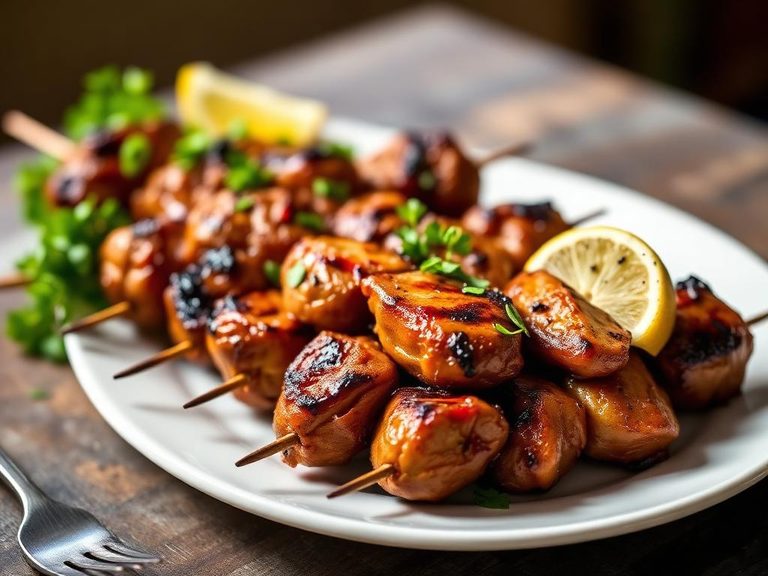
Ostrich kabobs are a lean, flavorful dish featuring marinated ostrich meat skewered and grilled, often with vegetables like bell peppers and onions. Originating from South Africa, where ostrich farming is common, this dish has gained popularity globally as a healthy, exotic alternative to traditional red meat kabobs.
🍽️ Nutrition at a glance
Ostrich kabobs are exceptionally high in protein and low in fat, making them a nutrient-dense choice. A typical serving provides a good source of iron, zinc, and B vitamins, with roughly 150-200 calories per 100 grams of cooked meat.
Nutrition breakdown
| Calories | 195 kcal |
| Protein | 30 g |
| Carbs | 2 g |
| Fat | 7 g |
| Fiber | 0.5 g |
| Sugar | 1 g |
| Sodium | 320 mg |
| Iron | 4.5 mg |
| Zinc | 4.2 mg |
| Vitamin B12 | 5.1 mcg |
| Niacin (B3) | 7.8 mg |
| Phosphorus | 280 mg |
| Selenium | 36 mcg |
| Potassium | 350 mg |
| Riboflavin (B2) | 0.3 mg |
Per 1 skewer (150 g) · estimated, varies by recipe
💡 What's interesting
Ostrich meat is nutritionally unique because it has the rich flavor of red meat but a fat profile more similar to skinless chicken, being very low in saturated fat. Culturally, it reflects a shift towards sustainable and novel protein sources, as ostriches are more environmentally efficient to raise than cattle.