

Open-faced Sandwich

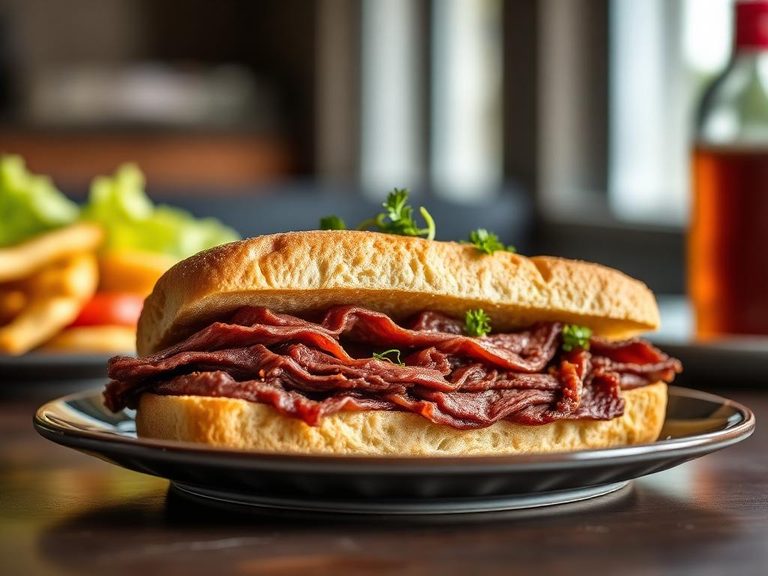
Smørrebrød is a traditional Danish open-faced sandwich, typically built on a slice of dense, dark rye bread (rugbrød) and topped with a variety of ingredients like pickled herring, roast beef, eggs, or cheese, often garnished with fresh herbs and condiments. It is a staple of Scandinavian cuisine, celebrated for its elegant simplicity and versatility.
🍽️ Nutrition at a glance
The nutritional profile varies widely based on toppings, but the base of rye bread provides complex carbohydrates and fiber, while toppings like fish or meat add protein and healthy fats. A typical serving can range from 250 to 500 calories, making it a balanced and customizable meal.
Nutrition breakdown
| Calories | 350 kcal |
| Protein | 15 g |
| Carbs | 35 g |
| Fat | 18 g |
| Fiber | 4 g |
| Sugar | 5 g |
| Sodium | 650 mg |
| Iron | 3 mg |
| Calcium | 120 mg |
| Vitamin A | 150 mcg |
| Vitamin C | 10 mg |
| Vitamin D | 1 mcg |
| Vitamin B12 | 1.5 mcg |
| Potassium | 350 mg |
| Magnesium | 40 mg |
Per 1 sandwich (approx. 150 g) · estimated, varies by recipe
💡 What's interesting
Smørrebrød is uniquely cultural in Denmark, where it is often enjoyed as a lunch dish with specific etiquette, such as eating it with a knife and fork. Nutritionally, the use of whole-grain rye bread and nutrient-dense toppings like fatty fish makes it a wholesome, balanced option that reflects the Nordic focus on simple, quality ingredients.
🍽️ Related dishes






AI estimate may be inaccurate · Terms