

New Year's Osechi-ryori
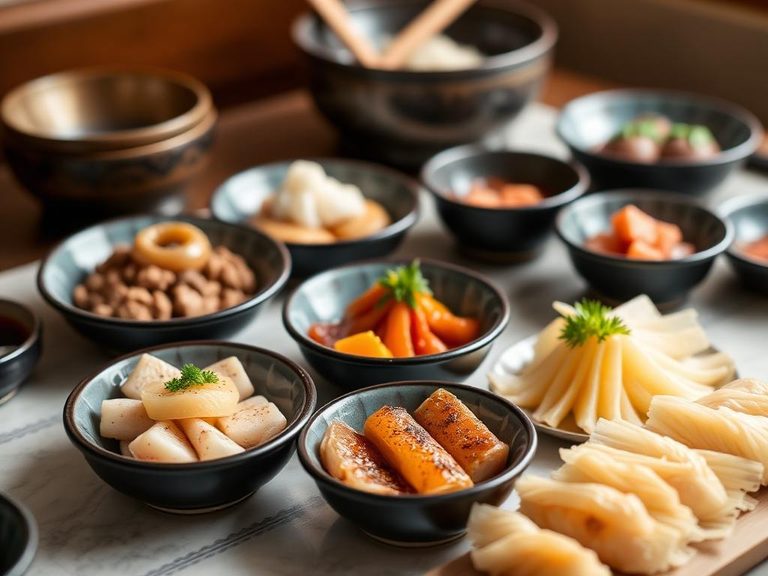
Osechi-ryori is a traditional Japanese New Year's feast consisting of numerous small, meticulously prepared dishes, each symbolizing a wish for the coming year. It features a wide array of ingredients like sweet simmered black beans for health, rolled omelets (datemaki) for learning, and shrimp for longevity, all served in special tiered boxes called jūbako.
🍽️ Nutrition at a glance
As a multi-dish assortment, Osechi-ryori is nutritionally diverse but often leans towards higher carbohydrates and fats due to sweet glazes, fried items, and sugared nuts. It provides a broad spectrum of nutrients from proteins (fish, beans) and vitamins (vegetables), with a typical full serving containing a substantial number of calories, often exceeding 1000 kcal.
Nutrition breakdown
| Calories | 450 kcal |
| Protein | 25 g |
| Carbs | 45 g |
| Fat | 18 g |
| Fiber | 4 g |
| Sugar | 12 g |
| Sodium | 1200 mg |
| Vitamin A | 150 mcg RAE |
| Vitamin C | 10 mg |
| Vitamin B12 | 2.5 mcg |
| Iron | 3 mg |
| Calcium | 120 mg |
| Potassium | 500 mg |
| Phosphorus | 300 mg |
| Zinc | 4 mg |
Per 1 typical assortment (approx. 300 g) · estimated, varies by recipe
💡 What's interesting
Culturally, every ingredient in Osechi-ryori is a pun or metaphor for a positive wish, making the meal an edible prayer for good fortune. Nutritionally, the preservation-focused cooking methods (simmering, pickling, frying) historically allowed families to avoid cooking during the first days of the year, a practical tradition that shaped its unique flavor profile.
🍽️ Related dishes





AI estimate may be inaccurate · Terms