Mutton and Hominy Soup
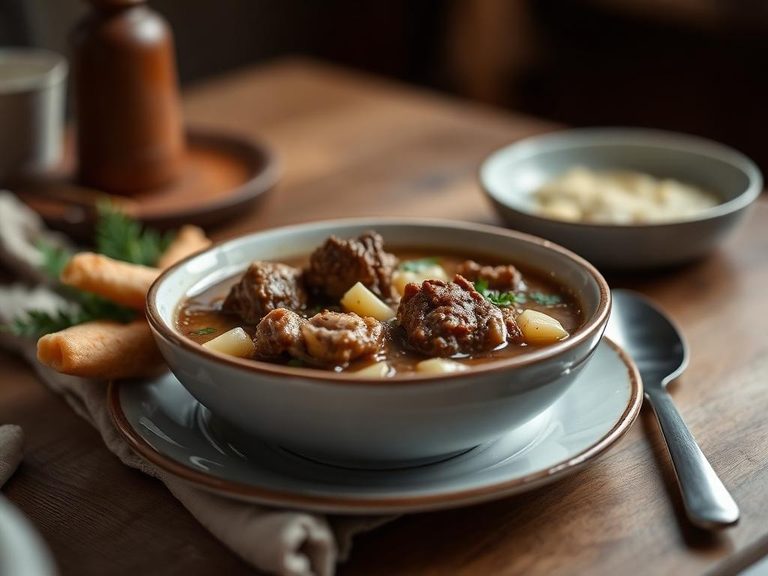
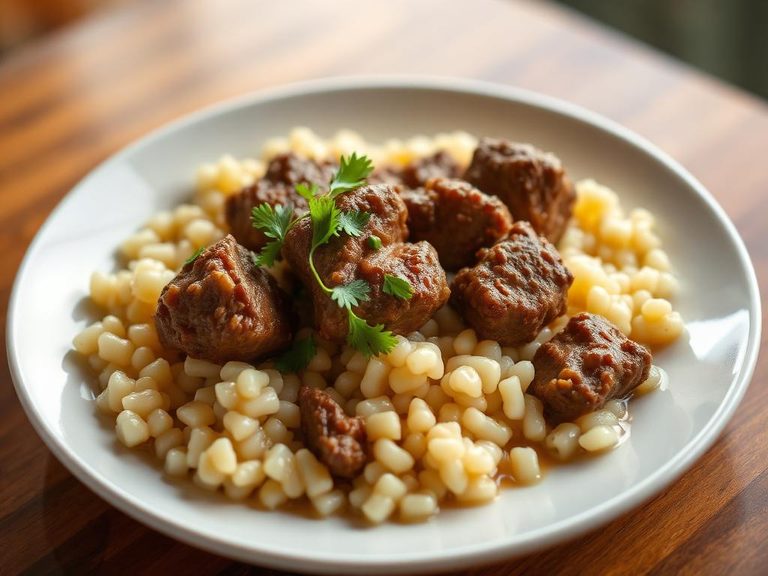
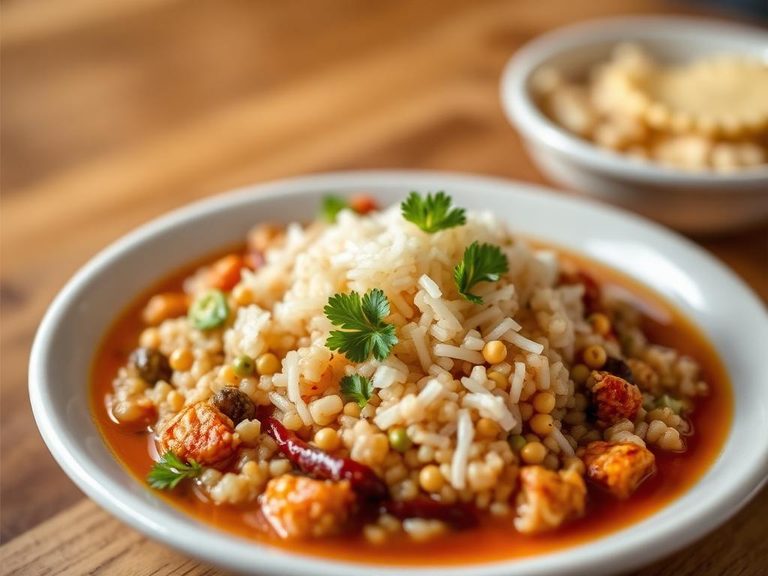
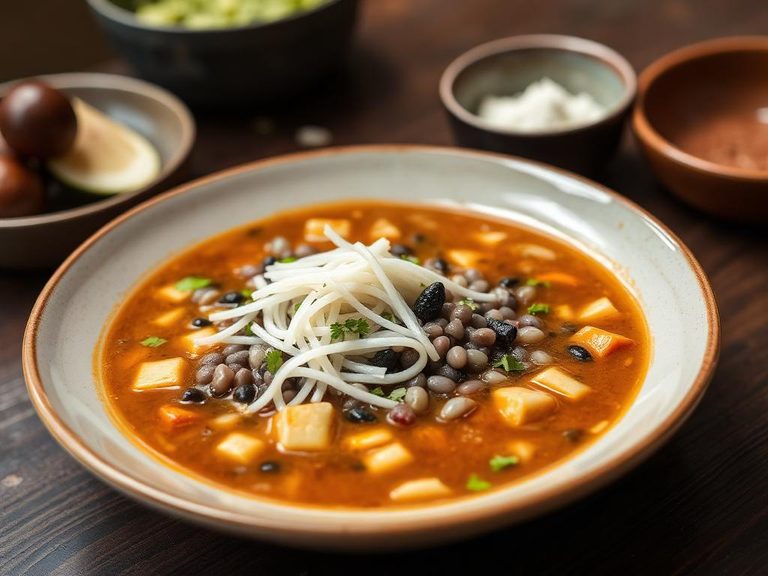
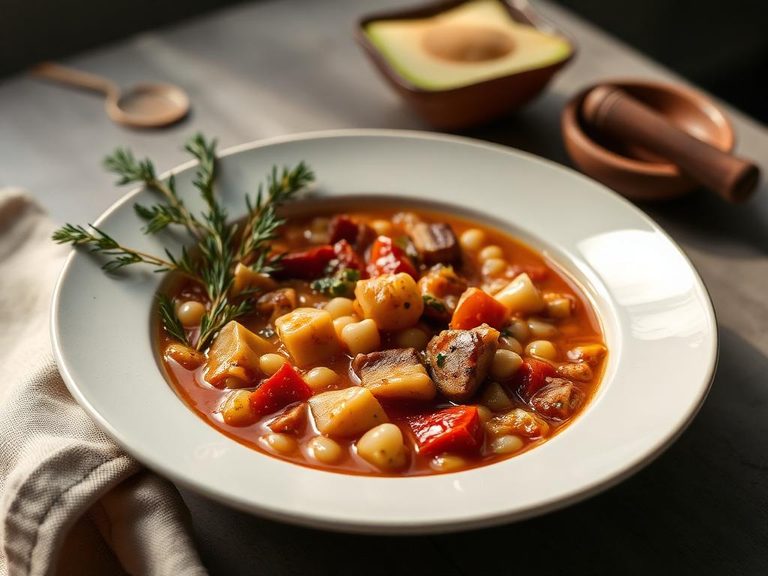
Mutton and Hominy Soup is a hearty, comforting stew traditionally made with tender chunks of mutton (or lamb) and large, nixtamalized corn kernels known as hominy. It is a staple in many Latin American cuisines, particularly in Mexico where it is called 'Pozole,' and is often seasoned with a blend of chilies, garlic, and herbs. The soup is typically served as a festive meal, especially during celebrations and holidays.
🍽️ Nutrition at a glance
This dish is a well-balanced source of high-quality protein from the mutton and complex carbohydrates from the hominy. It provides essential nutrients like iron, zinc, and B vitamins, with a typical serving containing roughly 300-400 calories, depending on the cut of meat and added fats.
Nutrition breakdown
| Calories | 350 kcal |
| Protein | 25 g |
| Carbs | 30 g |
| Fat | 15 g |
| Fiber | 4 g |
| Sugar | 2 g |
| Sodium | 600 mg |
| Iron | 3.5 mg |
| Zinc | 5 mg |
| Niacin (B3) | 6 mg |
| Potassium | 450 mg |
| Phosphorus | 300 mg |
| Selenium | 20 mcg |
| Vitamin B6 | 0.4 mg |
| Magnesium | 40 mg |
Per 1 cup (240 g) · estimated, varies by recipe
💡 What's interesting
Culturally, Pozole has deep roots in pre-Hispanic Mexican cuisine, where hominy was considered a sacred food by the Aztecs. Nutritionally, the process of nixtamalization used to make hominy increases the bioavailability of niacin (vitamin B3) and adds calcium, making the corn more nutritious than its raw form.