Moose Jerky
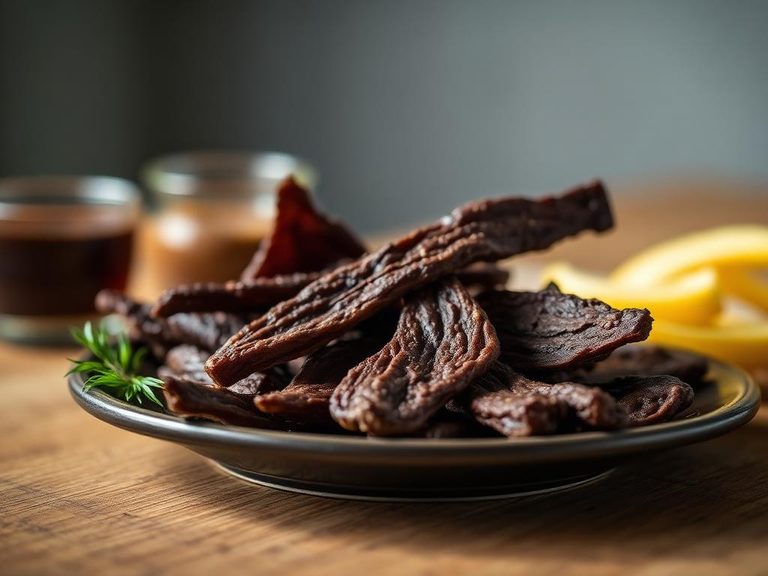
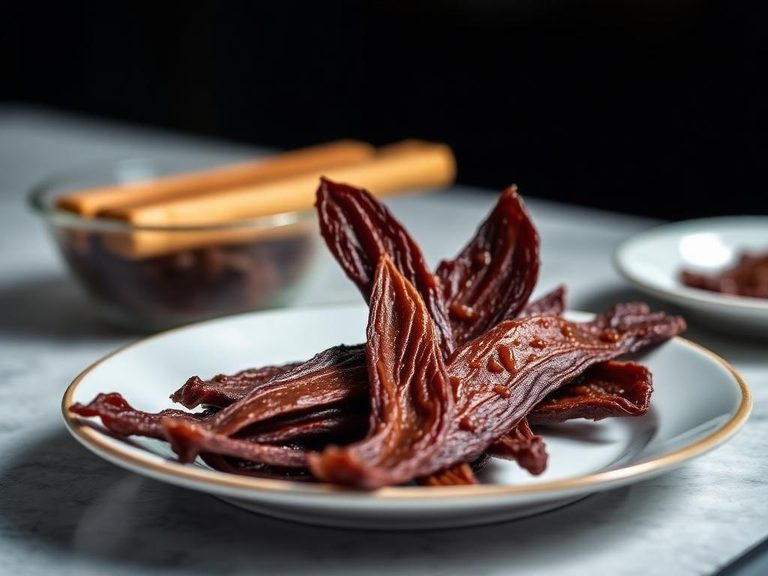
Moose jerky is a lean, dried meat snack made from the muscle meat of moose, typically seasoned with salt, pepper, and sometimes smoke or other spices. It's a traditional preservation method originating from Indigenous and rural communities in North America, particularly in Canada and Alaska, where moose is a common game animal. The jerky is made by slicing the meat thin, marinating it, and dehydrating it to create a portable, shelf-stable food.
🍽️ Nutrition at a glance
Moose jerky is extremely high in protein and very low in carbohydrates and fat, making it a nutrient-dense, energy-efficient snack. It provides significant amounts of iron, zinc, and B vitamins, with a typical serving containing around 100-150 calories.
Nutrition breakdown
| Calories | 116 kcal |
| Protein | 22 g |
| Carbs | 1 g |
| Fat | 2.5 g |
| Fiber | 0 g |
| Sugar | 0.5 g |
| Sodium | 480 mg |
| Iron | 2.5 mg |
| Zinc | 3.5 mg |
| Niacin (B3) | 6 mg |
| Vitamin B6 | 0.4 mg |
| Vitamin B12 | 1.8 mcg |
| Potassium | 280 mg |
| Phosphorus | 200 mg |
| Selenium | 18 mcg |
Per 1 ounce (28 g) · estimated, varies by recipe
💡 What's interesting
Culturally, moose jerky is deeply tied to subsistence hunting practices and is valued for its ability to provide sustenance during long winters or outdoor expeditions. Nutritionally, it's unique as a wild game product, often leaner and with a different mineral profile than conventional beef jerky.