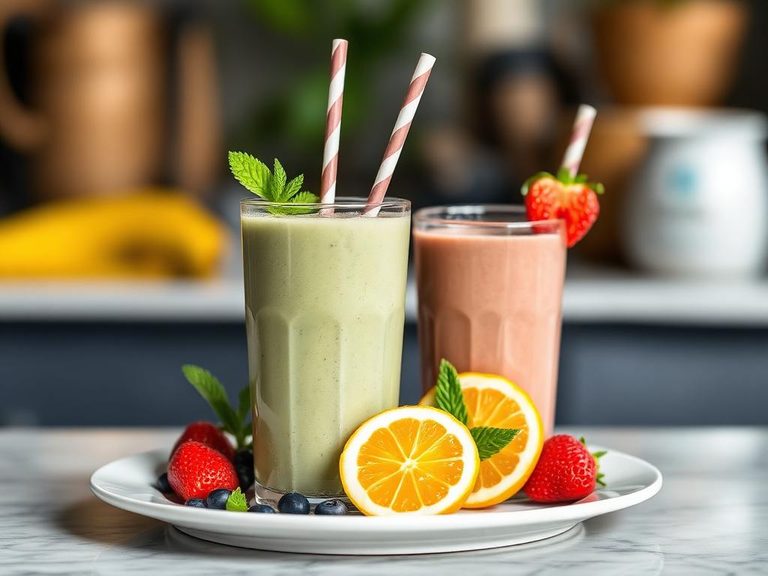
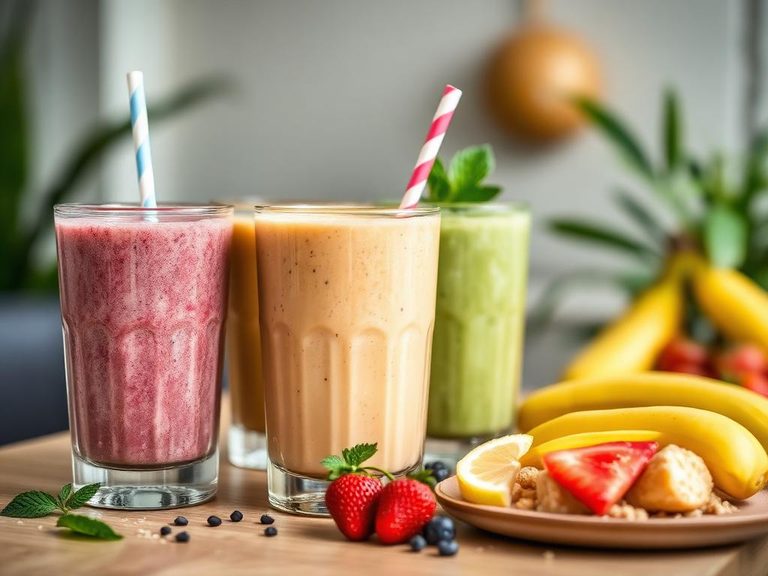
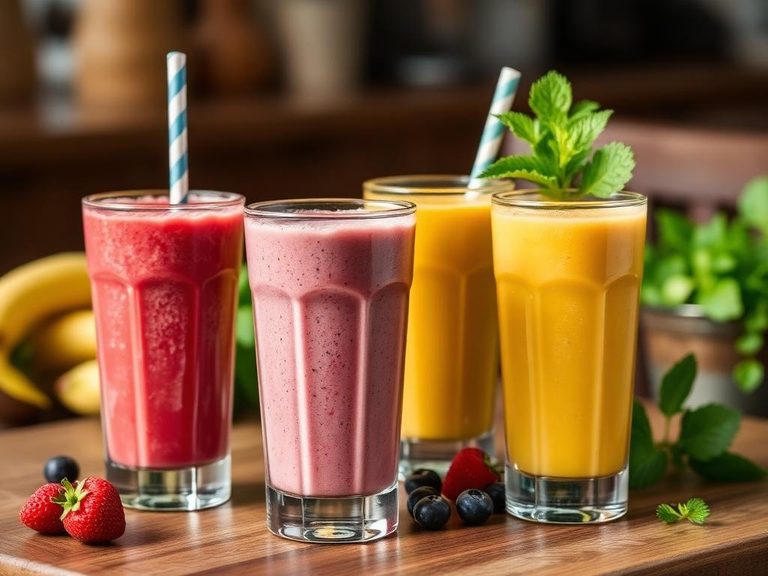
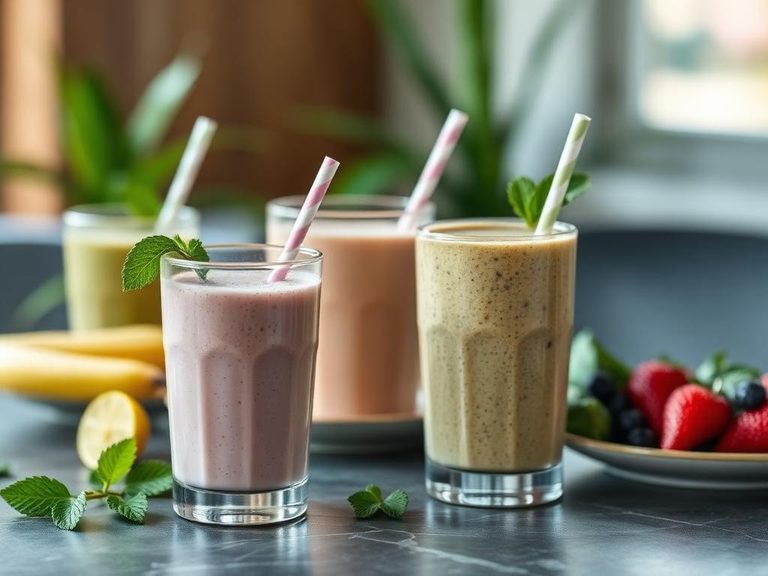
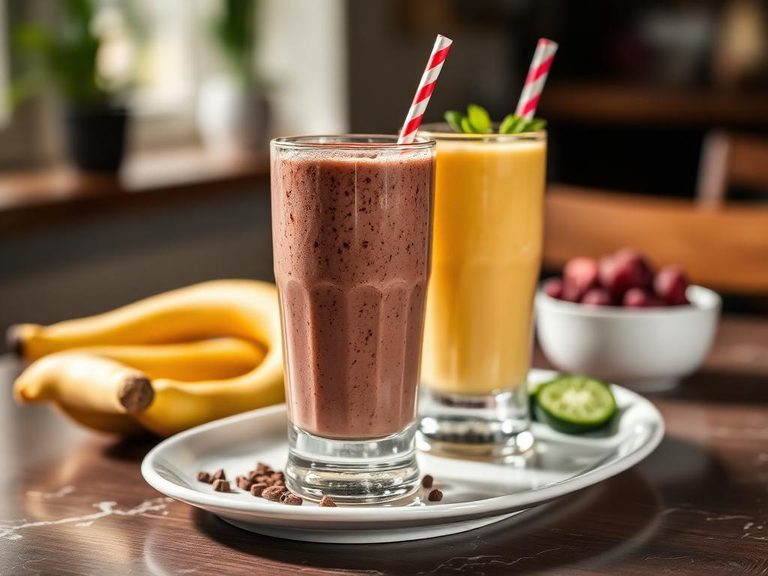
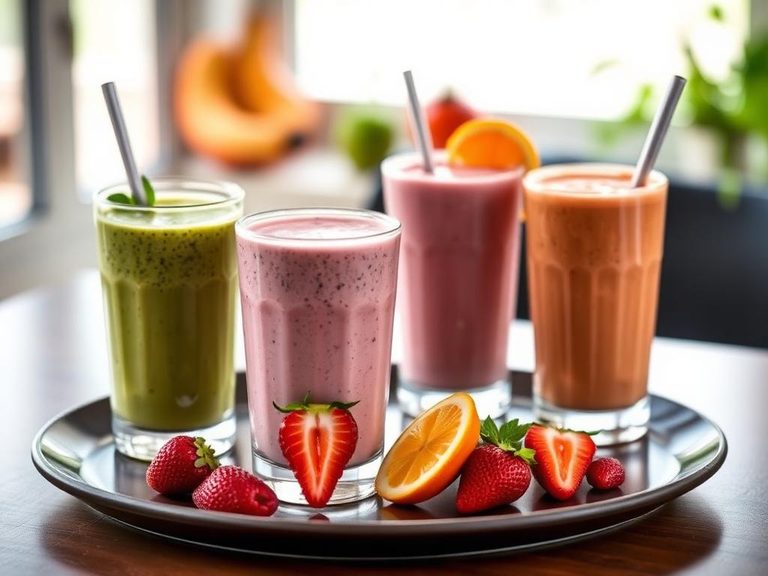
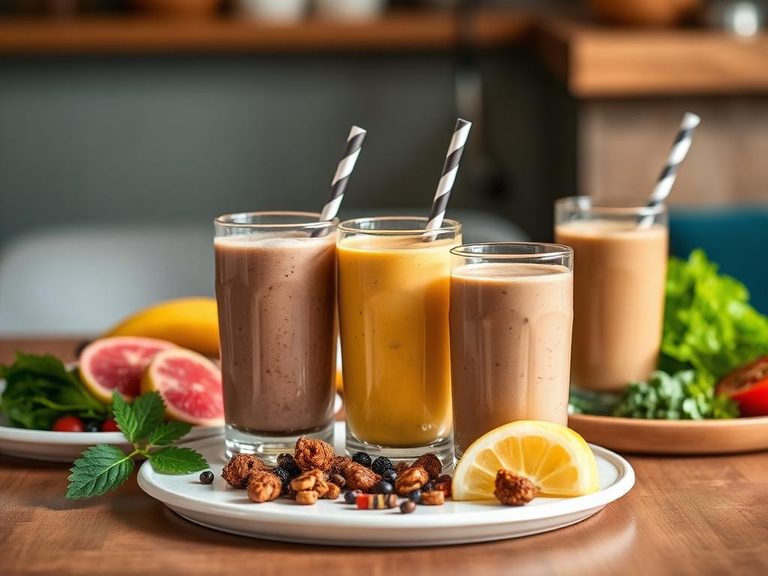
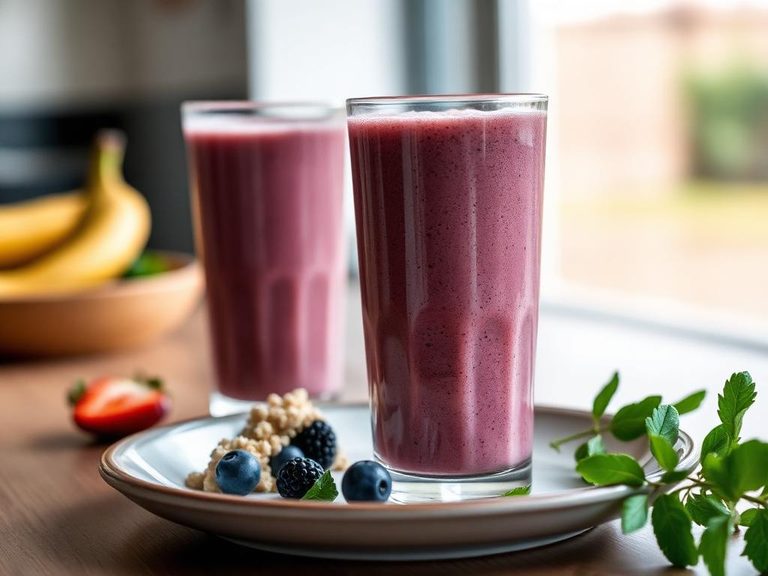
Mixed into smoothies or protein shakes
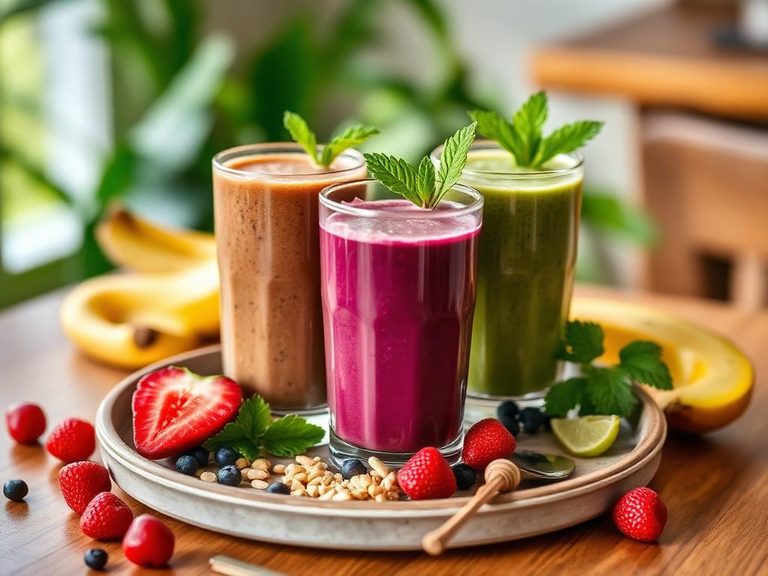
This refers to the practice of blending nutrient-dense ingredients like fruits, vegetables, nuts, seeds, or supplements into smoothies or protein shakes to create a convenient, drinkable meal or snack. Common additions include spinach, berries, banana, protein powder, and nut butters. While not a single 'dish' with a specific origin, this method of preparation is a global staple in health-conscious and fitness-oriented diets.
🍽️ Nutrition at a glance
A well-balanced smoothie can be high in protein (from powders, Greek yogurt, or seeds), complex carbs (from fruits and oats), and healthy fats (from nuts or avocado). It typically provides a good source of fiber, vitamins, and minerals, with a calorie range that can vary widely from 200 to 600+ kcal per serving depending on the ingredients.
Nutrition breakdown
| Calories | 350 kcal |
| Protein | 20 g |
| Carbs | 50 g |
| Fat | 8 g |
| Fiber | 7 g |
| Sugar | 28 g |
| Sodium | 150 mg |
| Potassium | 600 mg |
| Vitamin C | 45 mg |
| Calcium | 250 mg |
| Iron | 3 mg |
| Magnesium | 80 mg |
| Vitamin A | 300 mcg |
| Vitamin K | 70 mcg |
| Phosphorus | 300 mg |
Per 1 typical smoothie (400 g) · estimated, varies by recipe
💡 What's interesting
The smoothie's modern popularity as a health food is largely a 20th-century phenomenon, though the concept of blending foods has ancient roots in various cultures. Nutritionally, it's unique for its ability to pack a high density of diverse nutrients into a single, easily digestible, and customizable format.