

Miso soup seasoning
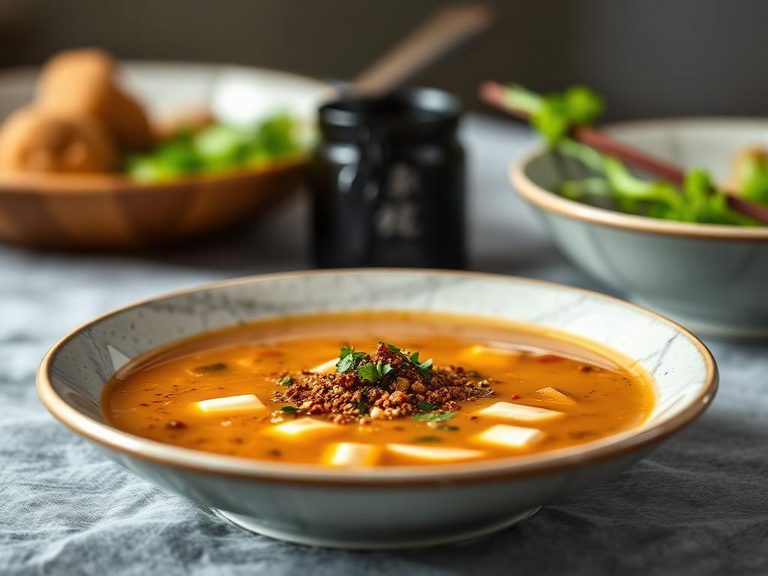
Miso soup seasoning, known as 'miso tare' or simply miso, is a fermented paste that forms the flavor base of the classic Japanese soup. It is primarily made from fermented soybeans, salt, and a grain like rice or barley, often blended with dashi stock, seaweed, or dried fish for umami depth. This essential seasoning is a cornerstone of Japanese cuisine, used not only for soup but also as a marinade, glaze, or dressing.
🍳 View the full Miso soup seasoning recipe →
🍽️ Nutrition at a glance
Miso is generally low in calories, fat, and carbohydrates, providing a modest amount of plant-based protein. It is a notable source of minerals like manganese and zinc, and contains probiotics from fermentation, though its sodium content is typically high.
Nutrition breakdown
| Calories | 30 kcal |
| Protein | 2 g |
| Carbs | 4 g |
| Fat | 0.5 g |
| Fiber | 1 g |
| Sugar | 1 g |
| Sodium | 900 mg |
| Potassium | 150 mg |
| Iron | 1.5 mg |
| Calcium | 20 mg |
| Magnesium | 10 mg |
| Phosphorus | 25 mg |
| Zinc | 0.5 mg |
| Copper | 0.1 mg |
| Manganese | 0.3 mg |
Per 1 cup (240 g) · estimated, varies by recipe
💡 What's interesting
Culturally, miso is a ancient, versatile staple in Japan, embodying the principle of 'umami'—the savory fifth taste. Nutritionally, its fermentation process creates beneficial probiotics and may enhance the bioavailability of nutrients, making it a functional food beyond just flavor.
🍽️ Related dishes




AI estimate may be inaccurate · Terms