

Marinades
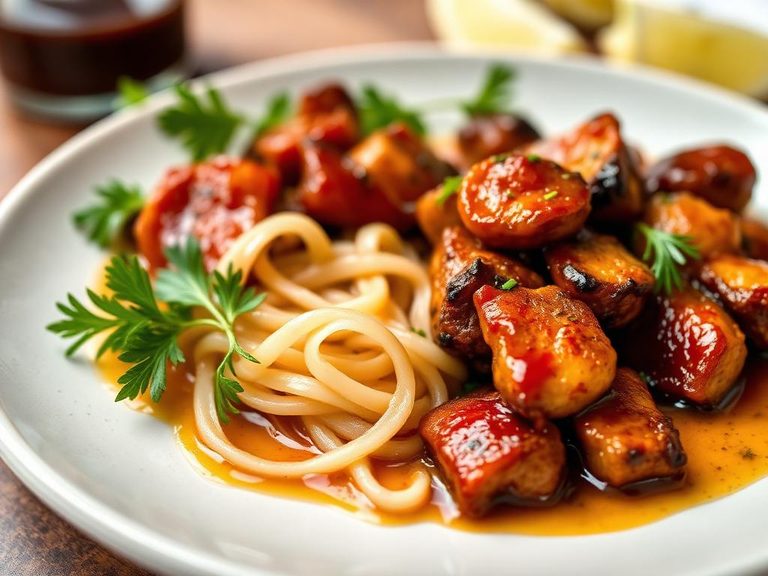
A marinade is a seasoned liquid mixture used to flavor and tenderize raw ingredients like meat, poultry, fish, or vegetables before cooking. It typically consists of an acidic component (like vinegar, citrus juice, or yogurt), oil, and a blend of herbs, spices, and aromatics. The practice is a global culinary technique with countless regional variations.
🍽️ Nutrition at a glance
Nutritionally, a marinade's profile varies widely by recipe, but it is generally not a significant source of calories or macronutrients on its own, as much of it is discarded. Its primary contribution is flavor, sodium, and trace amounts of fat-soluble vitamins from herbs and spices.
Nutrition breakdown
| Calories | 45 kcal |
| Protein | 0.5 g |
| Carbs | 2 g |
| Fat | 4 g |
| Fiber | 0.5 g |
| Sugar | 1 g |
| Sodium | 480 mg |
| Sodium | 480 mg |
| Vitamin C | 3 mg |
| Vitamin K | 5 mcg |
| Potassium | 50 mg |
| Iron | 0.3 mg |
| Calcium | 10 mg |
| Manganese | 0.1 mg |
| Allicin (from garlic) | Trace |
Per 1/4 cup (60 g) · estimated, varies by recipe
💡 What's interesting
Culturally, marinades are a universal cooking method found in nearly every cuisine, from Argentine chimichurri to Indian tandoori mixes. Nutritionally, acidic marinades can help break down tough muscle fibers in meat, potentially aiding in digestibility.
🍽️ Related dishes








AI estimate may be inaccurate · Terms