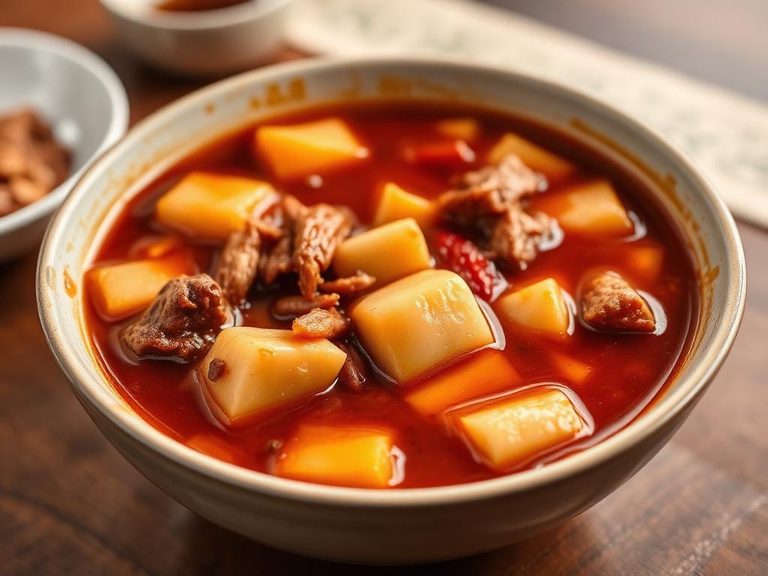
Korean-style rice cake with gochujang
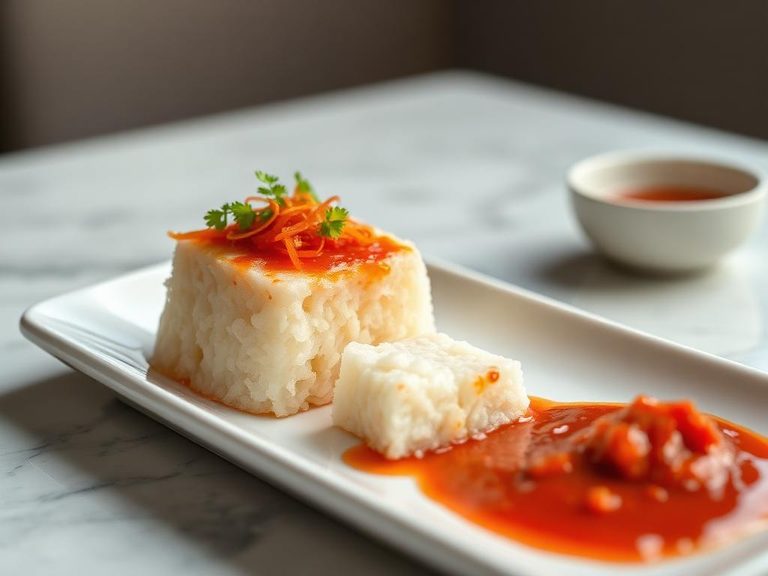
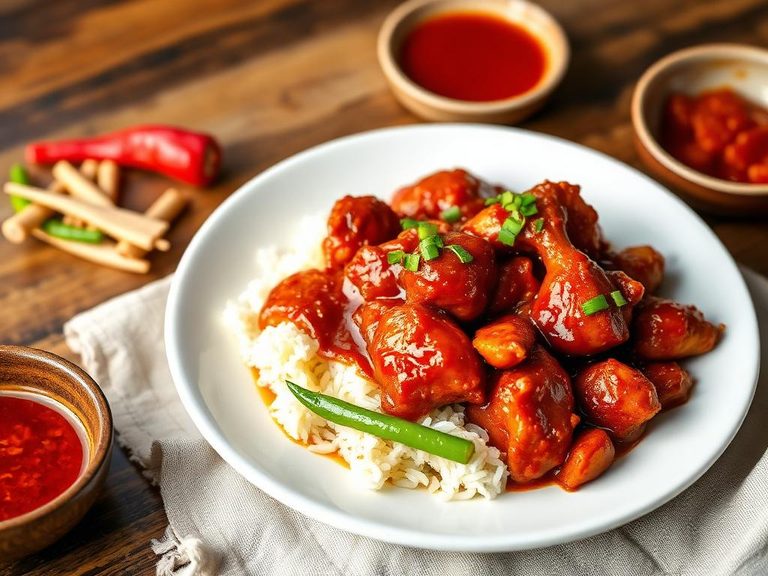
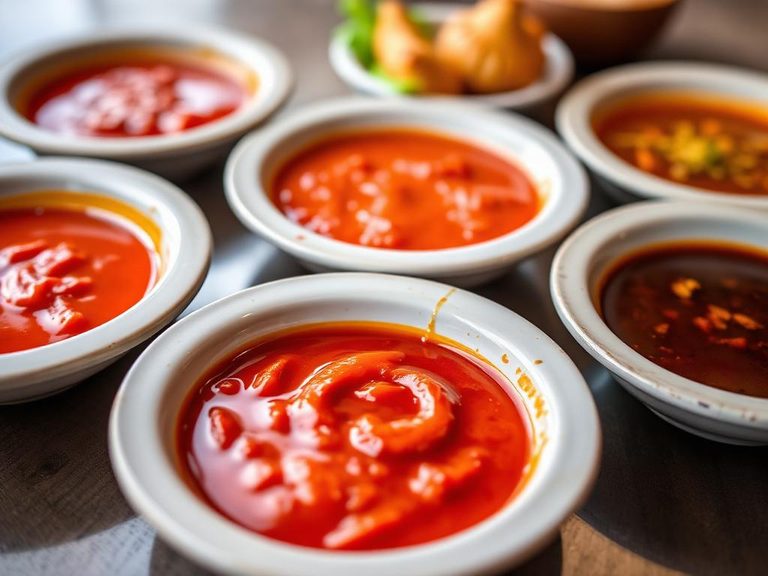
Korean-style rice cake with gochujang, commonly known as tteokbokki, is a beloved Korean street food featuring chewy cylindrical rice cakes simmered in a sweet and spicy gochujang-based sauce. The dish typically includes tteok (rice cakes), gochujang (fermented chili paste), sugar, soy sauce, and often fish cakes, scallions, and a hard-boiled egg. It originated as a royal court dish in the Joseon Dynasty but evolved into a popular, affordable street snack in the 20th century.
🍽️ Nutrition at a glance
This dish is primarily high in carbohydrates from the rice cakes, with a moderate amount of fat and protein depending on additions like fish cakes or eggs. It provides quick energy and some B vitamins, but can be high in sodium due to the sauce. A typical serving contains roughly 400-500 calories.
Nutrition breakdown
| Calories | 450 kcal |
| Protein | 10 g |
| Carbs | 85 g |
| Fat | 8 g |
| Fiber | 3 g |
| Sugar | 15 g |
| Sodium | 800 mg |
| Potassium | 200 mg |
| Iron | 2 mg |
| Calcium | 50 mg |
| Vitamin B6 | 0.3 mg |
| Niacin (B3) | 2 mg |
| Manganese | 0.5 mg |
| Selenium | 8 mcg |
| Phosphorus | 100 mg |
Per 1 cup (240 g) · estimated, varies by recipe
💡 What's interesting
Tteokbokki is a cultural icon of Korean comfort food and street culture, often enjoyed as a late-night snack or quick meal. Nutritionally, the fermented gochujang adds probiotics and capsaicin, which may boost metabolism, though the dish is best enjoyed in moderation due to its high sodium and refined carb content.