

Inside-Out Roll
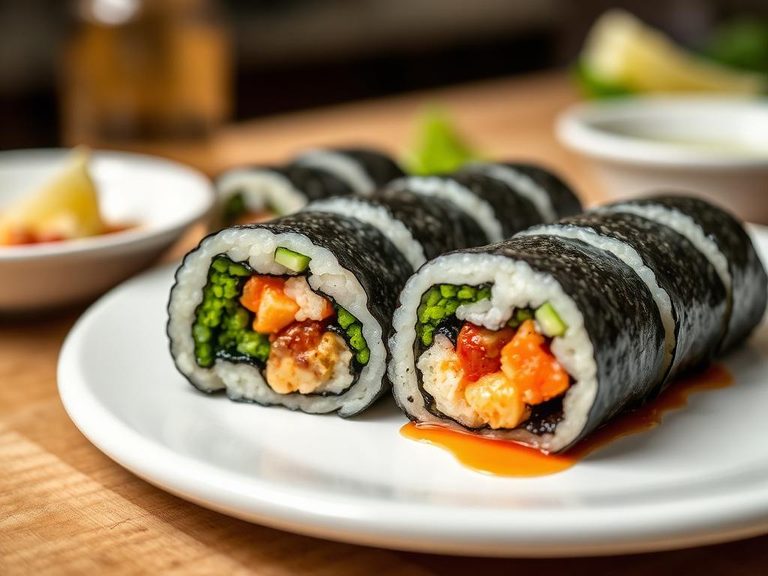
An Inside-Out Roll, or Uramaki, is a style of sushi where the rice is on the outside and the seaweed (nori) is on the inside, wrapping the fillings. Typical ingredients include vinegared sushi rice, nori, and a variety of fillings like avocado, cucumber, crab, or raw fish, often coated with sesame seeds or fish roe. It originated in the United States as a creative adaptation of traditional Japanese sushi.
🍽️ Nutrition at a glance
An Inside-Out Roll is generally high in carbohydrates from the sushi rice and can be moderate in fat depending on ingredients like avocado or mayonnaise-based sauces. It provides a good source of protein from fish or imitation crab, along with key nutrients like omega-3 fatty acids (if using fatty fish) and vitamins from vegetables. A typical serving of one roll (6-8 pieces) ranges from 300 to 500 calories.
Nutrition breakdown
| Calories | 350 kcal |
| Protein | 12 g |
| Carbs | 45 g |
| Fat | 14 g |
| Fiber | 3 g |
| Sugar | 5 g |
| Sodium | 680 mg |
| Vitamin B12 | 1.2 mcg |
| Iron | 2.5 mg |
| Calcium | 60 mg |
| Magnesium | 35 mg |
| Phosphorus | 150 mg |
| Zinc | 1.8 mg |
| Selenium | 22 mcg |
| Vitamin D | 0.5 mcg |
Per 1 roll (approx. 180 g) · estimated, varies by recipe
💡 What's interesting
Culturally, the Uramaki represents a fascinating example of culinary fusion, adapting Japanese sushi techniques to Western tastes and presentation. Nutritionally, it's unique for often incorporating more rice and decorative outer coatings compared to traditional rolls, making it a more filling and visually striking option.
🍽️ Related dishes


AI estimate may be inaccurate · Terms