

Decorated Holiday Cut-Outs

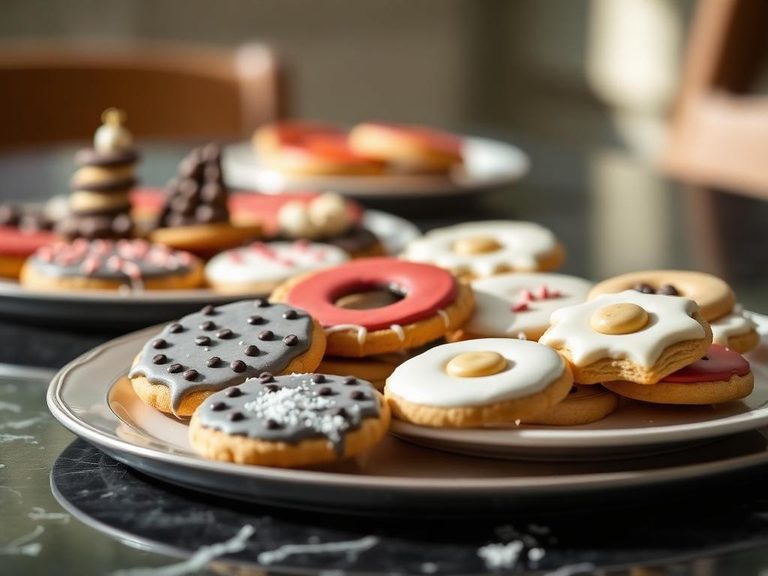
Decorated Holiday Cut-Outs are festive, intricately shaped cookies or pastries, typically made from a sturdy dough like shortbread or gingerbread, rolled out and cut into seasonal forms such as stars, trees, or snowflakes before baking. They are a beloved holiday tradition in many Western cultures, especially in the United States and Europe, where they are often decorated with colorful royal icing, sprinkles, or edible glitter. The dish is synonymous with Christmas, Hanukkah, and other winter celebrations, serving as both a treat and a decorative centerpiece.
🍽️ Nutrition at a glance
These treats are generally high in carbohydrates and fat due to their butter, sugar, and flour base, with minimal protein. A single, moderately sized decorated cookie typically contains around 100-150 calories, providing quick energy but limited essential nutrients beyond small amounts of iron from the flour.
Nutrition breakdown
| Calories | 280 kcal |
| Protein | 3 g |
| Carbs | 40 g |
| Fat | 12 g |
| Fiber | 1 g |
| Sugar | 22 g |
| Sodium | 150 mg |
| Calcium | 20 mg |
| Iron | 1.5 mg |
| Potassium | 45 mg |
| Vitamin A | 60 mcg RAE |
| Vitamin D | 0.2 mcg |
| Thiamin (B1) | 0.1 mg |
| Folate | 30 mcg DFE |
| Phosphorus | 30 mg |
Per 2 cookies (approx. 60 g) · estimated, varies by recipe
💡 What's interesting
Culturally, the act of making and decorating these cut-outs is a cherished social activity, often involving family and friends in a creative, bonding experience that blends culinary art with holiday nostalgia. Nutritionally, their dense, dry texture is intentionally designed to hold intricate shapes and support heavy icing, making them more of a celebratory confection than a nourishing food.
🍽️ Related dishes


AI estimate may be inaccurate · Terms