

Ingredient in a casserole
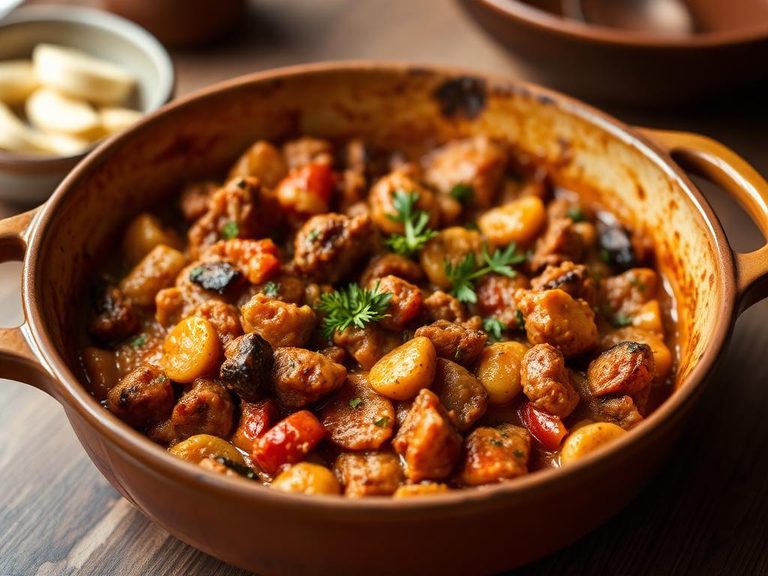
A casserole is a versatile, baked dish typically made by layering or combining ingredients like proteins, vegetables, starches, and a binding sauce in a single dish. It often features ingredients such as ground meat, potatoes, pasta, or rice, along with cheese, cream, or condensed soups, and is a staple of American home cooking, especially popular in the Midwest and South.
🍽️ Nutrition at a glance
Casseroles are generally high in carbohydrates and fat, with moderate protein, depending on the specific ingredients used. They provide key nutrients like protein, fiber, and vitamins from vegetables, but can be calorie-dense, often ranging from 300 to 600 calories per serving.
Nutrition breakdown
| Calories | 220 kcal |
| Protein | 10 g |
| Carbs | 25 g |
| Fat | 9 g |
| Fiber | 3 g |
| Sugar | 5 g |
| Sodium | 480 mg |
| Potassium | 350 mg |
| Vitamin A | 120 mcg |
| Vitamin C | 10 mg |
| Calcium | 150 mg |
| Iron | 2 mg |
| Vitamin B6 | 0.3 mg |
| Magnesium | 40 mg |
| Phosphorus | 180 mg |
Per 1 cup (240 g) · estimated, varies by recipe
💡 What's interesting
Casseroles are culturally significant as a symbol of comfort food and communal eating in the United States, often served at potlucks, holidays, and family gatherings. Nutritionally, they can be adapted to include healthier ingredients like whole grains and lean proteins, making them a flexible option for balanced meals.
🍽️ Related dishes




AI estimate may be inaccurate · Terms