

Human milk ice cream
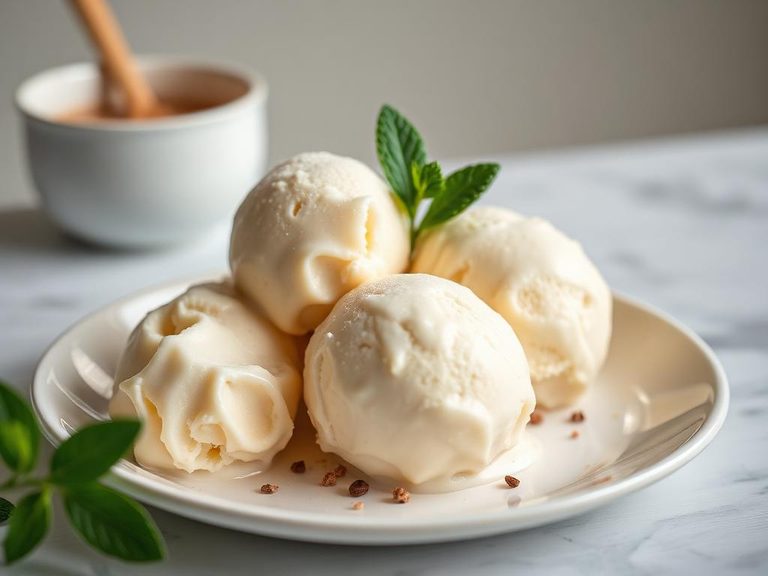
Human milk ice cream, also known as 'baby Gaga' or 'breast milk ice cream', is a novelty dessert made by churning human breast milk with sugar, vanilla, and other standard ice cream ingredients. It was most famously served as a limited-time offering at a London ice cream parlor in 2011, sparking widespread media attention and debate.
🍳 View the full Human milk ice cream recipe →
🍽️ Nutrition at a glance
As a dairy-based dessert, it is high in fat and sugar, providing a rich source of calories. Its key nutrients include calcium, vitamin D, and various antibodies and proteins naturally present in human milk.
Nutrition breakdown
| Calories | 170 kcal |
| Protein | 3.5 g |
| Carbs | 20 g |
| Fat | 9 g |
| Fiber | 0 g |
| Sugar | 18 g |
| Sodium | 40 mg |
| Calcium | 120 mg |
| Vitamin D | 1.5 mcg |
| Potassium | 150 mg |
| Phosphorus | 90 mg |
| Vitamin A | 60 mcg |
| Vitamin C | 4 mg |
| Riboflavin (B2) | 0.08 mg |
| Zinc | 0.4 mg |
Per 1 scoop (80 g) · estimated, varies by recipe
💡 What's interesting
This dish is culturally provocative, challenging conventional boundaries of food ethics and social taboos. Nutritionally, it's unique because human milk contains live antibodies and a different fat/protein composition than cow's milk, though these properties are altered by pasteurization and freezing.
🍽️ Related dishes



AI estimate may be inaccurate · Terms