Homemade mayonnaise and aioli
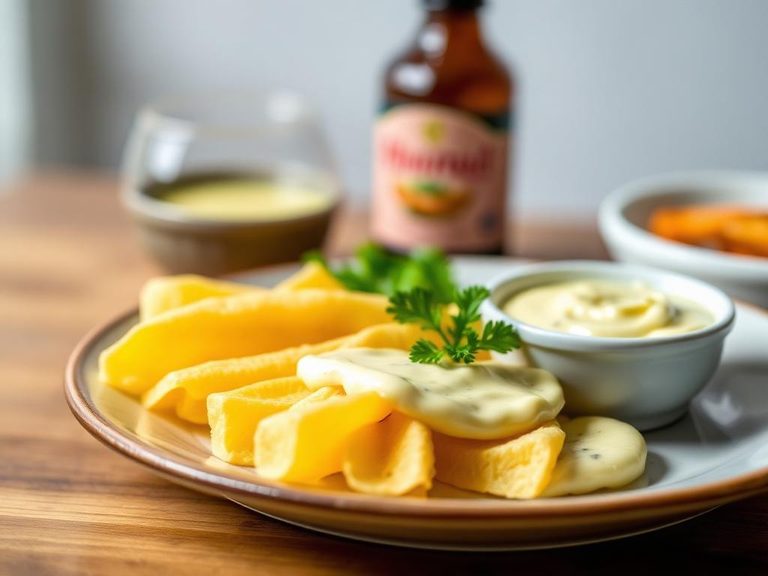
Homemade mayonnaise and aioli are rich, creamy emulsions made by slowly whisking oil into egg yolks, with aioli distinguished by the addition of garlic. Mayonnaise is a staple of French cuisine, while aioli originates from the Mediterranean region, particularly Provence and Catalonia. Both are incredibly versatile, serving as foundational sauces, dips, or spreads for a wide variety of dishes.
🍽️ Nutrition at a glance
Both sauces are very high in fat, primarily from the oil and egg yolks, with negligible carbohydrates and a small amount of protein. A single tablespoon serving contains roughly 90-100 calories and provides healthy monounsaturated fats and fat-soluble vitamins like Vitamin E.
Nutrition breakdown
| Calories | 100 kcal |
| Protein | 0.1 g |
| Carbs | 0.1 g |
| Fat | 11 g |
| Fiber | 0 g |
| Sugar | 0 g |
| Sodium | 90 mg |
| Vitamin E | 1.5 mg |
| Vitamin K | 5 mcg |
| Cholesterol | 5 mg |
| Saturated Fat | 1.5 g |
| Monounsaturated Fat | 7 g |
| Polyunsaturated Fat | 2 g |
| Sodium | 90 mg |
| Phosphorus | 5 mg |
Per 1 tablespoon (15 g) · estimated, varies by recipe
💡 What's interesting
The creation of mayonnaise is a culinary science, relying on the lecithin in egg yolks to act as an emulsifier that binds oil and water into a stable, creamy sauce. Historically, aioli was a peasant food in Mediterranean regions, often made with a mortar and pestle to create a potent, garlic-forward sauce that could preserve and flavor simpler foods.