

Hokkien Mee
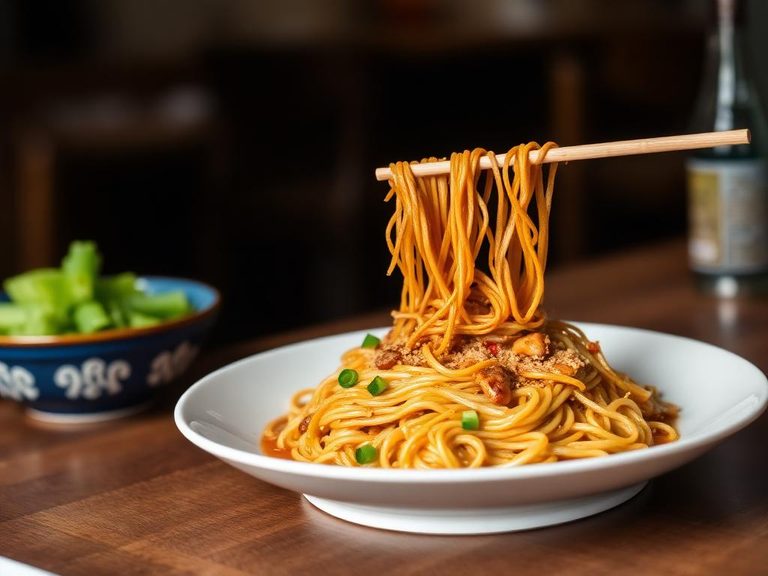
Hokkien Mee is a beloved stir-fried noodle dish popular across Southeast Asia, particularly in Malaysia, Singapore, and Indonesia. It features yellow wheat noodles and thin rice vermicelli (bee hoon) tossed in a savory, umami-rich sauce made from prawn stock, soy sauce, and often a splash of Chinese wine. Key ingredients typically include prawns, squid, pork belly, egg, bean sprouts, and a garnish of fried shallots, lime, and sambal.
🍽️ Nutrition at a glance
Hokkien Mee is a high-carbohydrate and moderate-to-high-fat dish due to the noodles, oil used in stir-frying, and often pork belly. It provides a good source of protein from the seafood and pork, along with some B vitamins and iron, with a typical serving ranging from 500 to 700 calories.
Nutrition breakdown
| Calories | 450 kcal |
| Protein | 22 g |
| Carbs | 52 g |
| Fat | 16 g |
| Fiber | 3 g |
| Sugar | 4 g |
| Sodium | 950 mg |
| Iron | 3.5 mg |
| Potassium | 420 mg |
| Vitamin B12 | 2.1 µg |
| Niacin (B3) | 5.8 mg |
| Phosphorus | 280 mg |
| Selenium | 35 µg |
| Zinc | 2.8 mg |
| Magnesium | 55 mg |
Per 1 plate (300 g) · estimated, varies by recipe
💡 What's interesting
Culturally, Hokkien Mee is a classic example of Peranakan (Straits Chinese) cuisine, reflecting a fusion of Chinese cooking techniques with local Southeast Asian ingredients and flavors. Its unique cooking method often involves a dramatic 'wok hei' (breath of the wok) finish, where the noodles are briefly charred for a smoky depth, making it a beloved hawker stall staple.
🍽️ Related dishes
AI estimate may be inaccurate · Terms