

Gruel
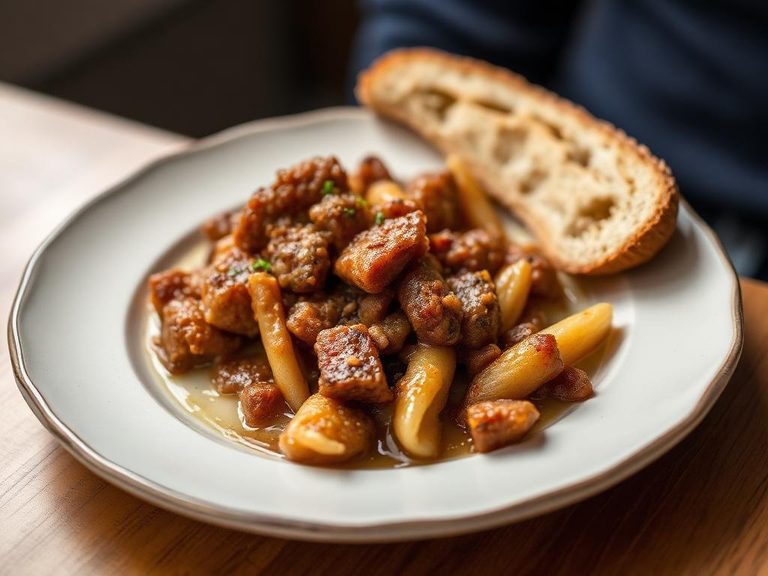
Gruel is a simple, thin porridge made by boiling grains like oats, barley, or wheat in water or milk, originating as a staple food in medieval Europe and ancient civilizations. It was a common, humble dish for the poor, the sick, and the elderly, often seasoned with salt or sweetened with honey.
🍳 View the full Gruel recipe →
🍽️ Nutrition at a glance
Gruel is primarily a high-carbohydrate food, providing quick energy with minimal fat and protein. A typical serving offers key nutrients like iron and B vitamins from the grains, with a calorie range of roughly 150-250 per bowl, depending on the grain and liquid used.
Nutrition breakdown
| Calories | 150 kcal |
| Protein | 4 g |
| Carbs | 30 g |
| Fat | 2.5 g |
| Fiber | 3 g |
| Sugar | 1 g |
| Sodium | 5 mg |
| Iron | 1.5 mg |
| Magnesium | 40 mg |
| Phosphorus | 100 mg |
| Potassium | 150 mg |
| Zinc | 1.0 mg |
| Thiamin (B1) | 0.2 mg |
| Niacin (B3) | 2.0 mg |
| Vitamin B6 | 0.1 mg |
Per 1 cup (240 g) · estimated, varies by recipe
💡 What's interesting
Historically, gruel was so ubiquitous that it became a cultural symbol of poverty and sustenance, famously featured in Charles Dickens' 'Oliver Twist.' Nutritionally, its thin consistency made it an easily digestible food for invalids and infants, acting as a precursor to modern infant formulas and medical diets.
🍽️ Related dishes
AI estimate may be inaccurate · Terms