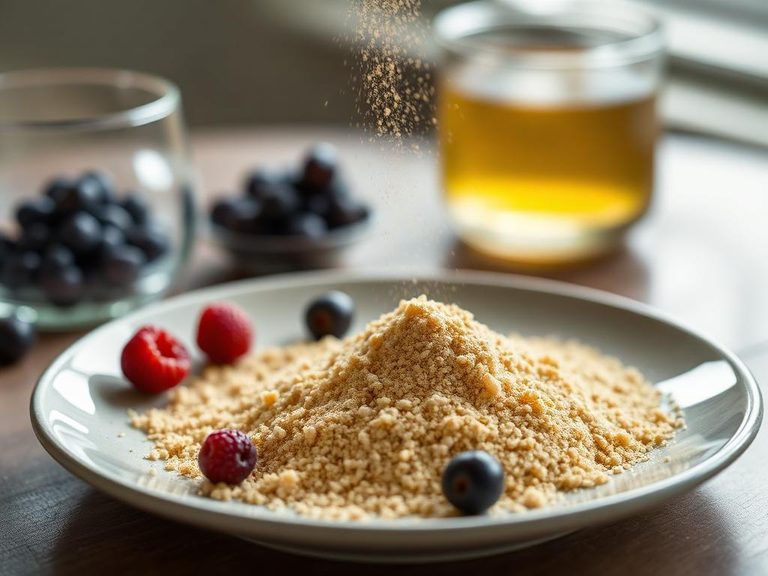
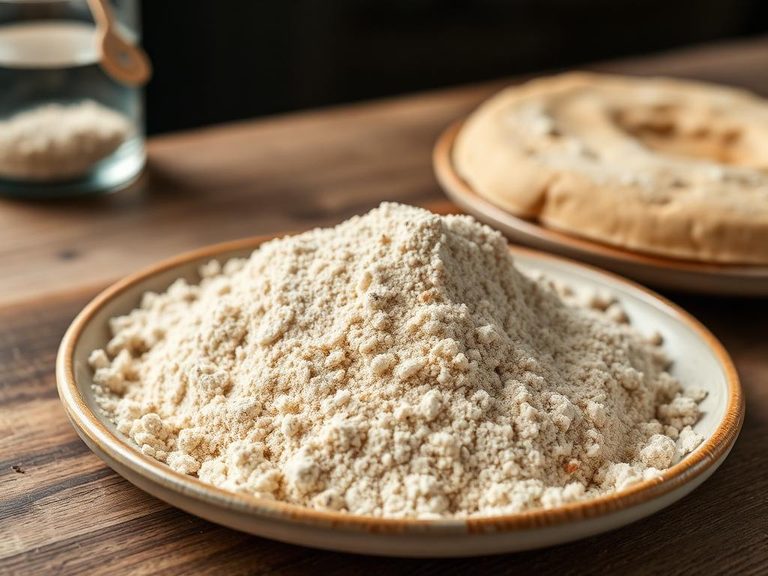
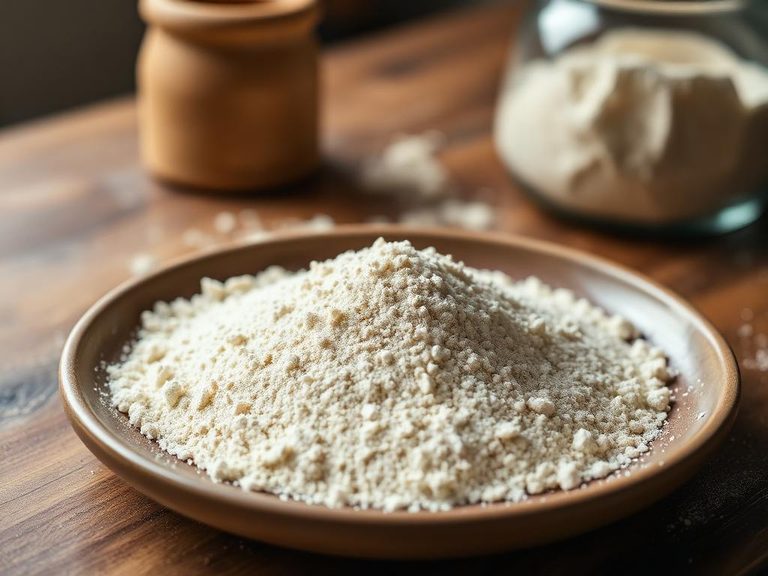
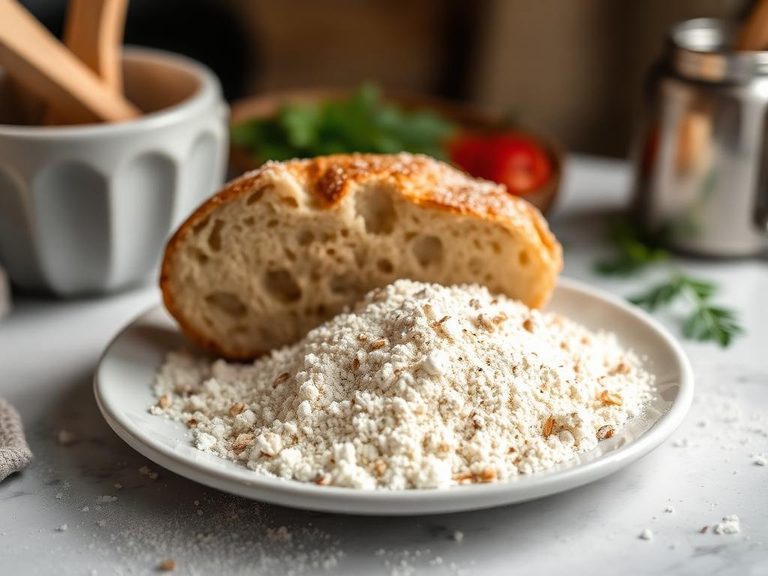
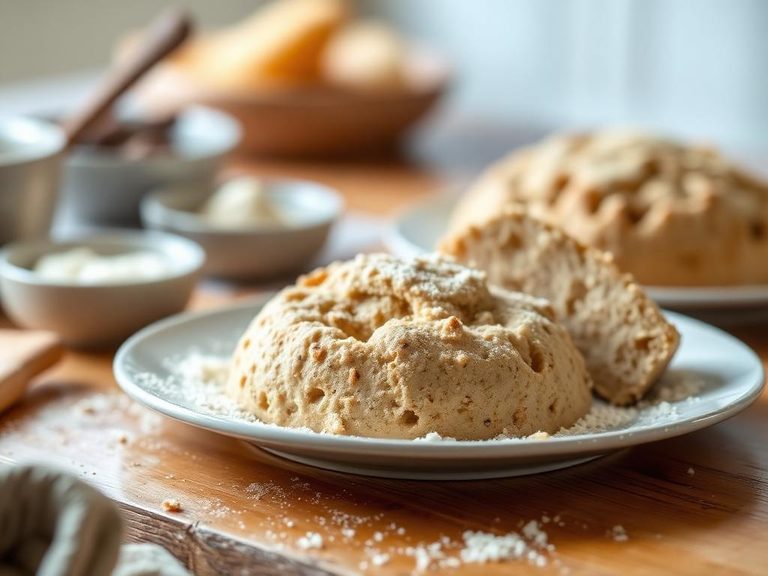
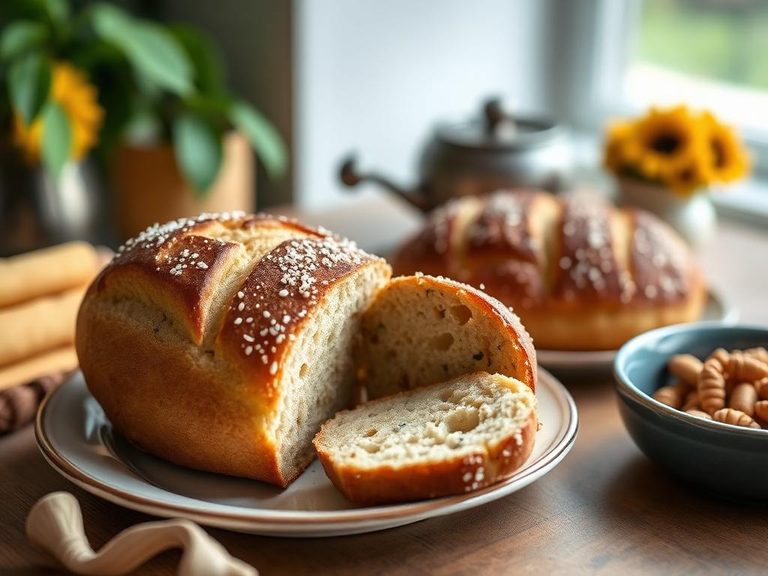
Ground into a powder for soups or breads
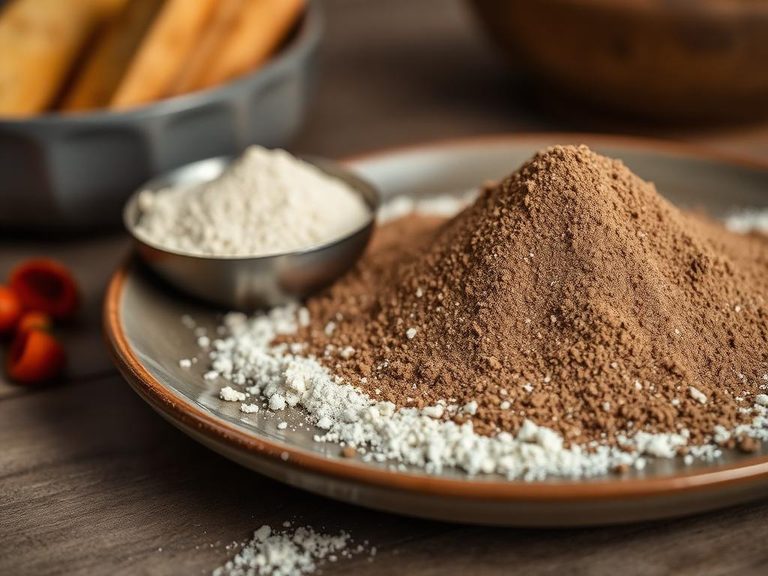
This refers to a versatile flour or powder made from a starchy root or grain, most commonly cassava (yuca) or plantain, which is a staple in tropical regions. The powder is used as a thickener for soups and stews or as a primary ingredient in breads and flatbreads. It originates from Latin America and the Caribbean, with cassava flour being particularly important in Brazilian and West African cuisines.
🍽️ Nutrition at a glance
This powder is very high in carbohydrates, providing a dense source of energy, but is typically low in protein and fat. It is a good source of some minerals like potassium and magnesium, with a rough calorie ballpark of 350-400 kcal per 100g serving.
Nutrition breakdown
| Calories | 460 kcal |
| Protein | 1.5 g |
| Carbs | 112 g |
| Fat | 0.5 g |
| Fiber | 4 g |
| Sugar | 1.5 g |
| Sodium | 15 mg |
| Potassium | 558 mg |
| Magnesium | 50 mg |
| Iron | 1.5 mg |
| Phosphorus | 50 mg |
| Vitamin C | 42 mg |
| Thiamin (B1) | 0.2 mg |
| Folate | 56 mcg |
| Manganese | 0.8 mg |
Per 1 cup (128 g) · estimated, varies by recipe
💡 What's interesting
Cassava flour is a gluten-free staple that can be processed into tapioca, a key ingredient in bubble tea. Nutritionally, it's a resilient crop that grows in poor soils, making it a critical food security crop for millions in the tropics.