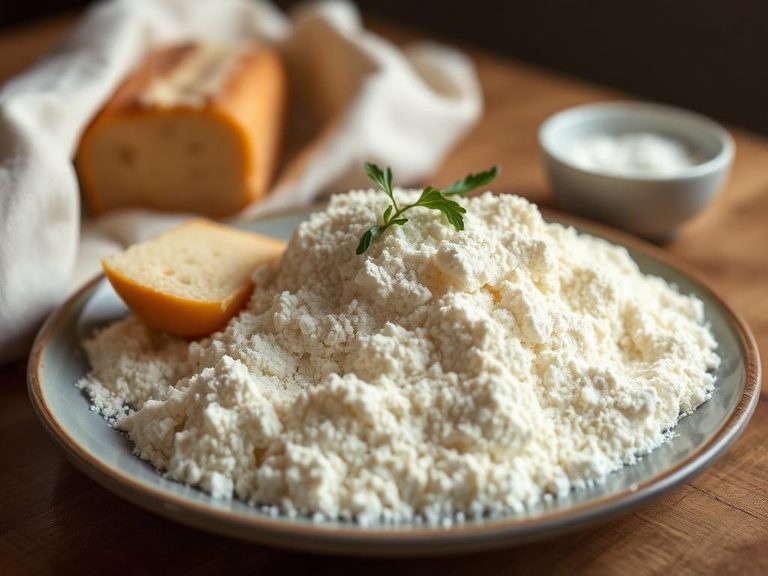
Ground into a flour for bread
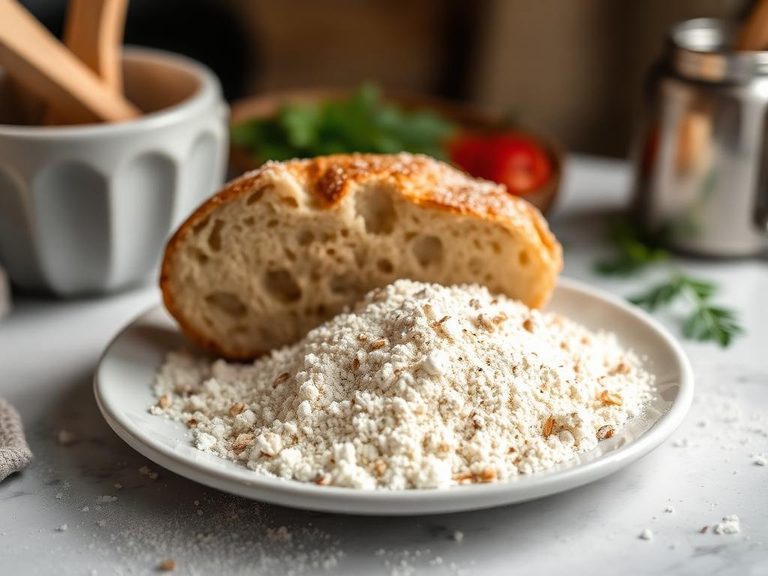
This refers to flour, a fine powder made by grinding grains, seeds, or roots, which serves as the foundational ingredient for bread and countless other baked goods. Its typical ingredients are simply the whole grain or seed itself, such as wheat, rye, or rice. It originates from ancient agricultural societies across the globe, with wheat flour being a staple in Europe, the Middle East, and the Americas.
🍽️ Nutrition at a glance
Flour is a high-carbohydrate food, providing the primary source of energy in bread. It also offers a moderate amount of plant-based protein and is a key source of B vitamins and minerals like iron and magnesium, especially in whole-grain varieties.
Nutrition breakdown
| Calories | 100 kcal |
| Protein | 4 g |
| Carbs | 20 g |
| Fat | 1 g |
| Fiber | 3 g |
| Sugar | 0 g |
| Sodium | 0 mg |
| Manganese | 1.0 mg |
| Selenium | 12 mcg |
| Phosphorus | 80 mg |
| Niacin (B3) | 2.0 mg |
| Thiamine (B1) | 0.1 mg |
| Magnesium | 30 mg |
| Iron | 1.0 mg |
| Zinc | 0.8 mg |
Per 1/4 cup (30 g) of whole-wheat flour · estimated, varies by recipe
💡 What's interesting
The cultural significance of flour is immense, symbolizing sustenance and community in nearly every civilization. Nutritionally, the difference between refined white flour and whole-wheat flour is stark, with the latter retaining the bran and germ for significantly higher fiber and nutrient content.
🍽️ Related dishes
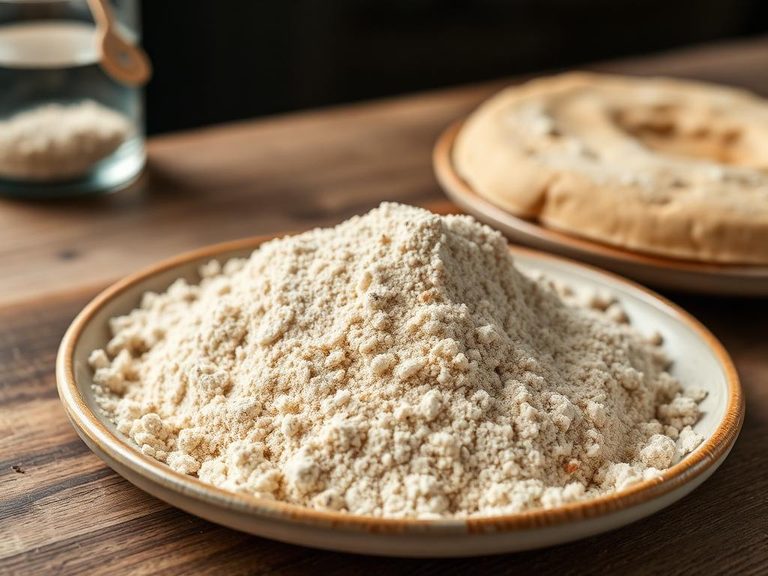 Ground into a sweet flour for tortillas or breads
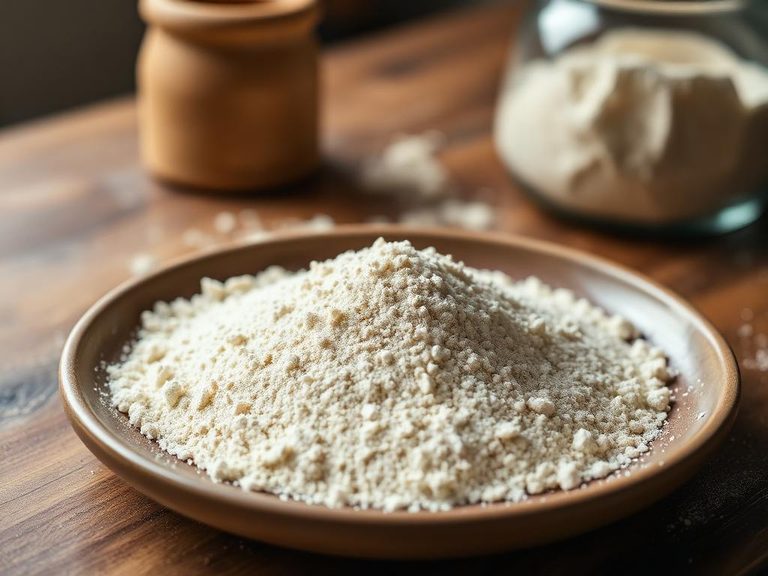 Ground into flour for baking
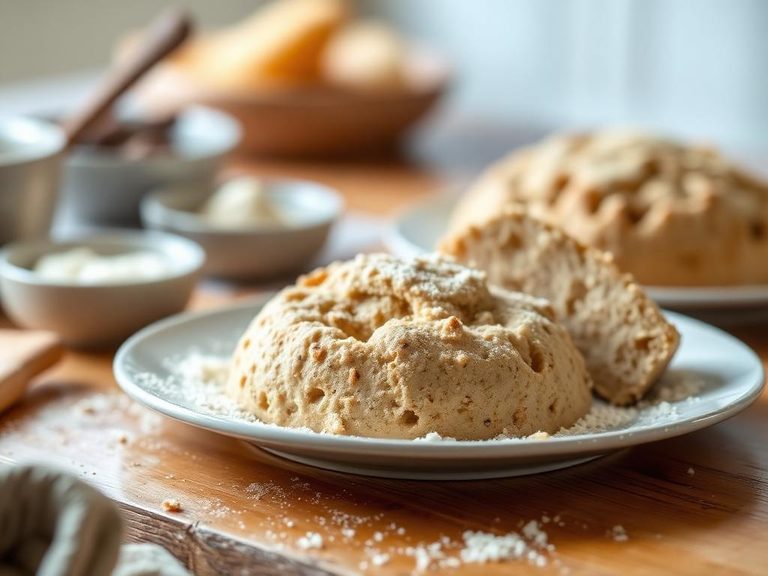 Ground into flour for protein-rich baking
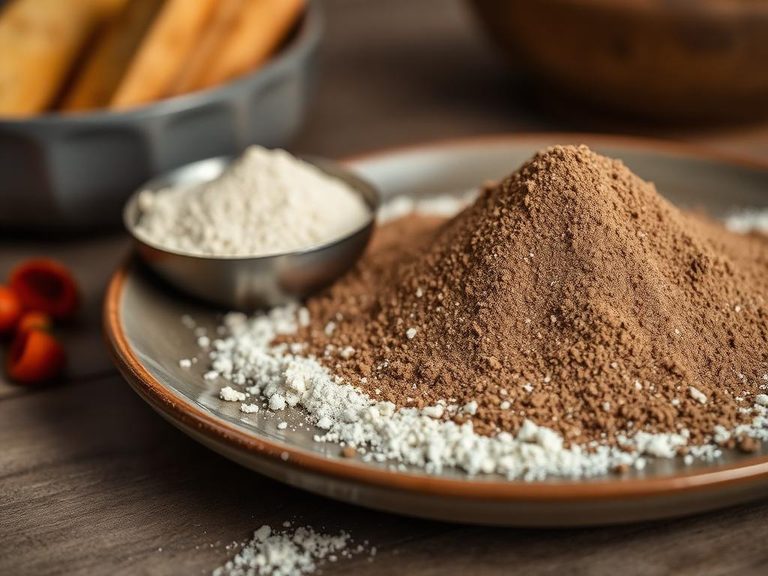 Ground into a powder for soups or breads
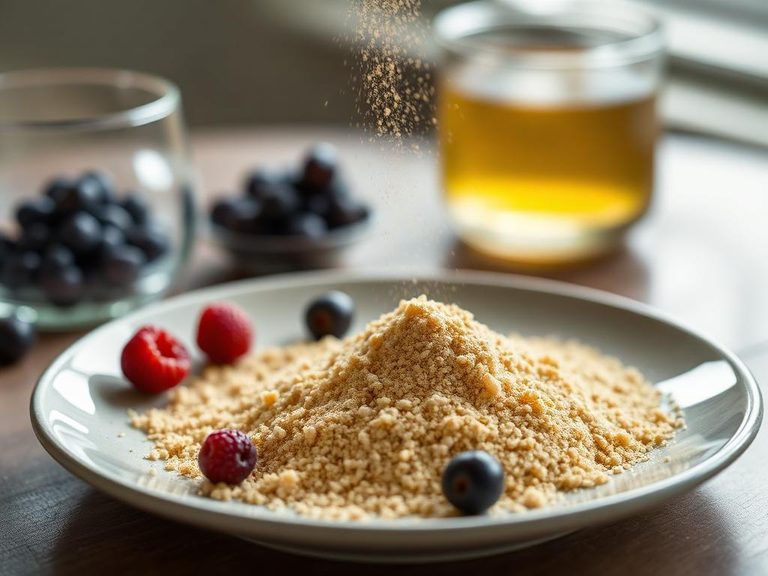 Ground into a powder for seasoning or mixing with berries
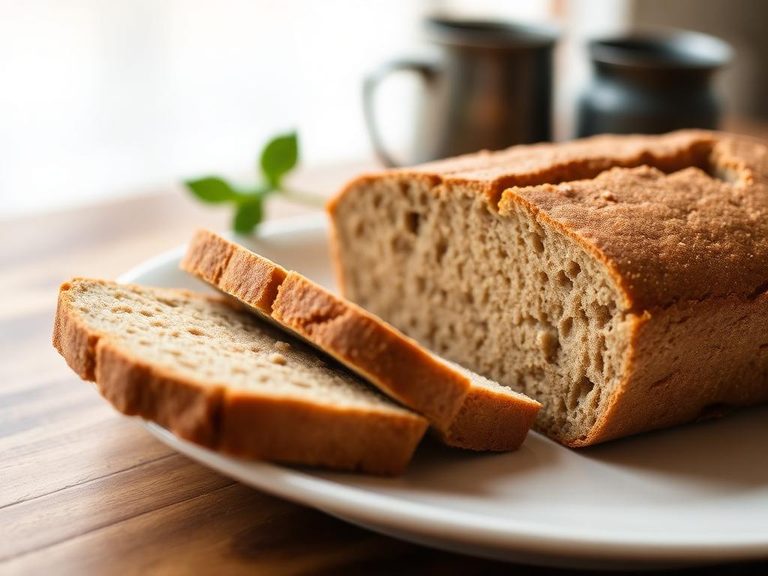 Gluten-Free Sorghum Flour Bread
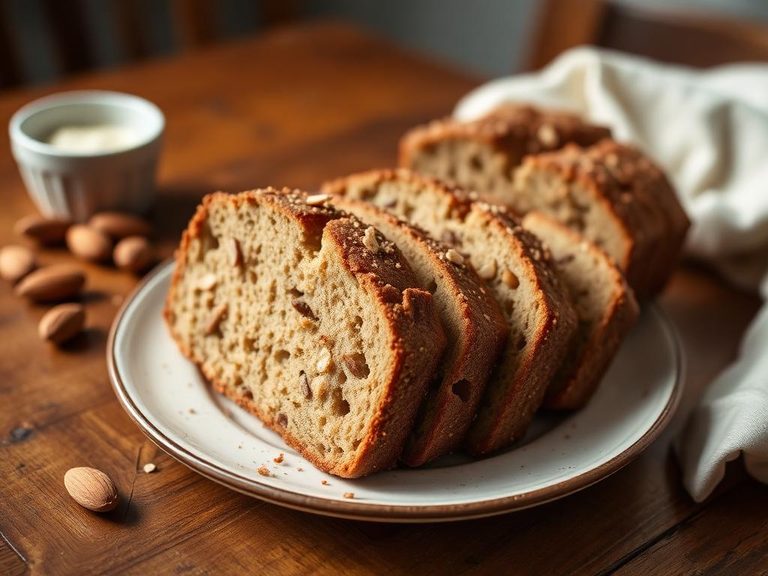 Gluten-free almond flour bread
 All-purpose flour for bread