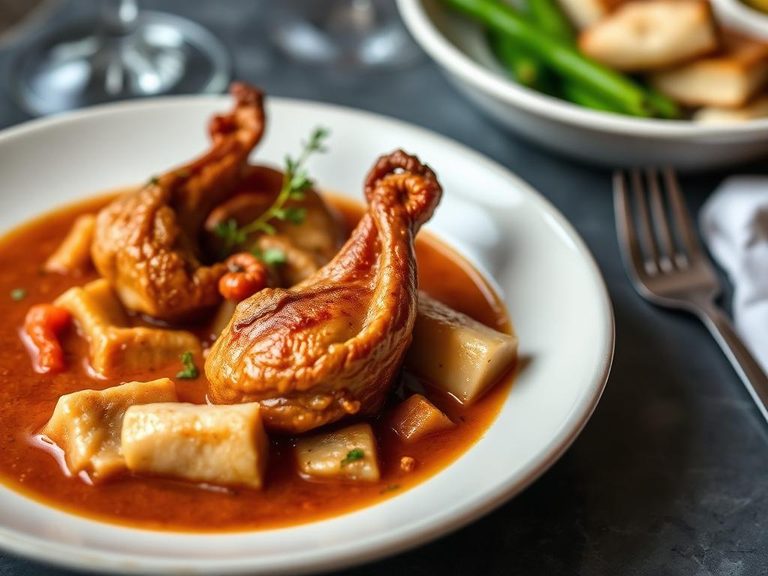
Frog Legs à la Provençale (French)
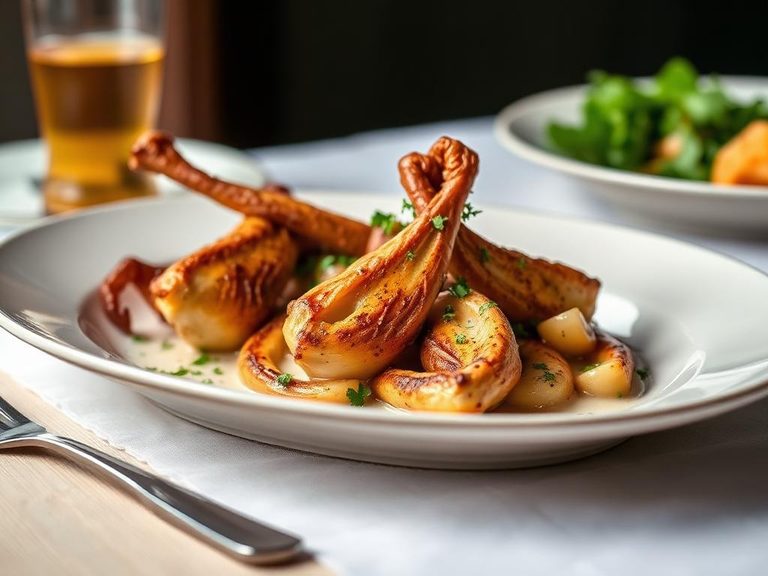
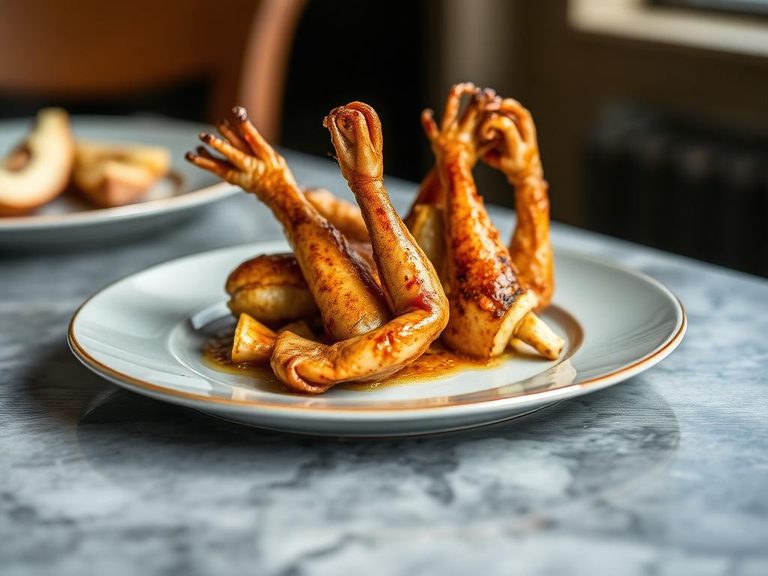
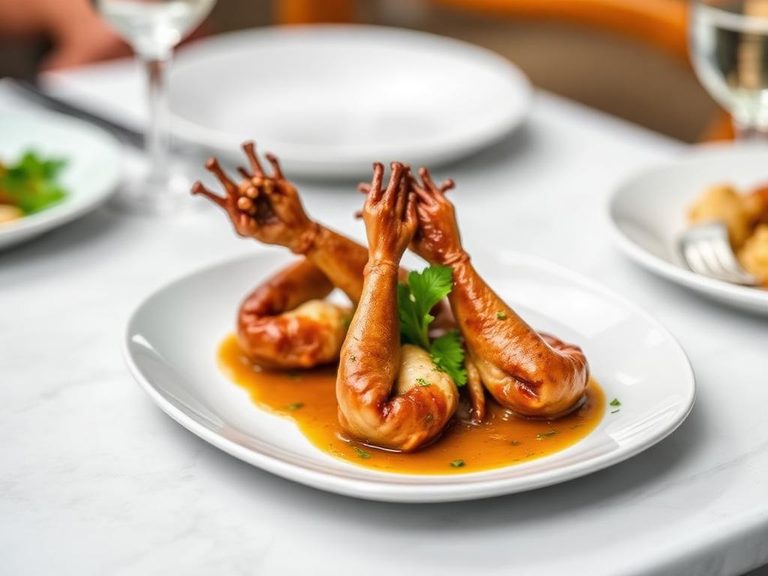
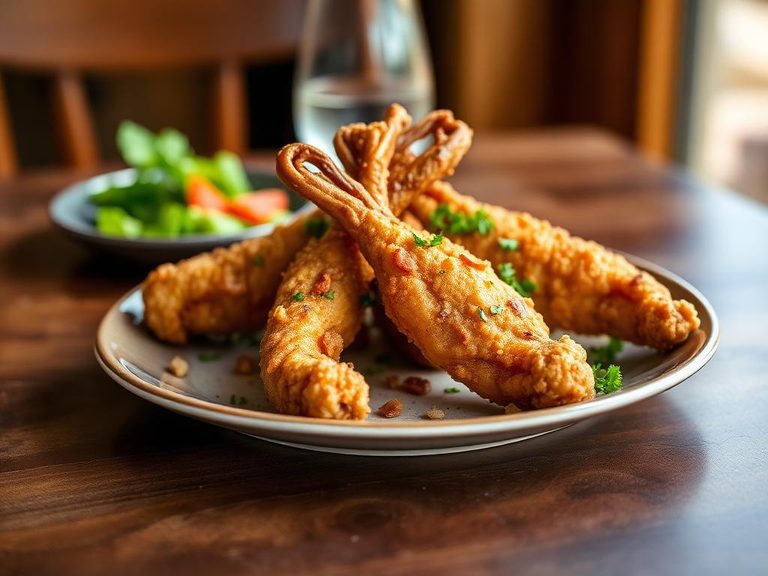
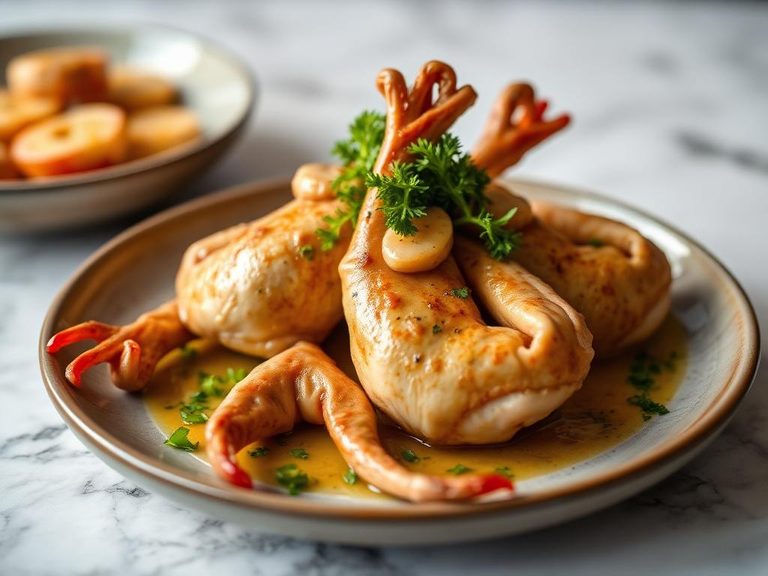
Frog Legs à la Provençale is a classic French dish featuring tender frog legs sautéed in butter or olive oil with garlic, parsley, and often a splash of white wine, embodying the rustic flavors of the Provence region. The preparation is simple yet aromatic, highlighting the delicate, mild flavor of the frog legs, which are often compared to a cross between chicken and fish. It is traditionally served as an appetizer or light main course in French bistros and home kitchens.
🍽️ Nutrition at a glance
This dish is high in protein and relatively low in carbohydrates, with a moderate amount of fat depending on the cooking method. A typical serving provides essential nutrients like selenium, vitamin B12, and potassium, with a rough calorie ballpark of 200-300 kcal per serving.
Nutrition breakdown
| Calories | 220 kcal |
| Protein | 26 g |
| Carbs | 2 g |
| Fat | 12 g |
| Fiber | 0.5 g |
| Sugar | 0.3 g |
| Sodium | 350 mg |
| Selenium | 45 mcg |
| Vitamin B12 | 2.5 mcg |
| Potassium | 320 mg |
| Phosphorus | 280 mg |
| Niacin (B3) | 4.2 mg |
| Riboflavin (B2) | 0.3 mg |
| Iron | 1.8 mg |
| Magnesium | 35 mg |
Per 4-6 frog legs (about 150 g) · estimated, varies by recipe
💡 What's interesting
Culturally, frog legs are a symbol of French culinary tradition, often associated with regional pride and gourmet dining, while nutritionally, they offer a lean protein source with a unique mineral profile that includes high levels of omega-3 fatty acids if prepared with quality oils.