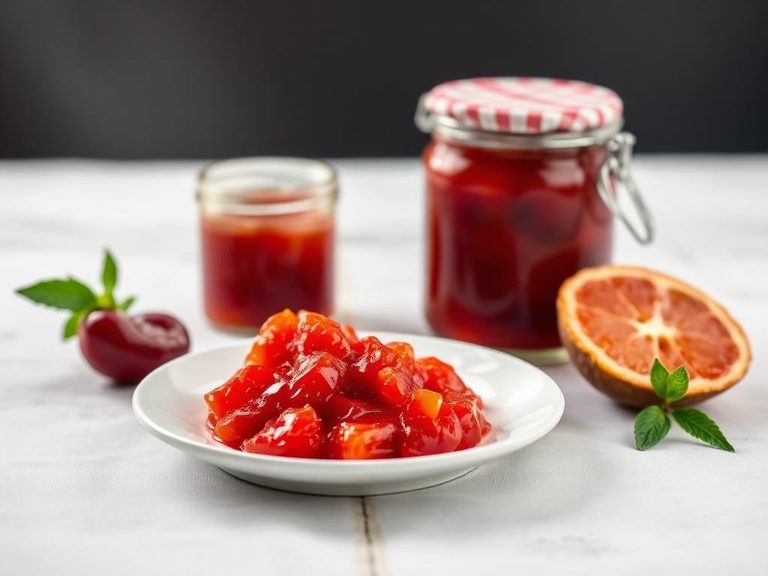
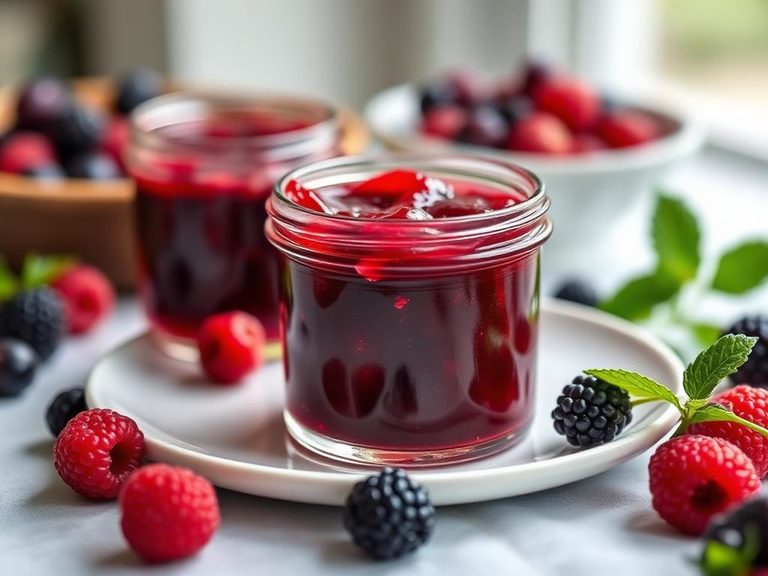
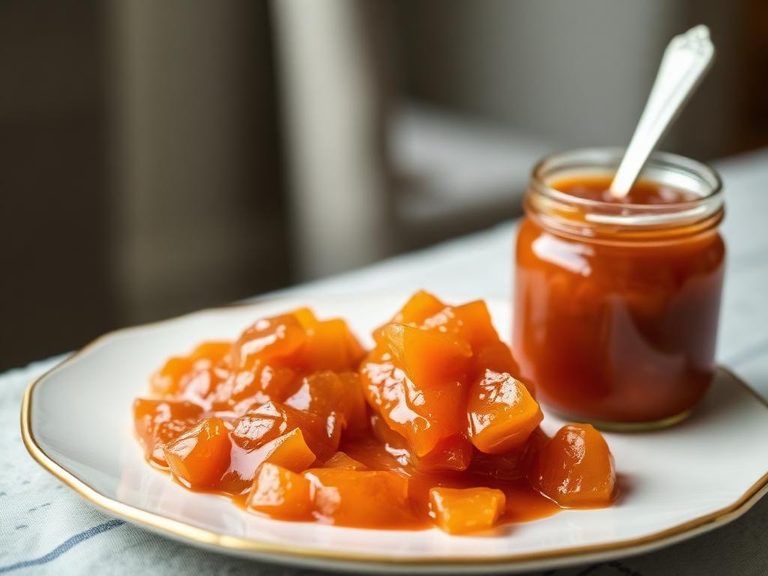
Fig Jam or Preserves
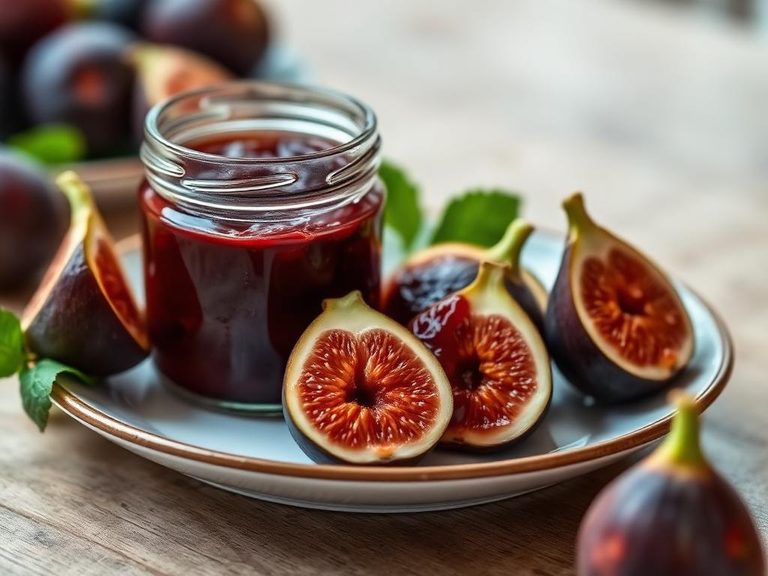
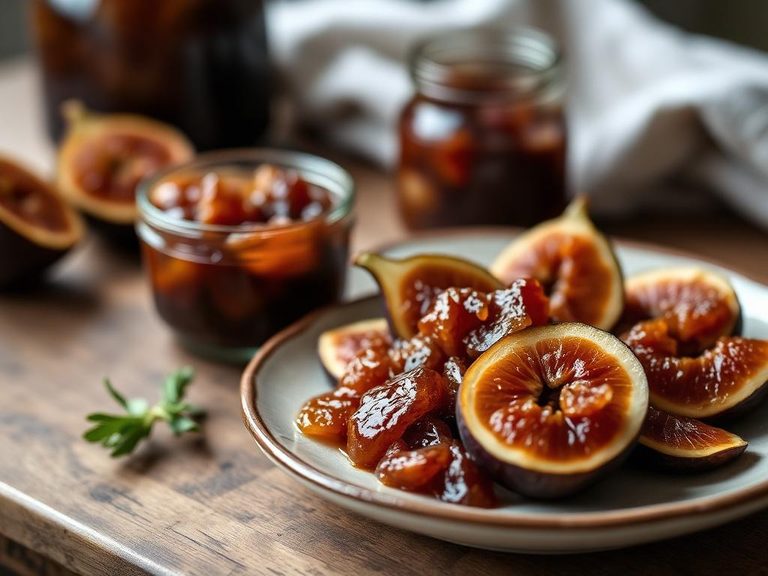
Fig jam or preserves is a thick, sweet spread made by slowly cooking figs with sugar and often lemon juice until they reach a jammy or chunky consistency. It is a classic preserve found in many cuisines, particularly around the Mediterranean, the Middle East, and Southern Europe, where figs have been cultivated for centuries.
🍽️ Nutrition at a glance
Fig jam is very high in carbohydrates, primarily from natural fruit sugars and added sugar, with negligible fat and protein. It provides a quick source of energy and offers some dietary fiber, potassium, and antioxidants from the figs.
Nutrition breakdown
| Calories | 50 kcal |
| Protein | 0.2 g |
| Carbs | 13 g |
| Fat | 0 g |
| Fiber | 0.5 g |
| Sugar | 12 g |
| Sodium | 5 mg |
| Potassium | 45 mg |
| Calcium | 5 mg |
| Magnesium | 3 mg |
| Iron | 0.1 mg |
| Phosphorus | 4 mg |
| Vitamin B6 | 0.01 mg |
Per 1 tablespoon (20 g) · estimated, varies by recipe
💡 What's interesting
Historically, figs were one of the first cultivated fruits, and making preserves was a vital way to enjoy their short seasonal harvest year-round. Nutritionally, the seeds in fig jam provide a unique, crunchy texture and are a good source of insoluble fiber.