

Eppaw porridge
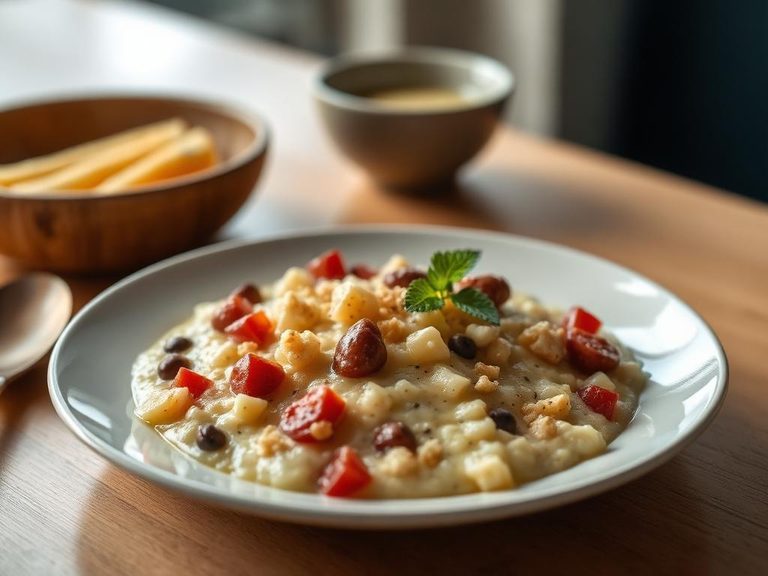
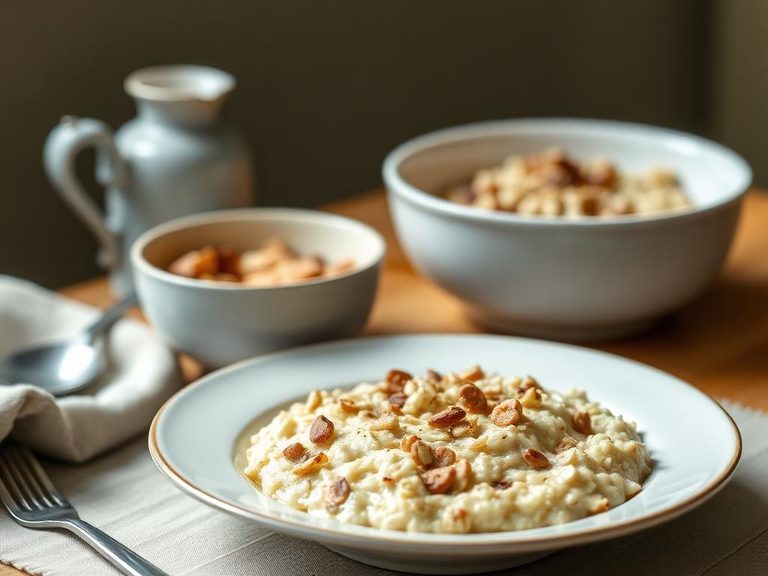
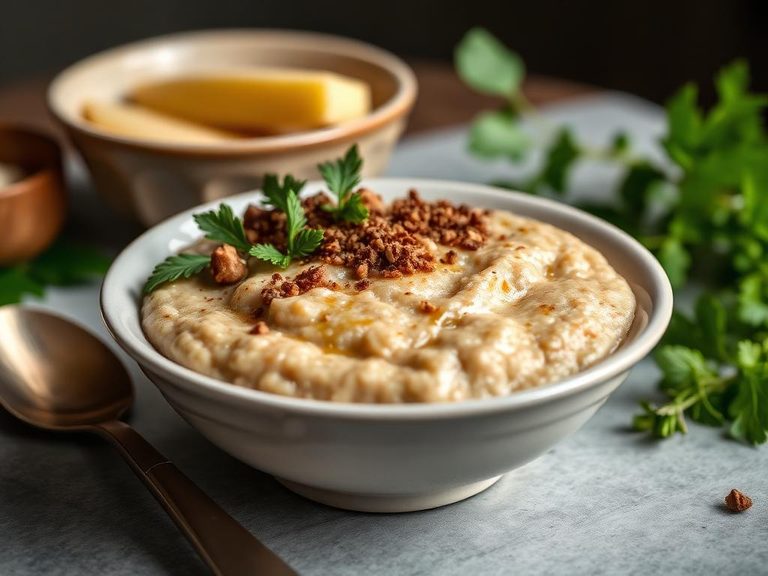
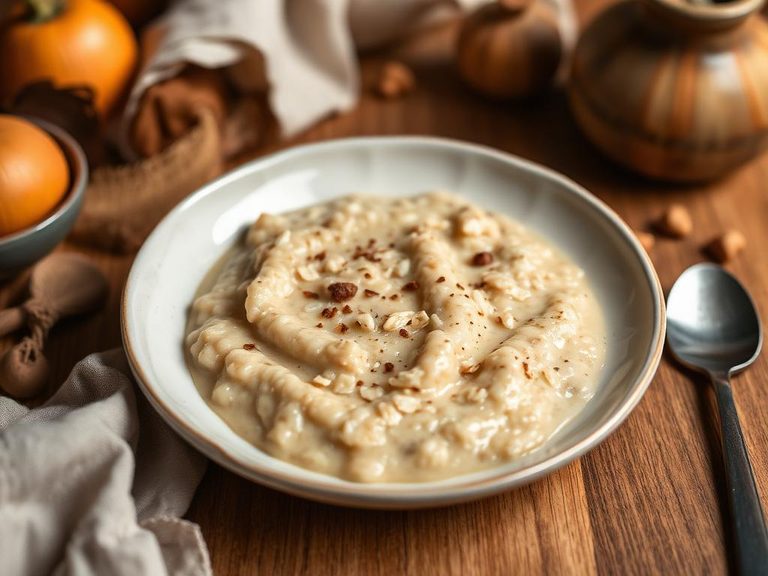
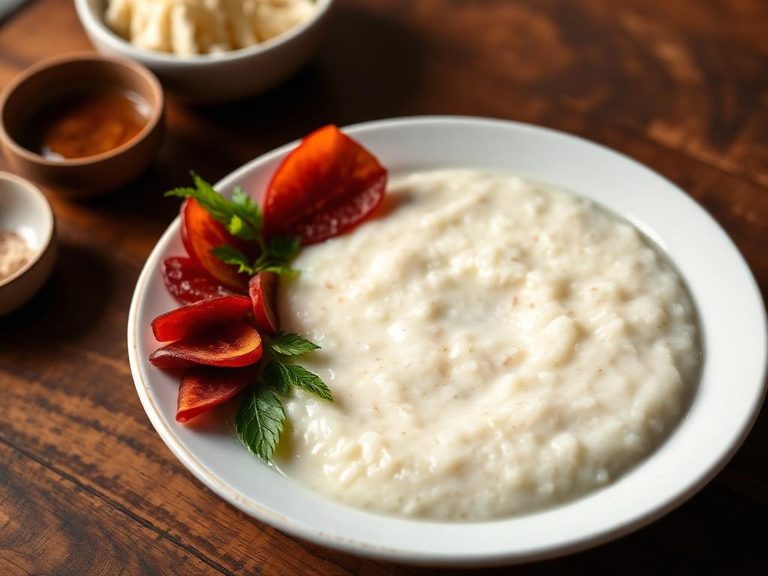
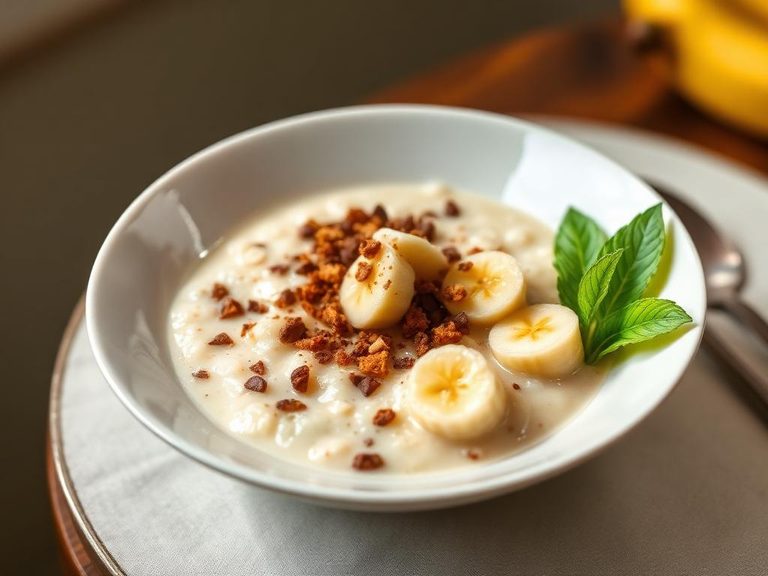
Eppaw porridge, also known as 'Eppo' or 'Eppa', is a traditional, comforting dish from the Indian state of Goa, particularly associated with the Konkani community. It is a simple, savory porridge made from cracked wheat (dalia) or sometimes semolina, cooked in water or milk and seasoned with salt, ghee, and often tempered with mustard seeds, curry leaves, and green chilies.
🍽️ Nutrition at a glance
This dish is primarily a source of complex carbohydrates from the cracked wheat, providing sustained energy. It is relatively low in fat and protein unless enriched with ghee or nuts, and a typical serving offers a moderate calorie count with beneficial fiber and B vitamins.
Nutrition breakdown
| Calories | 180 kcal |
| Protein | 5 g |
| Carbs | 35 g |
| Fat | 3 g |
| Fiber | 4 g |
| Sugar | 1 g |
| Sodium | 300 mg |
| Iron | 2.5 mg |
| Magnesium | 40 mg |
| Phosphorus | 120 mg |
| Zinc | 1.2 mg |
| Niacin (B3) | 3 mg |
| Thiamine (B1) | 0.2 mg |
| Selenium | 15 mcg |
| Manganese | 1.5 mg |
Per 1 cup (240 g) · estimated, varies by recipe
💡 What's interesting
Culturally, Eppaw porridge is a quintessential comfort food in Goan households, often served for breakfast or as a light, restorative meal during illness. Its nutritional uniqueness lies in being a whole-grain, minimally processed dish that is both gentle on the digestion and a good source of dietary fiber.
🍽️ Related dishes
AI estimate may be inaccurate · Terms