

Cookies and biscuits
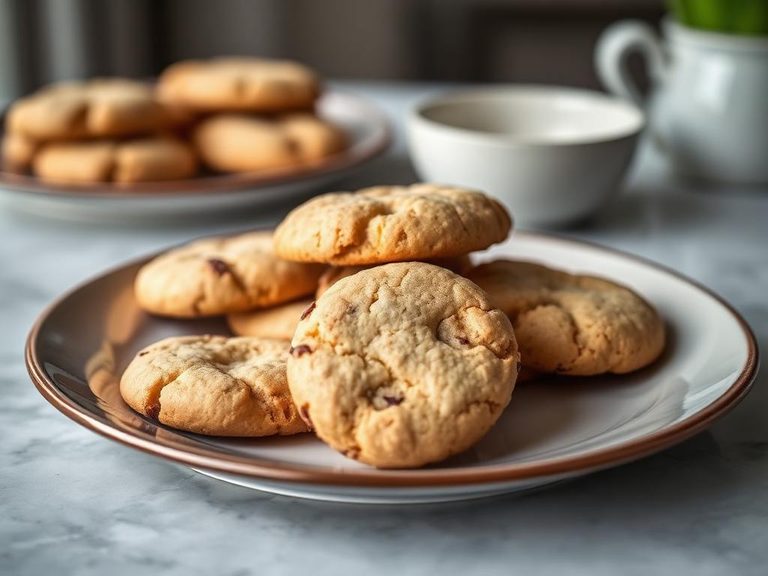
Cookies and biscuits are small, baked, flour-based treats enjoyed globally, with 'cookie' being the American term for what many other English-speaking countries call a 'biscuit.' They are typically made from a simple dough of flour, sugar, butter or oil, and eggs, often flavored with chocolate, vanilla, spices, or dried fruits. While their origins trace back to 7th-century Persia, they have become a universal snack with countless regional variations.
🍽️ Nutrition at a glance
These baked goods are primarily a source of carbohydrates and fats, with a modest amount of protein. A standard serving provides a quick energy boost but is often high in added sugars and saturated fats, with a typical two-cookie serving containing around 150-200 calories.
Nutrition breakdown
| Calories | 180 kcal |
| Protein | 2 g |
| Carbs | 26 g |
| Fat | 8 g |
| Fiber | 1 g |
| Sugar | 14 g |
| Sodium | 120 mg |
| Iron | 1.2 mg |
| Thiamin (B1) | 0.1 mg |
| Niacin (B3) | 1.5 mg |
| Folate | 30 mcg |
| Calcium | 20 mg |
| Magnesium | 10 mg |
| Phosphorus | 40 mg |
| Selenium | 4 mcg |
Per 2 medium cookies (approx. 60 g) · estimated, varies by recipe
💡 What's interesting
Culturally, the cookie/biscuit is a global comfort food, from the crisp British digestive to the soft American chocolate chip. Nutritionally, they are a classic example of an 'energy-dense' food, providing a lot of calories in a small, palatable package.
🍽️ Related dishes

AI estimate may be inaccurate · Terms