Chocolate-coated ice cream

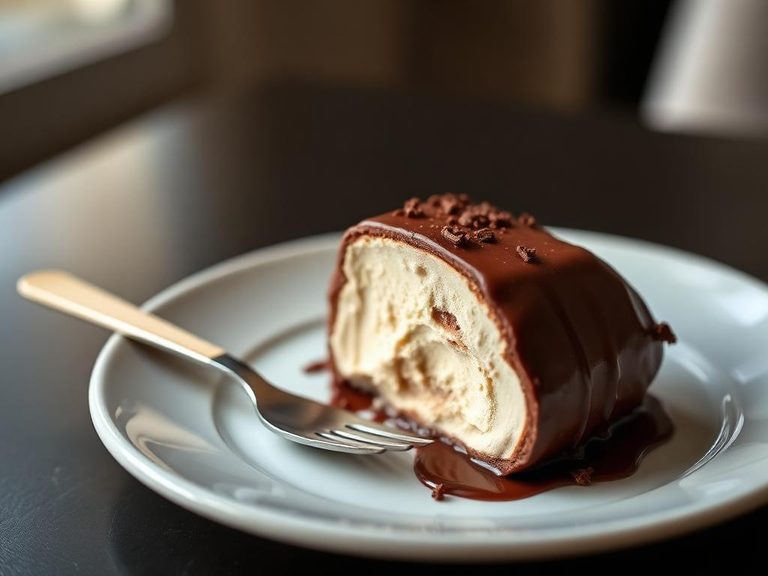
Chocolate-coated ice cream, often called an ice cream bar or Eskimo pie, is a frozen dessert consisting of a scoop of vanilla ice cream enrobed in a crisp shell of hardened chocolate. It typically combines a dairy-based ice cream core with a sweet chocolate coating, sometimes containing nuts or other textural elements. While its exact origin is debated, it became a popular commercial treat in the early 20th century, particularly in the United States.
🍽️ Nutrition at a glance
This dessert is high in both fat and carbohydrates, with the fat coming primarily from the cream and the chocolate, and the carbs from sugar. It provides a quick energy boost and some calcium, but is generally low in protein and fiber. A typical serving contains approximately 250-300 calories.
Nutrition breakdown
| Calories | 270 kcal |
| Protein | 3 g |
| Carbs | 30 g |
| Fat | 16 g |
| Fiber | 1 g |
| Sugar | 25 g |
| Sodium | 45 mg |
| Calcium | 80 mg |
| Phosphorus | 70 mg |
| Vitamin A | 120 IU |
| Potassium | 150 mg |
| Iron | 0.5 mg |
| Magnesium | 15 mg |
Per 1 bar (about 80 g) · estimated, varies by recipe
💡 What's interesting
The magic of the coating lies in a process called 'enrobing,' where the frozen ice cream is quickly dipped into a liquid chocolate mixture that solidifies on contact, creating a satisfying snap. Nutritionally, it's a classic example of a treat that combines saturated fat and simple sugars, making it a high-energy but nutrient-poor food.