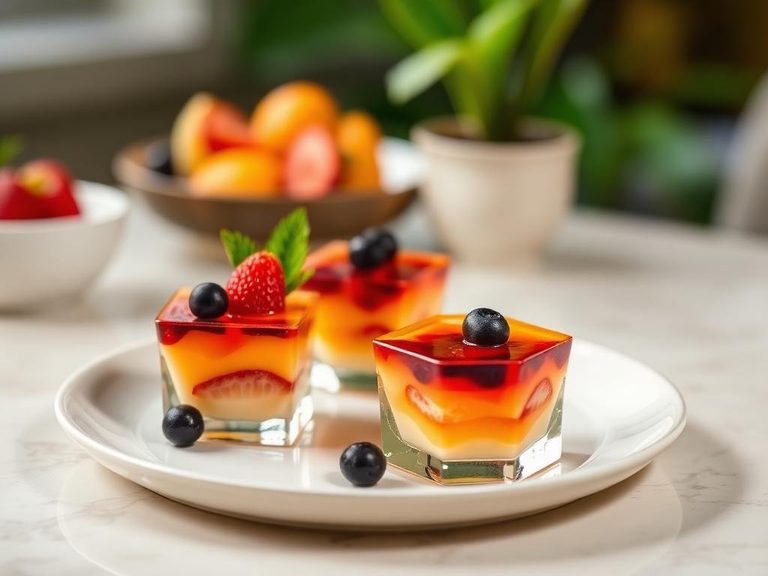
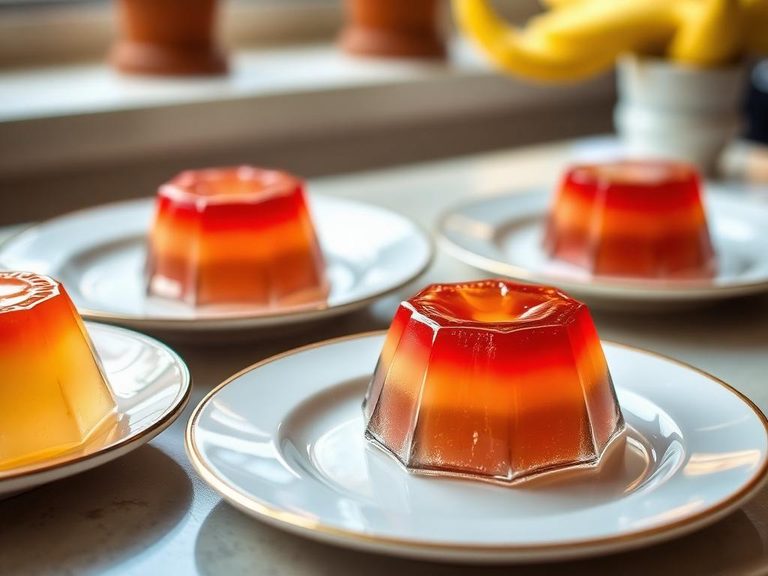
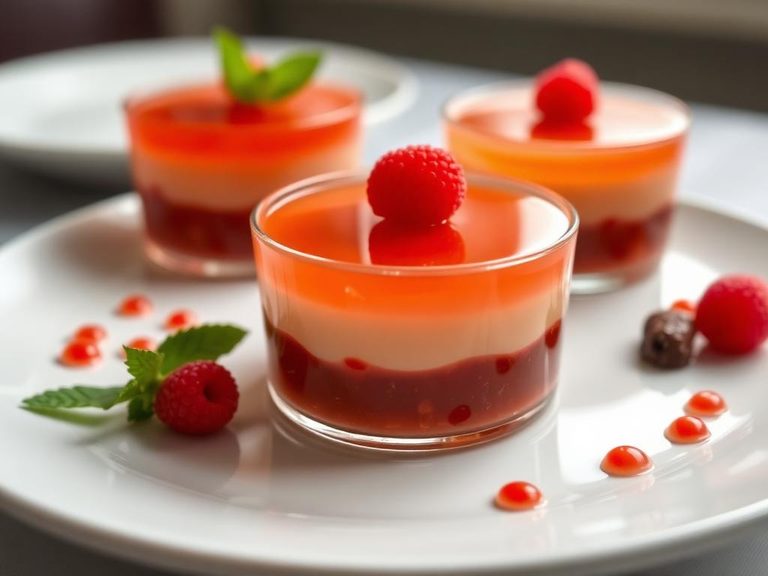
Champagne Gelatin Dessert
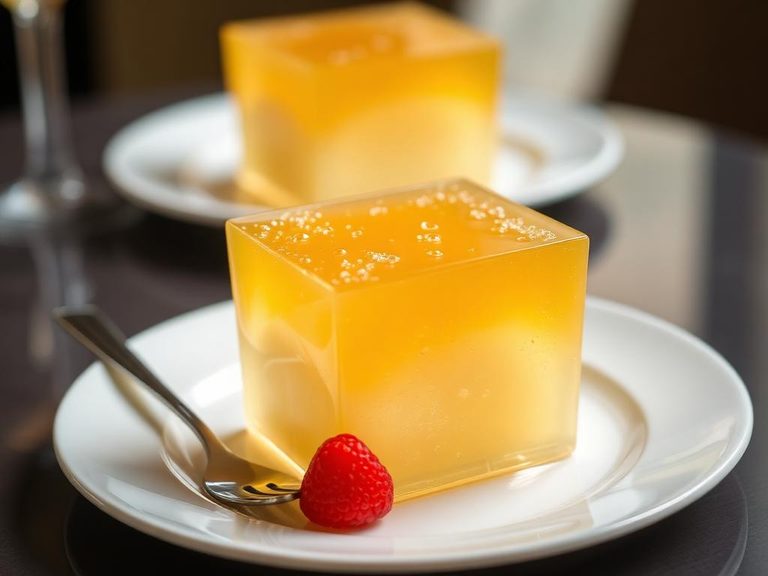
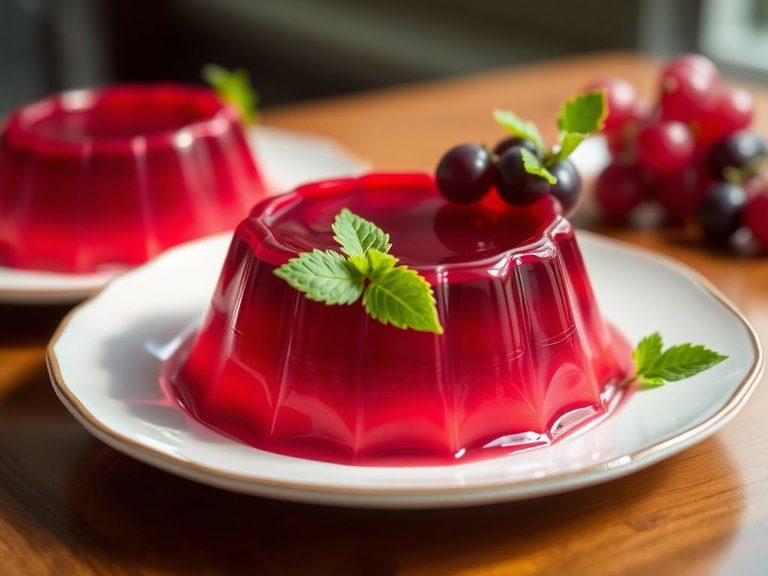
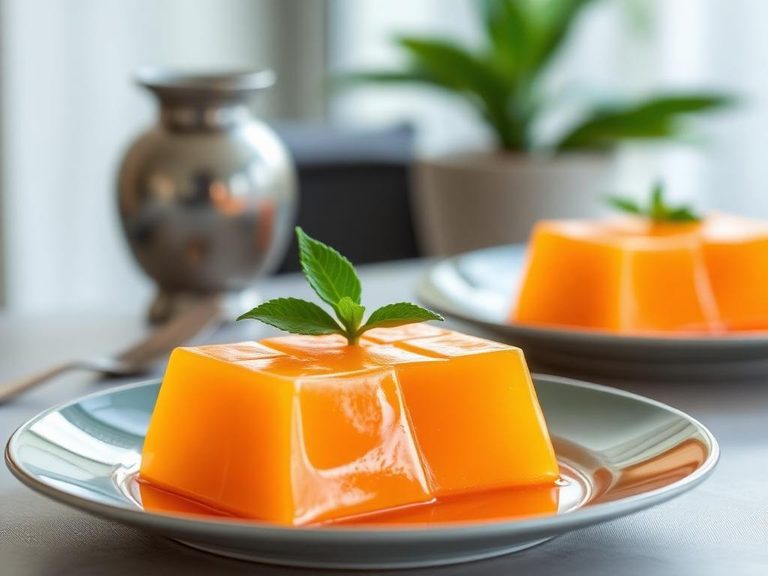
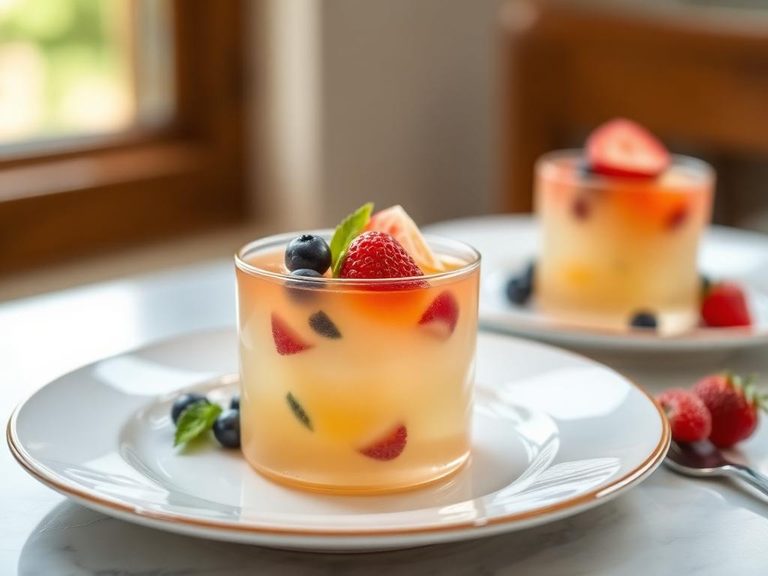
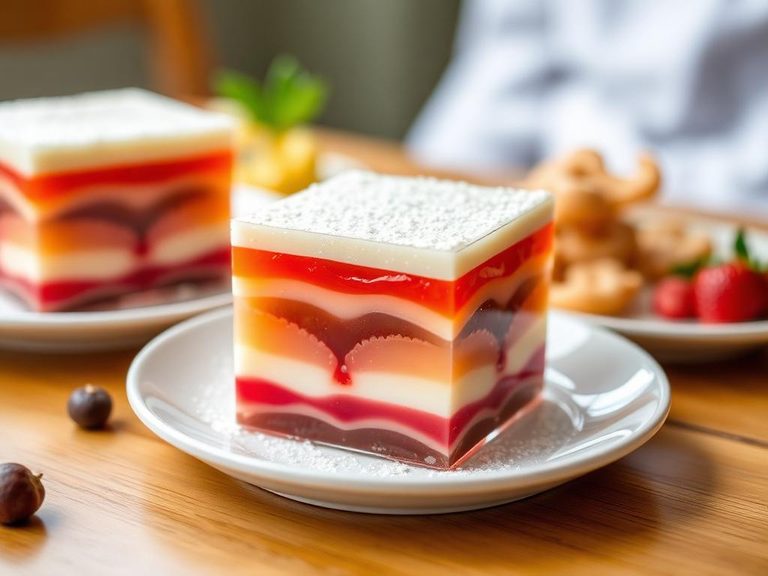
Champagne Gelatin Dessert is a light, elegant, and often celebratory dessert made by combining champagne (or sparkling wine) with gelatin, sugar, and sometimes fruit juice or puree to create a wobbly, translucent jelly. It is a classic Western dessert, particularly popular in French and American cuisine for festive occasions like New Year's Eve or weddings.
🍽️ Nutrition at a glance
This dessert is primarily high in carbohydrates from sugar and the natural sugars in champagne, with negligible fat and very little protein. A typical serving provides a quick energy boost and may offer small amounts of antioxidants from the wine, with a calorie ballpark of around 100-150 calories per serving, depending on the sugar content.
Nutrition breakdown
| Calories | 180 kcal |
| Protein | 3 g |
| Carbs | 38 g |
| Fat | 1 g |
| Fiber | 0 g |
| Sugar | 35 g |
| Sodium | 70 mg |
| Potassium | 45 mg |
| Calcium | 15 mg |
| Magnesium | 8 mg |
| Phosphorus | 20 mg |
| Vitamin C | 0 mg |
| Thiamin (B1) | 0.02 mg |
| Riboflavin (B2) | 0.01 mg |
| Niacin (B3) | 0.1 mg |
Per 1 cup (240 g) · estimated, varies by recipe
💡 What's interesting
Culturally, it transforms a luxurious beverage into a playful, spoonable treat, often symbolizing celebration and sophistication. Nutritionally, the use of gelatin provides a source of protein (collagen), which is unique for a dessert and can be beneficial for joint and skin health.